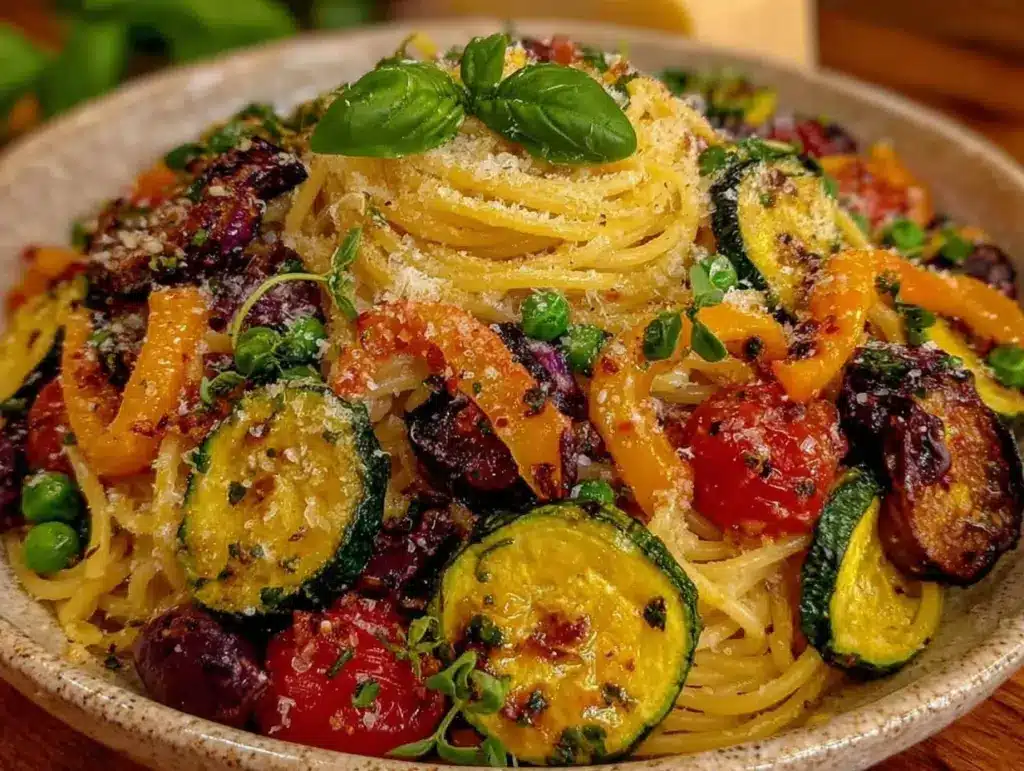
Picture this: the aroma of garlic sizzling in olive oil, mingling with the sweetness of just-picked bell peppers and the earthy scent of zucchini. The colors are so vivid—sunshine yellow squash, emerald green broccoli florets, ruby cherry tomatoes—you could swear you’re looking at a painter’s palette. When I first cooked Fresh Garden Vegetable Primavera Pasta with Parmesan, I was knee-high to a grasshopper, helping my grandma pull tomatoes off the vine. She’d toss the veggies straight into the pot, and I remember pausing in the kitchen, fork halfway to my mouth, thinking, “This is what summer tastes like.”
Honestly, there’s nothing quite like the snap of fresh vegetables against al dente pasta, all hugged together by a sprinkle of nutty parmesan. It’s the kind of meal that makes your family circle the table before dinner’s even called—my kids can’t help sneaking bites right out of the skillet (and neither can I, if we’re being real). The first time I made this for friends, the bowl emptied before I could plate seconds. You know what? That’s when I realized I’d stumbled onto something pretty special.
Fresh Garden Vegetable Primavera Pasta with Parmesan has become a staple at our place—weeknight dinners, lazy Sunday lunches, even birthday potlucks. It’s dangerously easy and totally customizable, perfect for anyone craving pure, nostalgic comfort with a healthy twist. I’ve tested this recipe more times than I can count (in the name of research, of course), and it always delivers that “warm hug” feeling, with rave reviews from everyone. If you want a Pinterest-worthy dinner that’s bright, wholesome, and downright delicious, you’re going to want to bookmark this one.
Why You’ll Love This Recipe
Let’s face it—there’s pasta, and then there’s Vegetable Primavera Pasta. Over the years, I’ve tweaked and tasted nearly every version under the sun. This one stands out, not just because it’s packed with flavor, but because it’s fuss-free and adaptable. Here’s why you’ll be reaching for this recipe again and again:
- Quick & Easy: Comes together in under 30 minutes, so you can whip it up even on the busiest weeknights.
- Simple Ingredients: No fancy store runs needed—just grab whatever vegetables are lurking in your fridge and some basic pantry staples.
- Perfect for Any Occasion: Works for casual dinners, springtime brunches, potlucks, or those nights when you want something light but satisfying.
- Crowd-Pleaser: Kids gobble it up, adults ask for seconds, and even picky eaters find something to love.
- Unbelievably Delicious: The combo of crisp-tender veggies with a hint of garlic, tossed with tender pasta and a veil of parmesan—pure comfort food.
What sets this Vegetable Primavera Pasta apart is the way the fresh vegetables are sautéed until just tender, then finished with a splash of pasta water for that silky, restaurant-style sauce. I use a blend of seasonal veggies and always finish with freshly grated parmesan—it melts in, giving every bite that savory richness. You can swap in whole grain or gluten-free pasta, play with different cheese, and add protein if you want.
Honestly, after the first bite, you might close your eyes and savor that garden-fresh flavor. It’s not just a meal—it’s a mood booster, a healthy way to enjoy comfort food, and a recipe that turns a simple dinner into something memorable. Whether you’re cooking for your family, impressing guests, or just treating yourself, this pasta brings everyone together around the table.
What Ingredients You Will Need
This Vegetable Primavera Pasta recipe is all about celebrating fresh, wholesome produce. I love that you can make it with whatever’s in season or hiding in your crisper drawer. Here’s what you’ll need to create a bowl packed with vibrant flavor and texture—no complicated ingredients, just lots of color!
- Pasta: 12 oz (340 g) penne, fusilli, or spaghetti (use whole wheat or gluten-free if preferred)
- Olive Oil: 2 tbsp (30 ml) extra virgin (adds richness and depth)
- Garlic: 3 cloves, minced (the flavor backbone)
- Onion: 1 small, thinly sliced (red or yellow—your call)
- Bell Peppers: 1 red and 1 yellow, sliced into thin strips (sweet and colorful)
- Zucchini: 1 medium, halved lengthwise and sliced (crisp-tender)
- Yellow Squash: 1 medium, halved and sliced (for sunny color)
- Broccoli Florets: 1 cup (90 g), bite-sized pieces (adds crunch)
- Cherry Tomatoes: 1 cup (150 g), halved (juicy bursts)
- Carrots: 1 large, peeled and julienned (slightly sweet)
- Frozen Peas: 1/2 cup (70 g) (quick and easy, or use fresh in spring)
- Salt & Pepper: To taste (I prefer sea salt and cracked black pepper)
- Pasta Water: 1/2 cup (120 ml), reserved from cooking pasta (makes the sauce silky)
- Parmesan Cheese: 1/2 cup (50 g), freshly grated (plus extra for serving—use vegetarian parmesan if needed)
- Fresh Herbs: 2 tbsp (8 g) chopped basil, parsley, or thyme (herby finish)
Ingredient Tips:
- If you’re shopping, try brands like De Cecco for pasta (I swear by the texture) and Parmigiano Reggiano for cheese.
- Switch up the veggies based on season—swap in asparagus, snap peas, or spinach in spring; eggplant and corn in summer; even roasted squash in fall.
- Substitute gluten-free pasta for allergies, or go dairy-free with nutritional yeast instead of parmesan.
- Don’t have fresh herbs? Dried works in a pinch, but add less (about 1/2 tablespoon).
- For extra protein, toss in cooked chicken, shrimp, or chickpeas.
I love how flexible this Primavera Pasta recipe is—if your garden’s overflowing, just add whatever’s ripe. If you’re low on veggies, use a frozen mix. No matter what, you’ll end up with a bowl bursting with flavor and color.
Equipment Needed
Honestly, you don’t need a fancy kitchen setup to whip up Vegetable Primavera Pasta. Here’s what you’ll want handy:
- Large Pot: For boiling pasta (use a 5-quart size or bigger so the noodles have space to move)
- Large Skillet or Sauté Pan: A 12-inch pan works best to fit all the veggies (nonstick or stainless both do the trick)
- Colander: For draining pasta—if you don’t have one, a slotted spoon works in a pinch
- Sharp Knife: For slicing vegetables—my old chef’s knife is still going strong after years!
- Cutting Board: Preferably large to handle all the chopping
- Wooden Spoon or Silicone Spatula: For stirring without scratching your pan
- Measuring Cups and Spoons: For accurate ingredient portions
- Cheese Grater: For fresh parmesan—microplane works wonders
If you don’t have a skillet big enough, split the veggies between two pans. For budget-friendly options, check thrift stores—I found my favorite pasta pot for $5! To keep knives sharp, hone them every few uses (wish I’d learned that years ago). And if you’re short on gadgets, don’t stress—this recipe is forgiving.
Preparation Method
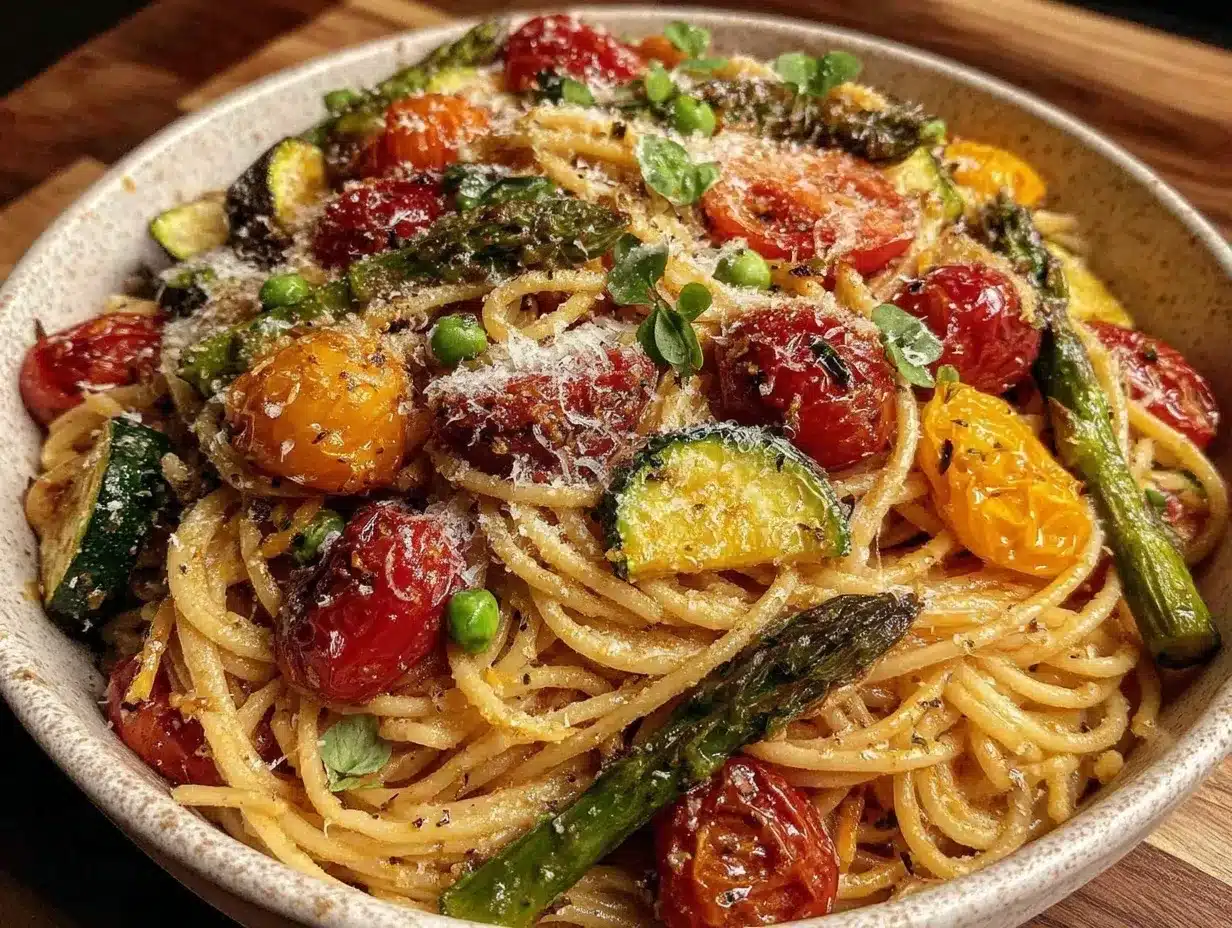
Here’s how to cook up a batch of Fresh Garden Vegetable Primavera Pasta with Parmesan that’ll have everyone asking for seconds. I’ve included all my personal notes so you can avoid the hiccups I’ve hit over the years. Let’s get started:
- Prep the Vegetables: Wash and dry all veggies. Slice bell peppers into thin strips, halve and slice zucchini and yellow squash, cut broccoli into bite-sized florets, halve cherry tomatoes, and peel and julienne the carrot. Chop herbs. (Tip: Prep everything before you start cooking—makes life easier!)
- Boil the Pasta: Bring a large pot of salted water to a boil. Add 12 oz (340 g) pasta and cook until al dente, usually 8-10 minutes for penne or fusilli. Reserve 1/2 cup (120 ml) pasta water, then drain pasta and set aside. (Don’t overcook—slightly firm pasta holds up better with veggies.)
- Sauté the Onion and Garlic: Heat 2 tbsp (30 ml) olive oil in a large skillet over medium heat. Add sliced onion, cook 2-3 minutes until soft and fragrant. Stir in 3 cloves garlic, cook 30 seconds until aromatic but not browned. (If it smells sweet and savory, you’re on track. If it smells bitter, lower the heat.)
- Add Vegetables: Toss in bell peppers, carrot, broccoli, zucchini, and yellow squash. Season with a pinch of salt and pepper. Sauté 5-6 minutes, stirring often, until veggies are just tender but still bright. (Don’t crowd the pan—veggies steam instead of sauté if packed too tightly.)
- Finish with Tomatoes and Peas: Add cherry tomatoes and peas. Cook another 2-3 minutes, until tomatoes are just starting to soften. (You want them to burst a little but not turn mushy.)
- Add Pasta and Pasta Water: Add drained pasta to the skillet. Pour in reserved 1/2 cup (120 ml) pasta water. Toss gently until everything is coated and the sauce starts to cling to the pasta, about 2 minutes. (If it looks dry, add a splash more water.)
- Season and Finish: Stir in 1/2 cup (50 g) grated parmesan and chopped herbs. Toss until cheese melts and herbs are evenly distributed. Taste and adjust salt and pepper as needed. (If you want more zing, add a squeeze of lemon juice.)
- Serve: Plate immediately, topping with extra parmesan and fresh herbs if you like. (I usually sneak a bite straight from the pan—chef’s privilege!)
Preparation Notes: If your veggies start sticking, add a splash of olive oil. If you want more saucy pasta, use extra pasta water. Feel free to swap in whatever veggies look good at the store or in your garden. This recipe is forgiving—just keep an eye on texture and color, and you’ll nail it.
Cooking Tips & Techniques
After a dozen batches (give or take), I’ve learned a few tricks that make Vegetable Primavera Pasta sing. Here’s what you’ll want to know:
- Use High Heat for Sautéing: It lets the veggies caramelize quickly without turning mushy. But don’t wander off—burnt garlic ruins everything!
- Don’t Overcook Pasta: Pull it off a minute before “done”—it finishes in the pan and soaks up all the veggie flavors.
- Add Pasta Water Gradually: It’s your secret for silky sauce. Too much, and things get soupy; just enough, and you’ll have a glossy finish.
- Fresh Parmesan Matters: Pre-grated cheese often has anti-caking agents and doesn’t melt as well. Buy a wedge and grate it yourself—worth it!
- Season as You Go: Taste each layer—veggies, pasta, sauce. I made the mistake of waiting until the end and ended up with bland pasta more than once.
- Don’t Rush the Veggies: Let each type get its moment in the pan. If you dump everything at once, some will be overdone, some undercooked.
- Multitasking: Start boiling pasta while chopping veggies. You’ll save a ton of time and keep dinner moving.
I’ve had my share of flops—overcooked broccoli, mushy zucchini, burnt garlic (yikes!). The key is to keep things moving, use your senses, and trust that a little imperfection makes homemade pasta even better. The more you make this, the more you’ll find your groove—promise.
Variations & Adaptations
Vegetable Primavera Pasta is a canvas for creativity. Here are a few ways to switch things up, whether you’re eating with restrictions or just want to try something new:
- Gluten-Free: Use gluten-free pasta like brown rice or chickpea varieties. I’ve tried Barilla’s gluten-free penne—works great!
- Low-Carb: Swap pasta for spiralized zucchini or hearts of palm noodles. It’s surprisingly tasty and light.
- Vegan: Skip parmesan, add vegan cheese or a sprinkle of nutritional yeast. Toss in a handful of toasted nuts for richness.
- Seasonal Veggies: In spring, use asparagus and snap peas. In fall, roasted butternut squash and mushrooms add deep flavor.
- Protein Boost: Add grilled chicken, shrimp, or chickpeas for extra staying power.
- Spicy Kick: Stir in red pepper flakes or drizzle with chili oil before serving.
- Family Favorite: My kids love when I add sweet corn and swap parmesan for a blend of mozzarella and cheddar.
If you’re dealing with allergies, this recipe is easy to adapt—just check the pasta label and cheese ingredients. I love experimenting with different herbs (thyme, oregano, even a bit of mint). The best part? Each batch feels a little different, so you’ll never get bored.
Serving & Storage Suggestions
I love serving Vegetable Primavera Pasta straight from the skillet—it’s warm, fragrant, and the colors look gorgeous on a big platter. For the best flavor, serve it hot and top with extra parmesan and herbs. If you’re planning a dinner party, pair it with garlic bread and a crisp green salad. For brunch, add a side of roasted potatoes and a pitcher of lemonade.
Leftovers store well in an airtight container in the fridge for up to 3 days. The flavors get even deeper overnight (always a pleasant surprise). To reheat, add a splash of water and warm gently in a skillet over medium heat—this keeps the pasta from drying out. You can also microwave in 30-second bursts, stirring in between.
If you’re making a big batch for meal prep, freeze individual portions (without parmesan) for up to 2 months. Thaw overnight in the fridge, then reheat as above. Honestly, this pasta tastes just as good cold—try it as a salad with a squeeze of lemon the next day!
Nutritional Information & Benefits
Each serving of Vegetable Primavera Pasta (about 1 1/2 cups) packs in roughly:
- Calories: 340
- Protein: 11g
- Carbs: 55g
- Fat: 9g
- Fiber: 6g
The real stars are the veggies—broccoli, bell peppers, and tomatoes bring vitamins C and K, plus antioxidants and fiber. Olive oil adds heart-healthy fats, and parmesan bumps up the calcium and protein. Use whole wheat or gluten-free pasta for extra dietary perks.
This recipe is vegetarian, and easily made vegan or gluten-free. Watch out for dairy and wheat if you have allergies. From a wellness perspective, I love how this dish balances taste and nutrition—filling, colorful, and packed with nutrients.
Conclusion
Vegetable Primavera Pasta with Parmesan isn’t just dinner—it’s a celebration of fresh produce, easy comfort, and family moments. From the first sizzle of garlic to the last sprinkle of cheese, it’s a recipe that brings out smiles and “wow, can I have seconds?” requests. I love how customizable it is, and how it fits any occasion—weeknight rush, lazy weekend, or special get-together.
Give it your own twist—use the veggies you love, swap the cheese, or add protein if you want. Cooking should be fun, not fussy! Personally, this is the dish I reach for when I want something fast and nourishing, or when I just need a bowl of happiness. I hope you’ll fall in love with it too.
If you try this Vegetable Primavera Pasta Recipe, let me know in the comments—share your photos, your swaps, your stories! Tag me on Pinterest or Instagram so I can see your masterpiece. Here’s to more delicious moments around your table!
FAQs
Can I make Vegetable Primavera Pasta ahead of time?
Yes, you can prep the veggies and even cook the pasta ahead. Store separately, then toss together and reheat just before serving for best texture.
What vegetables work best in primavera pasta?
Almost any! Bell peppers, zucchini, broccoli, cherry tomatoes, carrots, and peas are classic. Use whatever’s fresh or in season—spinach, asparagus, or mushrooms are great too.
How do I keep the pasta from getting mushy?
Cook it until just al dente, then finish in the skillet with veggies. Don’t overcook, and use plenty of boiling water when cooking pasta.
Is this Vegetable Primavera Pasta Recipe vegetarian?
Yes! Just make sure your parmesan is vegetarian if needed. For vegan, skip cheese or use a plant-based alternative.
Can I freeze leftovers?
You can! Freeze in airtight containers without cheese for up to 2 months. Thaw overnight and reheat gently, then add fresh parmesan before serving.
Pin This Recipe!
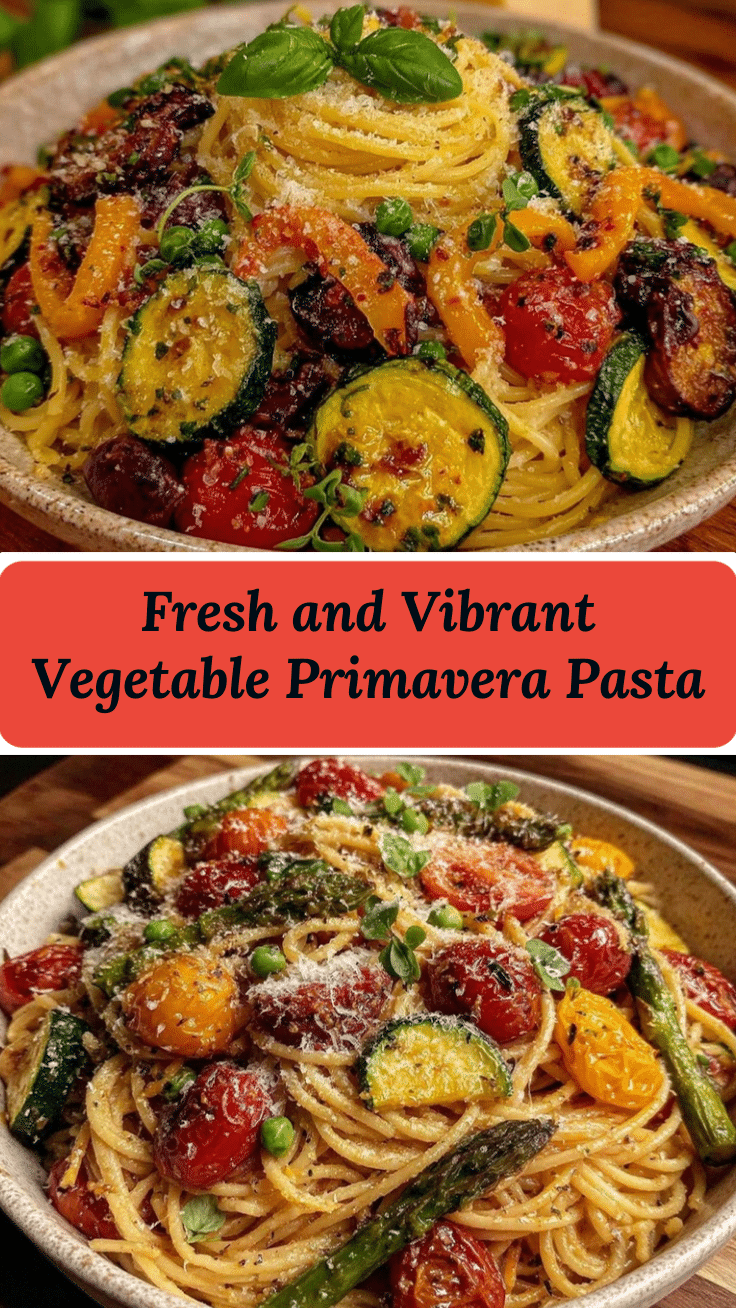
Vegetable Primavera Pasta Recipe – Easy Fresh Garden Dinner with Parmesan

This Vegetable Primavera Pasta is a vibrant, quick, and customizable dinner packed with fresh garden vegetables, tossed with al dente pasta and finished with nutty parmesan. It’s a healthy comfort food perfect for weeknights, potlucks, or any occasion.
- Prep Time: 15 minutes
- Cook Time: 15 minutes
- Total Time: 30 minutes
- Yield: 4 servings 1x
- Category: Main Course
- Cuisine: Italian
Ingredients
- 12 oz penne, fusilli, or spaghetti (whole wheat or gluten-free if preferred)
- 2 tbsp extra virgin olive oil
- 3 cloves garlic, minced
- 1 small onion, thinly sliced (red or yellow)
- 1 red bell pepper, sliced into thin strips
- 1 yellow bell pepper, sliced into thin strips
- 1 medium zucchini, halved lengthwise and sliced
- 1 medium yellow squash, halved and sliced
- 1 cup broccoli florets, bite-sized pieces
- 1 cup cherry tomatoes, halved
- 1 large carrot, peeled and julienned
- 1/2 cup frozen peas (or fresh)
- Salt & pepper to taste
- 1/2 cup reserved pasta water
- 1/2 cup freshly grated parmesan cheese (plus extra for serving, use vegetarian parmesan if needed)
- 2 tbsp chopped fresh herbs (basil, parsley, or thyme)
Instructions
- Wash and dry all vegetables. Slice bell peppers into thin strips, halve and slice zucchini and yellow squash, cut broccoli into bite-sized florets, halve cherry tomatoes, and peel and julienne the carrot. Chop herbs.
- Bring a large pot of salted water to a boil. Add pasta and cook until al dente, 8-10 minutes. Reserve 1/2 cup pasta water, then drain pasta and set aside.
- Heat olive oil in a large skillet over medium heat. Add sliced onion and cook 2-3 minutes until soft. Stir in garlic and cook 30 seconds until fragrant.
- Add bell peppers, carrot, broccoli, zucchini, and yellow squash. Season with salt and pepper. Sauté 5-6 minutes, stirring often, until veggies are just tender but still bright.
- Add cherry tomatoes and peas. Cook another 2-3 minutes, until tomatoes are just starting to soften.
- Add drained pasta to the skillet. Pour in reserved pasta water. Toss gently until everything is coated and the sauce clings to the pasta, about 2 minutes.
- Stir in grated parmesan and chopped herbs. Toss until cheese melts and herbs are evenly distributed. Taste and adjust salt and pepper as needed.
- Serve immediately, topping with extra parmesan and fresh herbs if desired.
Notes
Prep all vegetables before cooking for efficiency. Use high heat for sautéing to caramelize veggies quickly. Add pasta water gradually for a silky sauce. Freshly grated parmesan melts best. Swap in seasonal vegetables or add protein like grilled chicken, shrimp, or chickpeas. For vegan, use nutritional yeast or plant-based cheese. Leftovers store well and can be reheated with a splash of water.
Nutrition
- Serving Size: About 1 1/2 cups per
- Calories: 340
- Sugar: 8
- Sodium: 350
- Fat: 9
- Saturated Fat: 2.5
- Carbohydrates: 55
- Fiber: 6
- Protein: 11
Keywords: vegetable primavera, pasta primavera, vegetarian pasta, garden pasta, easy dinner, healthy pasta, parmesan pasta, spring pasta, summer pasta, weeknight dinner