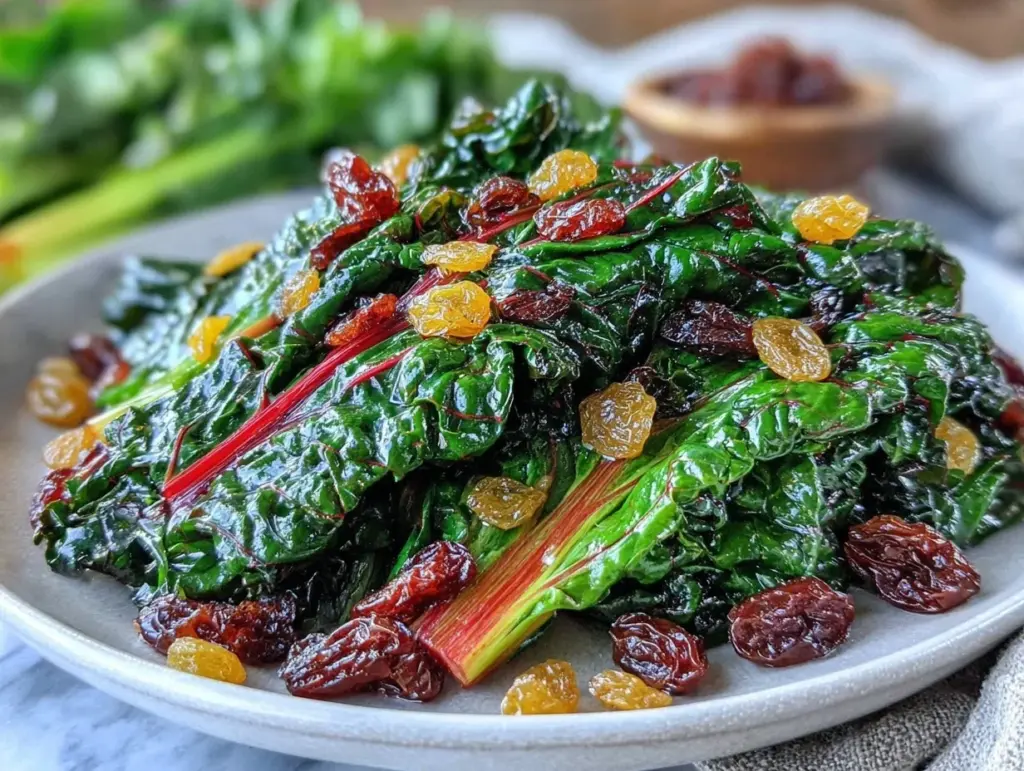
Let me just say—there’s something magical about the moment a pan of fresh Swiss chard hits a swirl of olive oil and garlic. The aroma that fills your kitchen is earthy and slightly sweet, almost as if you’ve been whisked away to a sunlit Mediterranean garden. The vivid green leaves and striking magenta stems practically glow as they soften, and when you toss in a handful of golden raisins and pine nuts, it’s like a painter tipping their brush into gold and ivory. I remember the first time I made Swiss chard sautéed with raisins and pine nuts; I was at my grandmother’s house, knee-high to a grasshopper, watching her transform humble vegetables into something so special. She’d always say, “A little sweetness, a little crunch—that’s how you make greens taste like a treat!”
Honestly, I was instantly hooked. That was the kind of moment where you pause, take a deep breath, and just smile because you know you’re onto something truly special. It’s pure, nostalgic comfort—dangerously easy to whip up, but so elegant it’ll brighten up your Pinterest board and wow your dinner guests. Over the years, this recipe has become my go-to for potlucks, weeknight dinners, and those times when I want to sneak more greens into my family’s plates. (You know how kids can be with anything green!) My family couldn’t stop sneaking forkfuls off the skillet, and I can’t really blame them. Even the self-proclaimed “vegetable skeptics” were won over by the soft chard, sweet raisins, and buttery pine nuts.
What I love most is how this dish fits practically any occasion—from fancy brunches to simple solo lunches. If you’ve ever wished for a veggie side that’s equal parts delicious and beautiful, Swiss chard sautéed with raisins and pine nuts is the answer. I’ve tested it more times than I can count (all in the name of research, of course), and it’s now a staple for family gatherings, gifting, and cozy nights in. It feels like a warm hug, and you’re going to want to bookmark this one for your own kitchen adventures.
Why You’ll Love This Recipe
Let’s face it—Swiss chard sautéed with raisins and pine nuts is not your average vegetable side. After years in restaurant kitchens and plenty of home cooking experiments, I can tell you this combo just works. It’s chef-tested, grandma-approved, and kid-friendly (if you don’t mention the “chard” part too loudly!). Here are all the reasons you’ll want to put this recipe on repeat:
- Quick & Easy: Ready in under 20 minutes, so you can whip it up even when you’re short on time.
- Simple Ingredients: No wild goose chase at the grocery store—Swiss chard, golden raisins, pine nuts, olive oil, garlic, a splash of vinegar, and seasonings.
- Perfect for Any Occasion: Makes a showstopper side dish for holidays, brunches, and weeknight dinners alike.
- Crowd-Pleaser: Even the most stubborn veggie critics can’t resist the sweet-savory mix.
- Unbelievably Delicious: The chard gets tender but stays vibrant, the raisins plump up with flavor, and the pine nuts add a nutty crunch that’s just addictive.
What sets this apart? The balance is spot-on—the golden raisins add just enough sweetness to play off the earthy chard, while the pine nuts lend a buttery, almost decadent richness. I’ve tried other greens, but Swiss chard wins hands-down for its tender leaves and gorgeous color. The splash of vinegar at the end brightens everything up, making each bite sing. This isn’t just another “eat your greens” recipe; it’s a celebration of flavors and textures. Whether you’re impressing friends or just want a cozy meal for one, this dish brings soul-soothing satisfaction every single time.
Trust me, there’s nothing fussy here—just honest, good cooking. It’s the kind of recipe that makes you close your eyes after the first bite, savoring the blend of sweet, nutty, and savory all at once. I love that it’s healthy but feels like a treat, and it’s perfect for turning any meal into something memorable. So grab your pan, and let’s get cooking!
What Ingredients You Will Need
This recipe uses simple, wholesome ingredients to deliver bold flavor and satisfying texture without the fuss. Swiss chard is the star, but the golden raisins and pine nuts play crucial supporting roles, giving this dish its signature sweet-nutty twist. Most of these are pantry staples, and if you’re missing something, I’ve got easy swaps for you!
- Swiss chard, 1 large bunch (about 12 oz / 340 g), washed and chopped (leaves and stems separated)
- Golden raisins, 1/4 cup (40 g) (adds lovely sweetness—regular raisins work too, but golden are more delicate)
- Pine nuts, 1/4 cup (35 g), lightly toasted (buttery crunch—substitute slivered almonds or sunflower seeds if needed)
- Extra virgin olive oil, 2 tablespoons (30 ml) (for sauteeing—choose a fruity, good-quality brand for best flavor)
- Garlic, 2 large cloves, minced (adds depth—fresh is best, but jarred works in a pinch)
- Red wine vinegar, 1 tablespoon (15 ml) (brightens the flavors—lemon juice is a fine swap)
- Salt, 1/2 teaspoon (or to taste)
- Black pepper, 1/4 teaspoon (freshly ground for a little kick)
Optional Extras:
- Crushed red pepper flakes, pinch (for a touch of heat—skip if you prefer mild)
- Parmesan cheese, grated, for serving (adds a salty finish—leave out for vegan)
Ingredient notes: For Swiss chard, look for bunches with crisp leaves and sturdy stems. Rainbow chard is gorgeous if you can find it! I prefer golden raisins for their milder flavor and softer texture, but regular raisins or dried cranberries can work in a pinch. Pine nuts are a splurge, I know, but a little goes a long way. If you’re watching your budget, slivered almonds or chopped walnuts make good stand-ins. Olive oil is key here—I recommend California Olive Ranch or Lucini for a fruity, peppery finish. Garlic should be fresh if possible; it really makes a difference. Don’t skip the vinegar—it ties everything together and lifts the dish.
Substitution suggestions: Swap Swiss chard with spinach or beet greens if you must, though chard’s texture is best. Use lemon juice instead of vinegar, or try apple cider vinegar for a subtle twist. If you need nut-free, go for pumpkin seeds or sunflower seeds. And for a vegan option, skip the cheese at the end—this dish is plenty flavorful on its own.
Equipment Needed
Sautéing Swiss chard with raisins and pine nuts doesn’t require anything fancy, just a few trusty kitchen basics. Here’s what I reach for every time:
- Large skillet or sauté pan (preferably nonstick or stainless steel, about 12-inch / 30 cm is ideal)
- Chef’s knife (for chopping chard and garlic—sharp is safer and faster!)
- Cutting board (I use a large wooden one, easier to keep chard leaves from flying everywhere)
- Measuring cups and spoons (for pine nuts, raisins, oil, vinegar, and seasonings)
- Wooden spoon or spatula (gentle on greens, helps mix without bruising)
- Small dry skillet (for toasting pine nuts—can use the main pan if you’re multitasking)
- Colander or salad spinner (for washing and drying chard)
If you don’t have a sauté pan, a regular frying pan works just fine. I’ve used cast iron in a pinch, but keep an eye on the heat so the chard doesn’t stick. For toasting pine nuts, I sometimes use my toaster oven if I’m feeling lazy—just watch closely, they burn fast! If you’re looking for budget-friendly tools, IKEA and Cuisinart make affordable skillets that get the job done. And don’t forget to wipe down your knife right after chopping chard—the magenta stems can stain if left too long.
Preparation Method
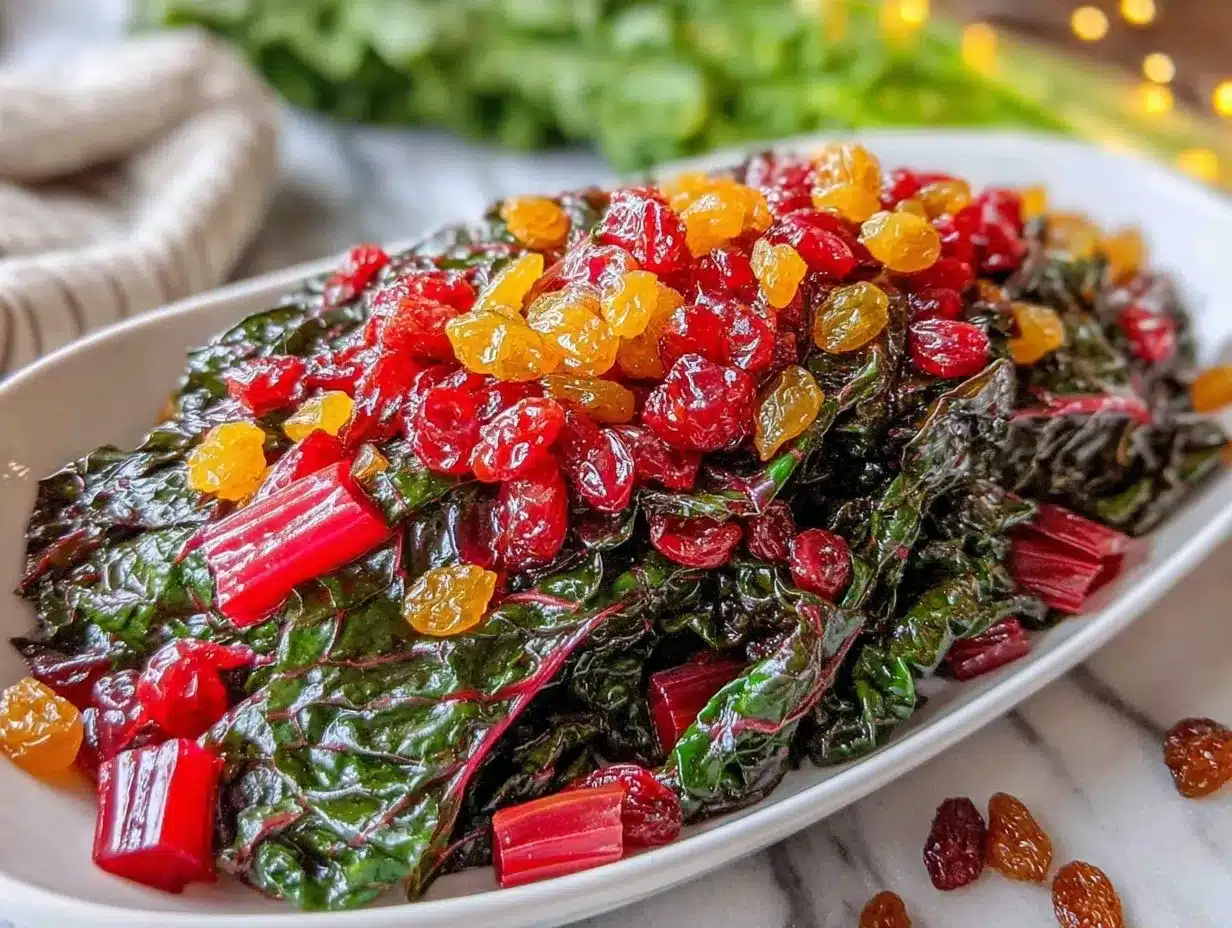
Ready to make Swiss chard sautéed with raisins and pine nuts? Here’s the step-by-step rundown, complete with exact measurements and my favorite efficiency tricks.
-
Prep the chard: Wash the Swiss chard thoroughly, then shake or spin dry.
Separate the stems from the leaves. Chop stems into 1/2-inch (1 cm) pieces and slice leaves into 1-inch (2.5 cm) ribbons.
Tip: Chard stems take longer to cook than leaves, so keep them apart. -
Toast pine nuts: Heat a small dry skillet over medium-low. Add pine nuts and toast, stirring often, until golden and fragrant (about 2-3 minutes). Immediately transfer to a plate to cool.
Warning: Pine nuts go from toasted to burnt in seconds—don’t walk away! -
Sauté aromatics: In a large skillet, heat 2 tablespoons (30 ml) olive oil over medium heat. Add minced garlic and cook until just fragrant and barely golden (about 30-45 seconds).
Note: Don’t let garlic brown—it turns bitter fast. -
Add chard stems: Toss in the chopped chard stems. Sauté for 2-3 minutes until slightly softened and starting to turn translucent.
Sensory cue: Stems should be bright in color, not mushy. -
Add chard leaves: Add sliced chard leaves to the pan. Sprinkle with 1/2 teaspoon salt and 1/4 teaspoon black pepper. Stir gently to coat with oil. Cover (or use a lid or foil) and cook for 3-4 minutes, stirring once, until leaves are wilted and tender but still vibrant green.
Tip: If your pan looks dry, add an extra drizzle of olive oil. -
Add raisins: Uncover and scatter 1/4 cup (40 g) golden raisins over the chard. Stir and cook for 1-2 minutes, until raisins plump and soften.
Note: The steam helps the raisins get juicy—don’t skip the lid! -
Finish with vinegar: Drizzle 1 tablespoon (15 ml) red wine vinegar over the mixture. Stir well and cook for another 30 seconds, just until the vinegar sizzles and lifts the flavors.
Sensory cue: You’ll smell a fresh, tangy aroma. -
Fold in pine nuts: Sprinkle toasted pine nuts over the sautéed chard and gently toss.
Tip: Save a few pine nuts for garnish if you’re feeling fancy. -
Adjust & serve: Taste and adjust seasoning with more salt or pepper if needed. Serve warm, optionally topped with grated Parmesan or a pinch of red pepper flakes.
Efficiency tip: While the chard cooks, set the table or prep your main dish!
If your chard ever turns soggy, it’s usually from overcooking or crowding the pan—use a big skillet and don’t be afraid to cook in batches. And if the raisins aren’t plumping, add a splash of water and cover for another minute. This recipe really is dangerously easy, but even the best cooks have their “oops” moments!
Cooking Tips & Techniques
I’ve made Swiss chard sautéed with raisins and pine nuts more times than I can count, and these little tricks make a big difference:
- Don’t crowd the pan: Chard needs room to wilt evenly. If doubling, use two pans or work in batches.
- Toast pine nuts slowly: Medium-low heat is key—pine nuts burn at the speed of light. Stir constantly and remove from heat as soon as they’re golden.
- Add stems first: Chard stems are sturdy and need a head start. Mixing them with leaves too soon leads to uneven texture.
- Keep garlic pale: Overcooked garlic is bitter. I’ve learned this the hard way—watch it like a hawk!
- Use a lid: A quick cover after adding the leaves traps steam, helping chard wilt gently and raisins plump up.
- Brighten with acid: Vinegar or lemon juice right at the end makes the flavors pop. Don’t add too early or it’ll evaporate before it works its magic.
Common mistakes? Overcooking the chard (it turns brown and mushy), burning the pine nuts (trust me, it happens in seconds), or forgetting to season as you go. I’ve had my share of “oops, forgot the raisins” moments—just toss them in late and let them steam for a minute. For multitasking, toast your pine nuts while prepping the chard and garlic. And for consistent results, measure your oil and vinegar instead of eyeballing—it’s easy to go overboard in the excitement!
One last tip: If you want extra flavor, finish with a splash of good olive oil right before serving. It’s my secret touch for restaurant-style richness at home.
Variations & Adaptations
Swiss chard sautéed with raisins and pine nuts is wonderfully flexible. Here are some favorite twists I’ve tried over the years:
- Vegan and Nut-Free: Skip the Parmesan and swap pine nuts for roasted sunflower seeds or pumpkin seeds. You still get crunch without the nuts.
- Seasonal Additions: Toss in dried cranberries in autumn for a tart twist, or add fresh cherry tomatoes in summer for a juicy pop of color.
- Spicy Version: Stir in 1/4 teaspoon crushed red pepper flakes with the garlic for gentle heat, or top with chili oil for a bolder kick.
Different cooking methods? You can roast the chard stems separately for extra caramelization, or try grilling the leaves for a smoky flavor before tossing everything together. If you prefer a richer finish, add a knob of butter at the end (not exactly traditional, but oh-so-delicious). For those watching carbs, skip the raisins and add chopped olives for a briny, savory twist.
I once swapped out Swiss chard for beet greens when my garden was overflowing—worked like a charm! And if you’re craving Mediterranean flavors, a sprinkle of za’atar or sumac is a fun way to jazz things up. The best part? This recipe is a blank canvas. Mix and match until you find your personal favorite!
Serving & Storage Suggestions
Swiss chard sautéed with raisins and pine nuts is best served warm, straight from the skillet. I love presenting it in a wide, shallow bowl so the colors pop (hello, Pinterest!). Sprinkle with reserved pine nuts and a grating of Parmesan for a little extra flair.
This dish pairs beautifully with roasted chicken, grilled salmon, or even a simple bowl of pasta. For brunch, serve alongside poached eggs and crusty sourdough. If you want to make it a meal, pile it over cooked farro, quinoa, or rice for a hearty vegetarian bowl.
Storage is easy—let leftovers cool, then pack into an airtight container. It keeps well in the fridge for up to 3 days. To reheat, gently warm in a skillet over low heat with a splash of water or olive oil to refresh the greens. You can freeze for up to 2 months, but the chard may lose a bit of texture. (Honestly, it’s so good fresh, you might not have leftovers!) The flavors deepen overnight, so don’t be surprised if it tastes even better the next day.
Nutritional Information & Benefits
This recipe is as nourishing as it is tasty. Swiss chard is loaded with vitamins A, C, and K, plus magnesium and fiber—all good stuff for bone health and energy. Pine nuts offer heart-healthy fats and a dose of protein, while golden raisins provide natural sweetness and iron.
Each serving (about 1 cup) clocks in at roughly 180 calories, with 3 grams of protein, 8 grams of fat, 25 grams of carbs, and 5 grams of fiber. It’s naturally gluten-free, vegetarian, and easily vegan if you skip the cheese. Allergens? Pine nuts are tree nuts, so swap for seeds if needed. I love that it’s a veggie-packed side that feels indulgent, but leaves you feeling light and happy.
From my own wellness journey, I’ve found adding leafy greens like Swiss chard to my meals just makes me feel better—more energy, less sluggishness, and, well, fewer cravings for junk food. This recipe is proof that healthy doesn’t have to be boring!
Conclusion
Swiss chard sautéed with raisins and pine nuts truly deserves a spot in your recipe rotation. It’s simple, beautiful, and packs so much flavor into every bite. Whether you’re cooking for a crowd or just for yourself, you’ll love how quick and easy it is—plus, it’s a surefire way to get more greens onto your plate.
Don’t be afraid to tweak the recipe to suit your pantry or your taste buds. That’s the joy of home cooking! For me, this dish is all about comfort and connection—sharing a tried-and-true family favorite that’s stood the test of time. I hope it brings a little warmth and joy to your kitchen too.
If you try this Swiss chard sautéed with raisins and pine nuts, let me know how it goes in the comments below—or tag me on Pinterest so I can see your beautiful creations! Happy cooking, and here’s to more delicious, easy veggie sides you’ll actually crave.
Frequently Asked Questions
How do I keep Swiss chard from turning soggy?
Don’t overcook! Sauté the stems first, then add leaves just until wilted. Use a big pan so the greens aren’t crowded.
Can I use regular raisins instead of golden?
Absolutely. Regular raisins work fine, though golden have a milder flavor and prettier color. Dried cranberries are another tasty option.
What’s the best substitute for pine nuts?
Try slivered almonds, chopped walnuts, or roasted sunflower seeds. They add crunch without breaking the bank.
Can I make this ahead for meal prep?
Yes! Store in an airtight container in the fridge for up to 3 days. Reheat gently in a skillet with a splash of water or oil.
Is Swiss chard sautéed with raisins and pine nuts gluten-free?
Yes, it’s naturally gluten-free. Just double-check any added seasonings or cheese for hidden gluten.
Pin This Recipe!
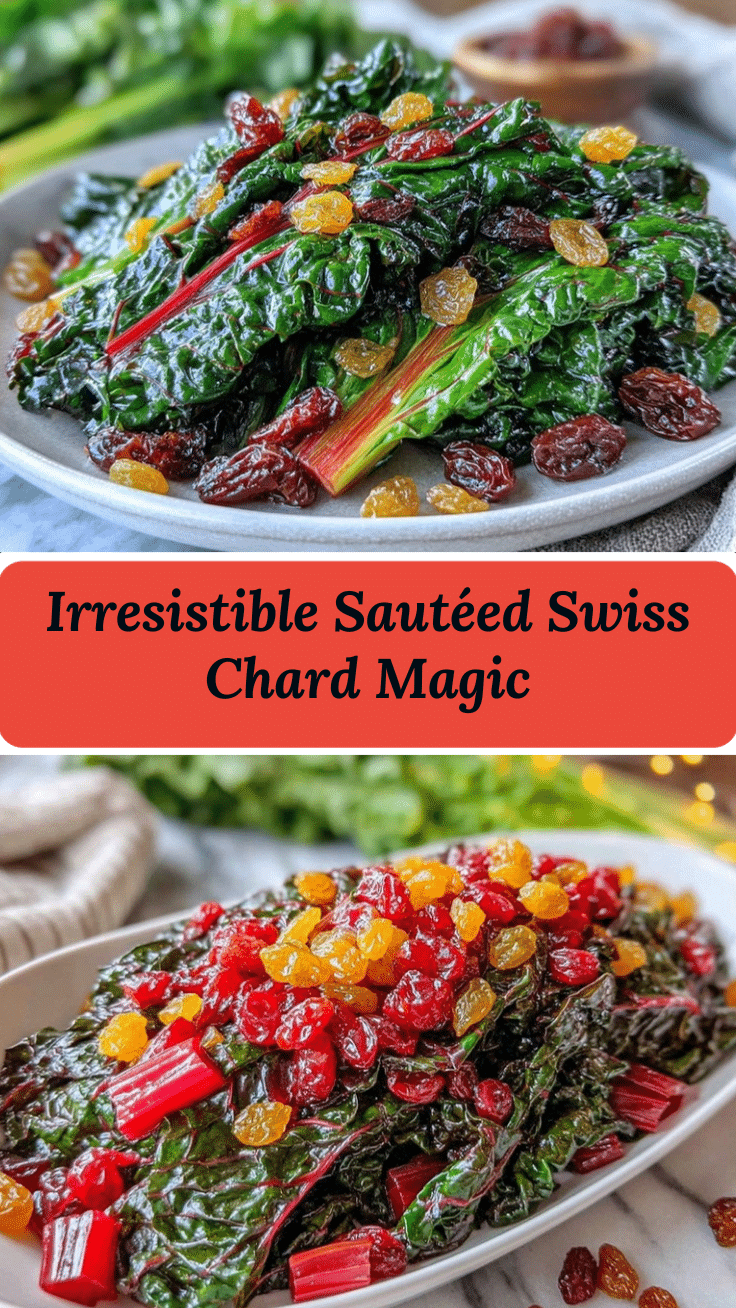
Swiss Chard Sautéed with Raisins and Pine Nuts

This quick and elegant Mediterranean-inspired side dish features tender Swiss chard sautéed with golden raisins and buttery pine nuts, finished with a splash of vinegar for brightness. Ready in 20 minutes, it’s a crowd-pleaser that’s both healthy and comforting.
- Prep Time: 10 minutes
- Cook Time: 10 minutes
- Total Time: 20 minutes
- Yield: 4 servings 1x
- Category: Side Dish
- Cuisine: Mediterranean
Ingredients
- 1 large bunch Swiss chard (about 12 oz), washed and chopped (leaves and stems separated)
- 1/4 cup golden raisins (or regular raisins)
- 1/4 cup pine nuts, lightly toasted
- 2 tablespoons extra virgin olive oil
- 2 large cloves garlic, minced
- 1 tablespoon red wine vinegar (or lemon juice)
- 1/2 teaspoon salt (or to taste)
- 1/4 teaspoon freshly ground black pepper
- Pinch crushed red pepper flakes (optional)
- Grated Parmesan cheese, for serving (optional)
Instructions
- Wash Swiss chard thoroughly and dry. Separate stems from leaves. Chop stems into 1/2-inch pieces and slice leaves into 1-inch ribbons.
- Heat a small dry skillet over medium-low. Add pine nuts and toast, stirring often, until golden and fragrant (2-3 minutes). Transfer to a plate to cool.
- In a large skillet, heat olive oil over medium heat. Add minced garlic and cook until just fragrant and barely golden (30-45 seconds).
- Add chopped chard stems and sauté for 2-3 minutes until slightly softened and starting to turn translucent.
- Add sliced chard leaves to the pan. Sprinkle with salt and pepper. Stir gently to coat with oil. Cover and cook for 3-4 minutes, stirring once, until leaves are wilted and tender but still vibrant green.
- Uncover and scatter golden raisins over the chard. Stir and cook for 1-2 minutes, until raisins plump and soften.
- Drizzle red wine vinegar over the mixture. Stir well and cook for another 30 seconds, just until the vinegar sizzles and lifts the flavors.
- Sprinkle toasted pine nuts over the sautéed chard and gently toss.
- Taste and adjust seasoning with more salt or pepper if needed. Serve warm, optionally topped with grated Parmesan or a pinch of red pepper flakes.
Notes
For vegan, skip Parmesan cheese. Substitute pine nuts with sunflower or pumpkin seeds for nut-free. Don’t overcook chard to avoid sogginess. Toast pine nuts carefully—they burn quickly. Use a lid to help wilt greens and plump raisins. Finish with a splash of olive oil for extra richness.
Nutrition
- Serving Size: About 1 cup per serv
- Calories: 180
- Sugar: 12
- Sodium: 350
- Fat: 8
- Saturated Fat: 1
- Carbohydrates: 25
- Fiber: 5
- Protein: 3
Keywords: Swiss chard, sautéed greens, Mediterranean side, vegetarian, gluten-free, easy vegetable recipe, pine nuts, raisins, healthy side dish