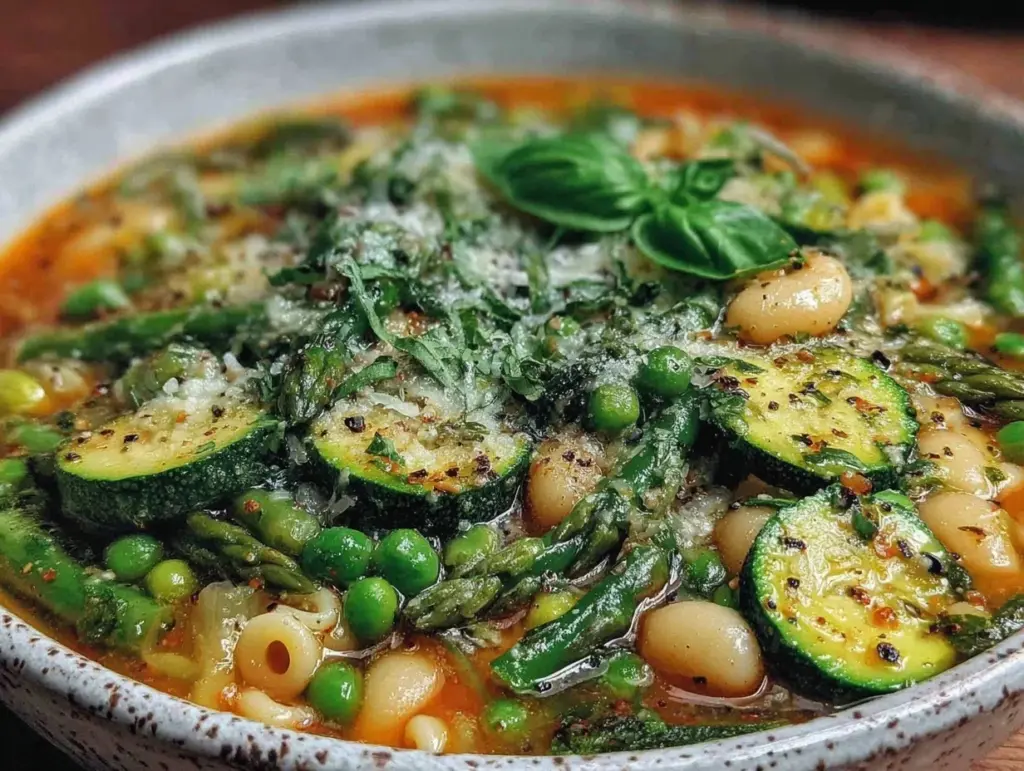
Let me tell you, when the aroma of simmering spring vegetables like tender asparagus, sweet peas, and vibrant spinach fills my kitchen, it’s pure happiness. The scent is grassy and lively—almost like opening a window to the garden after a long winter. The first time I ladled out this spring green minestrone soup, the color alone made me stop in my tracks. Pale green broth swirling with flecks of bright herbs, chunky bites of zucchini, and the snap of green beans—honestly, it’s the kind of moment where you pause, take a deep breath, and just smile because you know you’re onto something truly special.
Years ago, when I was knee-high to a grasshopper, my grandma used to make a rustic vegetable soup from whatever she’d picked from her garden that morning. I wanted to capture that feeling—freshness, comfort, and a dash of nostalgia. I stumbled upon this spring green minestrone on a rainy weekend, desperate to use up a bounty of market veggies before they wilted. I wish I’d discovered this trick for “spring cleaning” my crisper drawer ages ago!
My family couldn’t stop sneaking spoonfuls off the stove (and I can’t really blame them). The soup disappeared before it even cooled, with everyone asking for seconds. It’s become a staple for family gatherings and gifting jars to friends—because, let’s face it, a bowl of spring green minestrone soup is basically a warm hug. This recipe is dangerously easy and provides pure, nostalgic comfort. Perfect for potlucks, a sweet treat for your kids after a soccer game, or just to brighten up your Pinterest board with its gorgeous, fresh colors.
I’ve tested it more times than I can count in the name of research, of course. It hits all the right notes—fresh, hearty, and so satisfying that you’re going to want to bookmark this one. Trust me, it’s a keeper for anyone craving a taste of spring.
Why You’ll Love This Spring Green Minestrone Soup Recipe
You know what, after years of cooking and recipe testing, I can say with confidence that this spring green minestrone soup is one of those rare finds that checks all the boxes. Whether you’re a busy parent, someone watching their health, or just craving bold, garden-fresh flavor, this soup has you covered. Here’s why you’ll fall head over heels for it:
- Quick & Easy: Comes together in under 45 minutes—ideal for busy weeknights or when you need dinner in a flash.
- Simple Ingredients: No fancy grocery trips required. Most of the veggies are easy to find, and you probably have the pantry basics already.
- Perfect for Spring: Packed with seasonal vegetables at their peak, making it the ultimate recipe for spring produce.
- Crowd-Pleaser: Kids love the mild, sweet flavor and vibrant colors, while adults appreciate the light, healthy vibe. It’s always a hit at potlucks or family dinners.
- Unbelievably Delicious: The combo of fresh herbs, lemon zest, and a splash of olive oil gives this soup a bright, zingy finish that’s next-level comfort food.
This isn’t just another veggie soup. What sets it apart is layering the vegetables so each stays crisp and colorful, instead of getting mushy. Honestly, the technique of adding peas and spinach right at the end makes all the difference. If you want a little extra creaminess, you can blend a scoop of cannellini beans and stir it in for a super silky broth—my own little twist!
Spring green minestrone soup is comfort food reimagined—lighter, fresher, and still soul-soothing. It’s the kind that makes you close your eyes after the first bite. Whether you’re impressing guests or just turning an ordinary weeknight into something memorable, this soup delivers every time. And hey, if you love recipes that are as beautiful as they are delicious, this one’s a showstopper for your Pinterest board.
What Ingredients You Will Need
This soup uses simple, wholesome ingredients to deliver bold flavor and satisfying texture without the fuss. Everything comes together in one pot—no complicated prep, just easy seasonal produce and a few pantry staples. Don’t worry if you need to swap something out; this recipe is super forgiving.
- Olive oil (extra virgin preferred, for that fresh, peppery flavor)
- Leek (white and light green parts, thinly sliced; gives a mellow onion base)
- Garlic cloves (minced; I go with 3-4 for a punchy aroma)
- Celery stalks (diced; adds crunch and earthy flavor)
- Zucchini (medium, cut into half-moons; I like the tender bite it adds)
- Asparagus (trimmed and cut into 1-inch pieces; choose thin stalks for quick cooking)
- Green beans (ends trimmed and cut into 1-inch pieces; for snap and texture)
- Frozen or fresh peas (about 1 cup; sweet and poppy)
- Baby spinach (about 2 cups, roughly chopped; wilts down nicely)
- Cannellini beans (one 15oz / 400g can, drained and rinsed; adds creaminess and protein)
- Vegetable broth (about 6 cups / 1.4 liters; use homemade or low-sodium store-bought for best flavor)
- Pasta (small shapes like ditalini or orzo, 1 cup / 90g; optional but classic in minestrone)
- Fresh parsley (finely chopped; for garnish and fresh flavor)
- Fresh basil (torn; optional, but adds a summery note)
- Lemon zest (from 1 lemon; brightens everything up)
- Salt and pepper (to taste; I recommend sea salt for best results)
- Grated Parmesan cheese (for serving; optional, skip for vegan)
If you need to swap, go for what’s in season or in your fridge—try sugar snap peas, baby kale, or even shredded spring cabbage. For gluten-free, use chickpea pasta or skip it altogether. I like using [Bob’s Red Mill] small pasta shapes for a hearty texture.
For vegan or dairy-free, just leave off the Parmesan, or sprinkle with nutritional yeast instead. If you want even more protein, toss in cooked lentils or tofu cubes at the end. The best part? You can make this soup with whatever green veggies look best at the market. In summer, swap in fresh corn and yellow squash. You get the picture—this soup is as flexible as you need it to be!
Equipment Needed
- Large soup pot or Dutch oven (at least 5-quart / 4.7L capacity; heavier pots retain heat better)
- Chef’s knife (for slicing veggies; I prefer a sturdy 8-inch blade)
- Cutting board (wood or plastic, whatever you’ve got)
- Wooden spoon or spatula (for stirring; wood won’t scratch your pot)
- Measuring cups & spoons (essential for accuracy—don’t eyeball the pasta, trust me)
- Microplane or fine grater (for zesting lemon and Parmesan)
- Ladle (for serving, obviously!)
If you don’t have a Dutch oven, a regular large pot works just fine. I’ve made this soup in everything from a thrift store stockpot to a fancy enameled Dutch oven, and it turns out great every time. For budget-friendly options, check out supermarket kitchen aisles—no need for anything fancy. Just keep your knives sharp for easier dicing (I learned that the hard way after hacking through asparagus with a dull blade—never again!). For maintenance, run your wooden spoon under hot water and let it air dry; this keeps it from absorbing odors. Use what you have—this soup is all about making things simple.
Preparation Method
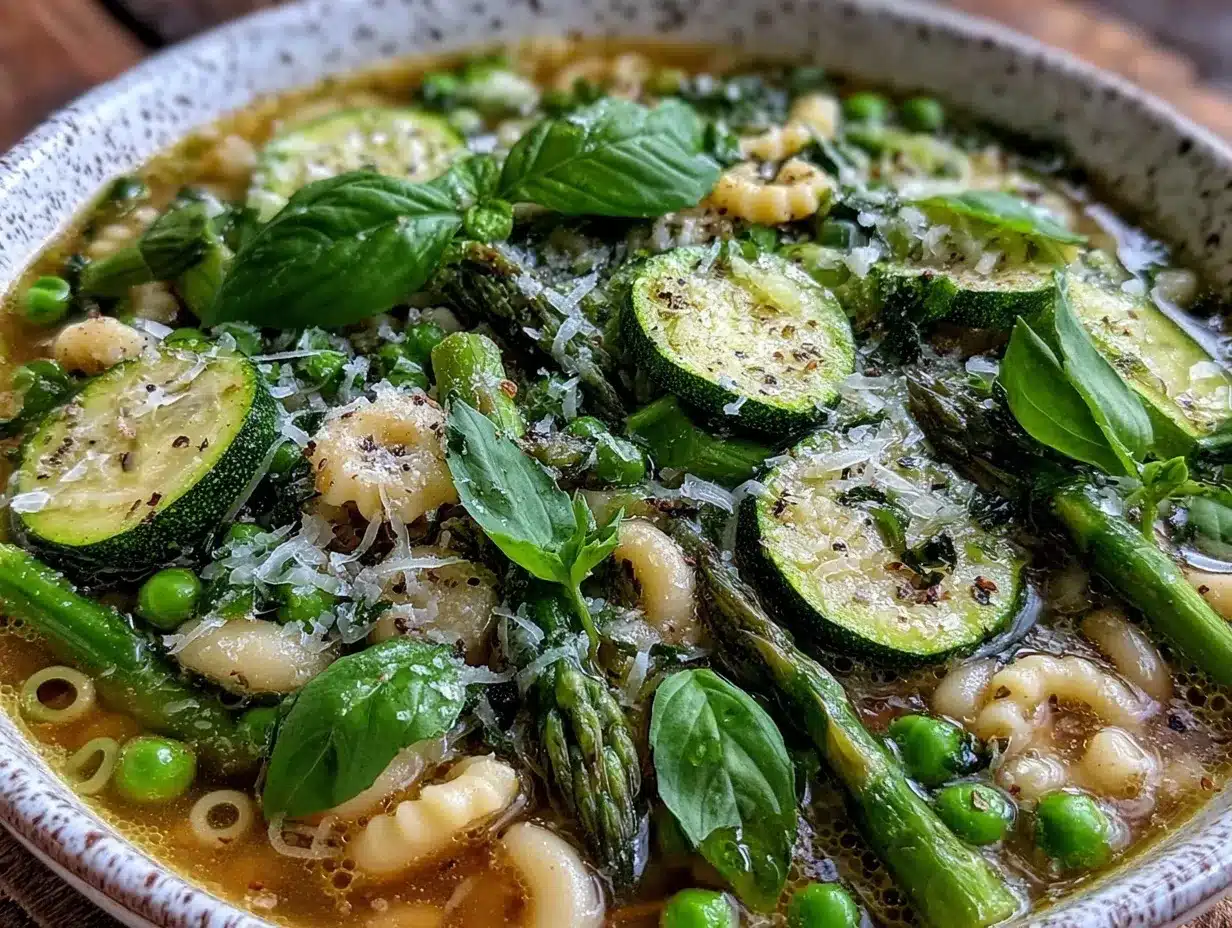
- Prep the veggies: Wash and trim all vegetables. Slice the leek (white and light green parts), chop celery, halve zucchini, trim asparagus and green beans into 1-inch pieces, roughly chop the spinach. Mince the garlic. (Takes about 10 minutes. Make sure to keep the spinach aside for later.)
- Start the base: Heat 2 tablespoons of olive oil in your soup pot over medium heat. Add sliced leek and celery, and sauté until softened and fragrant—about 5 minutes. Stir in the garlic and cook for another minute, until just golden but not burnt. (If you notice browning, lower the heat. The base sets the soup’s flavor!)
- Add heartier veggies: Toss in zucchini, asparagus, and green beans. Sauté for 3-4 minutes until they brighten in color but stay crisp. Sprinkle with a pinch of salt and pepper. (Don’t overcook; you want them to hold their shape.)
- Add broth and beans: Pour in 6 cups (1.4 liters) vegetable broth and the drained cannellini beans. Bring to a gentle boil, then reduce heat to a simmer. Cook for 10 minutes, partially covered. (If you like a creamier broth, blend one cup of beans with a ladle of broth and stir back in.)
- Add pasta: Stir in 1 cup (90g) small pasta shapes. Simmer uncovered for 7-8 minutes, or until the pasta is just tender. (If you’re using gluten-free pasta, check early. It can get mushy fast.)
- Finish with greens: Add peas and chopped spinach. Simmer for just 2-3 minutes, until spinach wilts and peas are vibrant green. (This is my favorite part—the soup goes from pale to bright green in seconds!)
- Season and brighten: Stir in lemon zest, half the parsley, and torn basil leaves if using. Taste and adjust salt and pepper. (Don’t skimp on the lemon zest—it makes everything zingy and fresh.)
- Serve: Ladle hot soup into bowls. Garnish with grated Parmesan, remaining parsley, and black pepper. (Optional: drizzle with a little extra olive oil for richness).
If your pasta drinks up too much broth, add a splash of water before serving. For meal prep, let the soup cool before storing. If you run into limp veggies, next time add them later in the cooking process. You want everything to taste springy and fresh!
Cooking Tips & Techniques
After making spring green minestrone soup more times than I’d like to admit, here are my tried-and-true tips for getting it just right:
- Layer your veggies: Start with sturdy vegetables like leeks and celery for flavor, then add zucchini, asparagus, and green beans so they stay crisp. Softer greens and peas go in last for maximum color and texture.
- Don’t overcook the pasta: Small shapes cook quickly—sometimes even faster than the package says. Test a noodle early so you don’t end up with mushy soup. If you’re meal prepping, consider cooking the pasta separately and adding it before serving.
- Taste as you go: The flavor of your broth and veggies can vary. Don’t be shy about adjusting salt, pepper, and lemon zest at the end. I learned the hard way that bland soup just won’t cut it—don’t be afraid to punch it up a notch!
- Use fresh herbs: Parsley and basil add freshness. If you only have dried, use half the amount, but fresh is always best for that garden flavor.
- Common mistakes: Adding all vegetables at once. Trust me, spinach and peas only need a couple of minutes. If they go in too early, they’ll lose their pop.
- Timing & multitasking: While the broth simmers, wash and chop your greens and herbs. It keeps things moving and saves you from scrambling at the last minute.
- Consistency: If you want a thicker soup, blend a scoop of beans with broth, or toss in extra pasta. For a lighter version, use more broth and less pasta.
Honestly, my first attempt ended with limp spinach and soggy pasta—live and learn! Just keep a close eye and don’t rush the layering. With these tips, your spring green minestrone will be fresh and full of vibrant flavor every time.
Variations & Adaptations
The beauty of spring green minestrone soup is how easy it is to adapt. Here are a few favorite variations:
- Gluten-free: Use chickpea or lentil pasta, or skip the pasta and add cooked rice or quinoa instead. Works great for anyone avoiding gluten.
- Vegan: Skip the Parmesan and finish with nutritional yeast or a sprinkle of toasted pine nuts. You won’t miss the cheese!
- Low-carb: Swap out pasta for spiralized zucchini or extra beans. Still hearty, but lighter on carbs.
- Seasonal swaps: In summer, add corn kernels and yellow squash. In early spring, use baby kale or ramps. For autumn, toss in diced sweet potato or carrots.
- Protein boost: Stir in shredded rotisserie chicken, cooked lentils, or tofu cubes at the end for a more substantial meal.
- Flavor twist: Add a spoonful of pesto or a dash of chili flakes for a spicy kick.
Personally, I love a version with lemony kale and a swirl of pesto—so good on chilly nights. If you’re cooking for different tastes, let everyone garnish their own bowl with cheese, herbs, or a splash of hot sauce. The soup adapts to whatever you have and whoever’s at the table. That’s what makes it such a favorite in my house!
Serving & Storage Suggestions
Spring green minestrone soup is best served hot—right off the stove, with a generous sprinkle of fresh herbs and grated Parmesan. If you’re making it for a party, ladle into wide bowls so everyone can see those gorgeous colors. Pair it with crusty bread, a simple salad, or even a cheese board for a complete meal.
For beverages, I like to serve it with sparkling water and a wedge of lemon, or a crisp white wine if it’s a dinner gathering. The soup’s light, zesty flavors go with just about anything.
Storing is easy: Let the soup cool, then transfer to airtight containers. It’ll keep in the fridge for up to 4 days. For longer storage, freeze without the pasta (it can get mushy)—just add fresh pasta when reheating. To reheat, warm gently over medium heat, adding a splash of broth or water if it looks thick. The flavors actually deepen after a day in the fridge, making leftovers even tastier!
If you’re packing for lunch, fill a thermos and tuck in a wedge of lemon and a little cheese on the side. The soup travels well, and honestly, it just gets better with time.
Nutritional Information & Benefits
Each bowl of spring green minestrone soup is brimming with vitamins, fiber, and lean protein. You get roughly 220 calories per serving, with about 8g protein, 6g fiber, and only 2g saturated fat (without cheese).
- Vegetables: Asparagus, spinach, peas, and zucchini provide folate, potassium, and antioxidants.
- Cannellini beans: Add protein, iron, and creamy texture.
- Olive oil: Heart-healthy fats and a little vitamin E.
This soup is naturally vegetarian and easily made vegan. It’s gluten-free if you swap in lentil or rice pasta. Just watch for allergens like Parmesan (dairy) and pasta (wheat). If you’re watching sodium, use homemade or low-salt broth.
From a wellness perspective, I love how this soup packs in greens and fiber without feeling heavy. It’s perfect for spring resets, healthy eating goals, or anyone wanting a tasty way to eat more veggies. Eating the rainbow never tasted better!
Conclusion
If you’re looking for a fresh, easy way to welcome spring at your table, spring green minestrone soup is absolutely worth a try. It’s bright, hearty, and loaded with the best seasonal veggies. The recipe is a blank canvas—customize it with your favorite greens, swap out the pasta, or add extra protein for a filling meal. I genuinely love how this soup makes any evening feel special, with minimal effort and maximum flavor.
Give it a shot, and don’t be afraid to put your own twist on it. Comment below if you’ve tried it, share your favorite veggie swaps, or show off your beautiful soup bowls on Pinterest! I’m always excited to hear how others make this recipe their own. And remember, every bowl is a little taste of spring—warm, comforting, and so vibrant you’ll want to make it again and again.
Frequently Asked Questions
Can I make spring green minestrone soup ahead of time?
Absolutely! The flavors actually get better after a day in the fridge. Just keep the pasta separate and add it when reheating to avoid mushiness.
What can I use instead of cannellini beans?
Great northern beans, navy beans, or even chickpeas work well. Use whatever you have on hand—the soup is forgiving!
Is this recipe vegan?
It’s vegetarian as written, and easily made vegan by skipping the Parmesan cheese or using nutritional yeast instead.
Can I freeze spring green minestrone soup?
Yes! Freeze without the pasta for best texture. When you’re ready to eat, thaw, reheat, and add fresh cooked pasta.
How do I make the soup gluten-free?
Simply use gluten-free pasta, like rice or lentil varieties, or leave out the pasta and add cooked quinoa or rice instead.
Pin This Recipe!
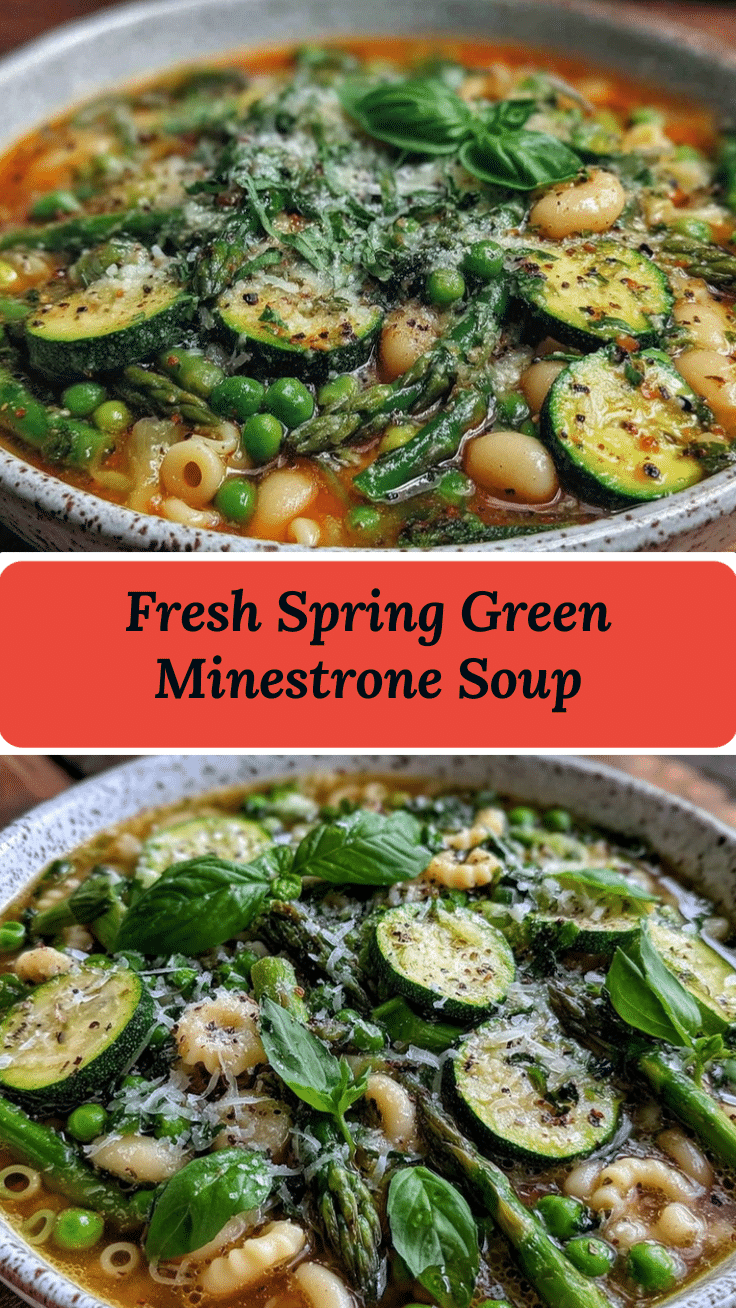
Spring Green Minestrone Soup

A vibrant, comforting soup packed with fresh spring vegetables like asparagus, peas, spinach, and zucchini, simmered in a light broth with cannellini beans and pasta. This easy one-pot recipe is perfect for busy weeknights, potlucks, or a healthy family meal.
- Prep Time: 15 minutes
- Cook Time: 30 minutes
- Total Time: 45 minutes
- Yield: 6 servings 1x
- Category: Soup
- Cuisine: Italian
Ingredients
- 2 tablespoons extra virgin olive oil
- 1 leek (white and light green parts, thinly sliced)
- 3–4 garlic cloves, minced
- 2 celery stalks, diced
- 1 medium zucchini, cut into half-moons
- 1 bunch asparagus (about 1 lb), trimmed and cut into 1-inch pieces
- 1 cup green beans, trimmed and cut into 1-inch pieces
- 1 cup frozen or fresh peas
- 2 cups baby spinach, roughly chopped
- 1 (15 oz) can cannellini beans, drained and rinsed
- 6 cups vegetable broth (homemade or low-sodium)
- 1 cup small pasta shapes (ditalini or orzo; optional)
- 1/4 cup fresh parsley, finely chopped (plus more for garnish)
- 1/4 cup fresh basil, torn (optional)
- Zest of 1 lemon
- Salt and pepper to taste
- Grated Parmesan cheese for serving (optional, skip for vegan)
Instructions
- Wash and trim all vegetables. Slice leek, chop celery, halve zucchini, trim asparagus and green beans into 1-inch pieces, roughly chop spinach, and mince garlic. Set spinach aside for later.
- Heat olive oil in a large soup pot over medium heat. Add leek and celery, sauté until softened and fragrant (about 5 minutes). Stir in garlic and cook for 1 minute until just golden.
- Add zucchini, asparagus, and green beans. Sauté for 3-4 minutes until bright in color but still crisp. Season with salt and pepper.
- Pour in vegetable broth and add cannellini beans. Bring to a gentle boil, then reduce heat to a simmer. Cook partially covered for 10 minutes. (Optional: blend 1 cup beans with a ladle of broth for a creamier soup and stir back in.)
- Stir in pasta and simmer uncovered for 7-8 minutes, or until pasta is just tender.
- Add peas and chopped spinach. Simmer for 2-3 minutes until spinach wilts and peas are vibrant green.
- Stir in lemon zest, half the parsley, and torn basil if using. Taste and adjust salt and pepper.
- Ladle hot soup into bowls. Garnish with grated Parmesan, remaining parsley, and black pepper. (Optional: drizzle with extra olive oil.)
Notes
Layer vegetables for best texture—add sturdy veggies first, greens and peas last. For vegan, skip Parmesan or use nutritional yeast. For gluten-free, use lentil or rice pasta, or omit pasta. If prepping ahead, store pasta separately to avoid mushiness. Add a splash of water if soup thickens after storing. Customize with seasonal veggies or extra protein like lentils or tofu.
Nutrition
- Serving Size: 1 generous bowl (abo
- Calories: 220
- Sugar: 6
- Sodium: 650
- Fat: 7
- Saturated Fat: 2
- Carbohydrates: 32
- Fiber: 6
- Protein: 8
Keywords: spring minestrone, green minestrone, vegetable soup, healthy soup, vegetarian soup, easy minestrone, spring soup, seasonal vegetables, one-pot soup, gluten-free minestrone, vegan minestrone