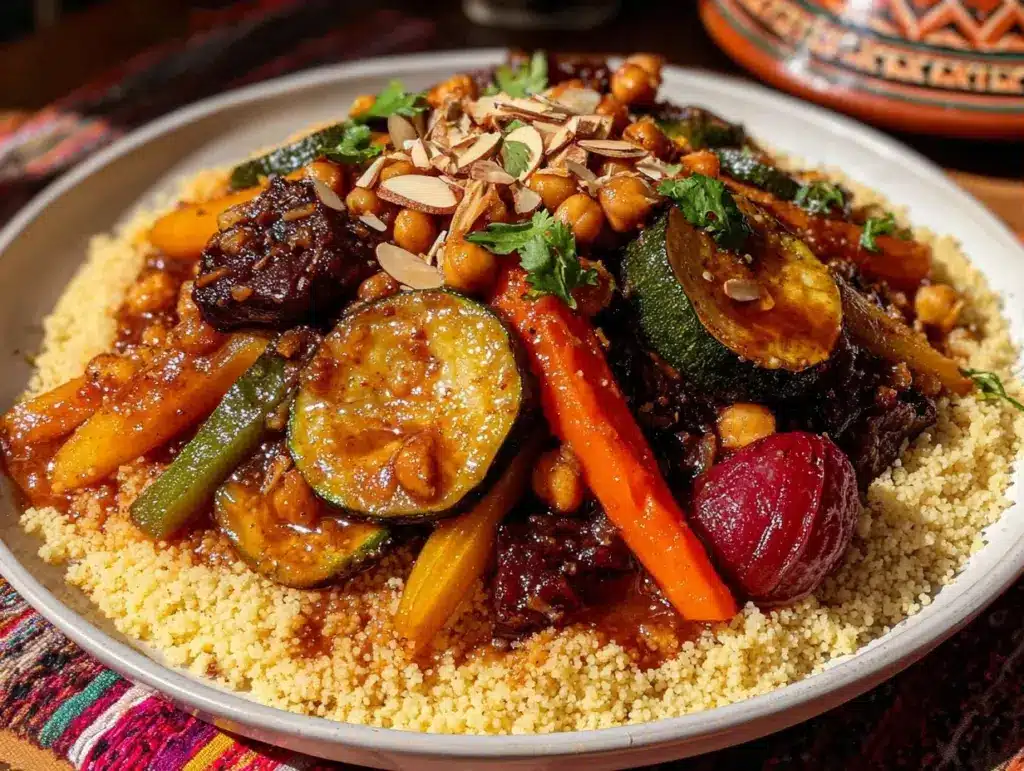
There’s something absolutely magical about the aroma of Moroccan couscous with seven vegetables bubbling away on the stove – it’s a heady mix of sweet carrots, peppery turnips, and warm spices that wrap the whole kitchen in a comforting hug. The first time I made this recipe, the steam filled the air with the scent of turmeric and cinnamon, and I stopped mid-stir, spoon in hand, just soaking it in. That was a moment, you know? The kind where you pause, smile, and realize you’ve stumbled onto something worth savoring.
This dish holds a special place in my heart, partly because it’s tied to family memories (my grandma used to make a version of this every Friday when I was knee-high to a grasshopper), and partly because it’s the sort of recipe that brings everyone together. I first tasted authentic Moroccan couscous at a bustling street market – big platters piled high, the veggies glistening under the sun, and vendors calling out their secret blends of ras el hanout. I was instantly hooked, wishing I’d discovered this wholesome comfort years ago.
When I finally tried it at home, my family couldn’t stop sneaking spoonfuls straight from the pot (honestly, I can’t blame them). It’s become a staple for family dinners, potlucks, and even gifting a batch to friends during Ramadan. Let’s face it – this is dangerously easy to make, packed with pure, nostalgic comfort. Whether you’re looking to brighten up your Pinterest board or need a vibrant centerpiece for a weeknight dinner, Moroccan couscous with seven vegetables delivers every time. I’ve tested it over and over (in the name of research, of course), and it never fails to feel like a warm hug. You’re going to want to bookmark this one!
Why You’ll Love This Moroccan Couscous with Seven Vegetables
After dozens of batches and tweaking every little detail, I can honestly say this Moroccan couscous is more than just a recipe – it’s an experience. Here’s why you’re going to fall head over heels for it:
- Quick & Easy: Comes together in under 45 minutes, which is perfect for those nights when you want something vibrant but don’t have hours to spare.
- Simple Ingredients: No need for a trip to a specialty store – most of these veggies and spices are already in your pantry or fridge.
- Perfect for Gatherings: Honestly, this couscous is a total showstopper for potlucks, holiday feasts, or even a cozy Sunday dinner.
- Crowd-Pleaser: Kids love the soft, fluffy couscous, adults appreciate the rich flavors – there’s something for everyone here.
- Unbelievably Delicious: The combination of sweet, earthy, and zesty flavors is pure comfort food, but with a wholesome twist that feels good.
What sets this recipe apart from the rest? For starters, I use a special technique to steam the couscous three times, which makes it extra light and fluffy (trust me, you won’t want to skip this step). The veggies are simmered in a fragrant broth laced with ras el hanout and saffron, giving each bite a burst of flavor. It’s not just another couscous recipe – it’s the best version I’ve ever tasted, and I’ve made a lot of couscous over the years!
This isn’t just about taste – it’s about nostalgia, tradition, and the magic of sharing a meal that feels both nourishing and celebratory. It’s healthy, fast, yet still full of soul-soothing comfort. Whether you’re aiming to impress guests or just want to turn a simple weeknight into something memorable, Moroccan couscous with seven vegetables has you covered.
What Ingredients You Will Need
This recipe uses fresh, wholesome ingredients to create a bold, satisfying dish without any hassle. Most of them are pantry staples or easy to pick up at your local market. Here’s what’s going into your pot:
- For the Couscous:
- 2 cups (340g) instant couscous (I recommend using a trusted brand like Roland or RiceSelect for the fluffiest texture)
- 2 tablespoons (30ml) olive oil (extra virgin gives that lovely aroma)
- 1 teaspoon (5g) salt
- 2 ½ cups (600ml) water (or vegetable broth for extra flavor)
- For the Seven Vegetables:
- 2 large carrots, peeled and sliced
- 2 medium zucchini, sliced
- 1 small turnip, peeled and cubed
- 1 medium potato, peeled and cubed
- 1 large tomato, chopped
- 1/2 small cabbage, cut into wedges
- 1 small onion, chopped
- For the Broth & Flavor:
- 2 tablespoons (30g) tomato paste
- 1 teaspoon (2g) ground turmeric
- 1 teaspoon (2g) ground cumin
- 1 teaspoon (2g) ground ginger
- 1 teaspoon (2g) ras el hanout (Moroccan spice blend)
- 1/4 teaspoon (1g) saffron threads (soaked in 2 tablespoons warm water)
- 1/2 teaspoon (1g) black pepper
- 1 teaspoon (5g) salt (more to taste)
- For Garnish/Serving:
- 1/4 cup (30g) fresh cilantro, chopped
- 1/4 cup (30g) fresh parsley, chopped
- Optional: chickpeas, cooked (for added protein)
- Optional: raisins or slivered almonds (for a hint of sweetness and crunch)
If you want to go gluten-free, swap the couscous for cooked millet or quinoa – it works beautifully. For vegan and dairy-free folks, this recipe is already naturally free from animal products. In summer, I’ll sometimes use fresh green beans or sweet potatoes instead of turnips. Honestly, it’s super flexible! If you’re missing an ingredient, don’t stress – it’s the spirit of the dish that matters most.
Equipment Needed
- Large pot or Dutch oven: Essential for simmering the vegetables and broth. I use a heavy-bottomed pot for even heating.
- Steamer basket or couscoussier: Traditional Moroccan couscous is steamed in a couscoussier, but a regular steamer basket over a pot works just fine.
- Mixing bowl: For fluffing the couscous.
- Sharp knife and cutting board: Prepping all those veggies is way easier with a good knife. I’ve tried with dull knives – trust me, don’t.
- Wooden spoon or spatula: For stirring the vegetables and broth.
- Fine mesh sieve: Optional, for rinsing couscous or chickpeas.
- Measuring cups and spoons: For accuracy. I’m notorious for “eyeballing it,” but with couscous, measurements matter!
If you don’t have a couscoussier, don’t sweat it – a regular steamer does the trick. For college kitchens or budget-friendly setups, use a big soup pot and improvise with a metal colander as a steamer. After each use, I rinse my steamer basket well to keep it from picking up lingering flavors. Good tools make all the difference, but this recipe is forgiving – use what you’ve got.
Preparation Method
-
Prep the Vegetables (10 minutes):
Wash, peel, and chop all vegetables into even pieces. This helps them cook at the same rate. I usually go for 1-inch chunks – not too small, not too big. If you’re using chickpeas, rinse and set aside. -
Start the Broth (5 minutes):
Heat 2 tablespoons olive oil in your large pot over medium heat. Add the chopped onion and sauté until soft, about 3 minutes. Stir in tomato paste, turmeric, cumin, ginger, ras el hanout, and saffron water. Sizzle for 1 minute until fragrant. -
Add the Vegetables (5 minutes):
Toss in carrots, turnip, potato, cabbage, zucchini, and tomato. Sprinkle with salt and pepper. Stir to coat the veggies in the spice mixture. -
Simmer (25 minutes):
Pour in 2 ½ cups water (or vegetable broth). Cover and simmer over medium-low heat for 25 minutes, or until veggies are tender but not mushy. Check halfway and stir gently. If liquid runs low, add a splash more water. -
Prepare the Couscous (15 minutes):
Place couscous in a large mixing bowl. Sprinkle with 1 teaspoon salt and drizzle with 2 tablespoons olive oil. Pour 2 cups boiling water over couscous, cover, and let sit for 5 minutes. Fluff gently with a fork, breaking up clumps. -
Steam the Couscous (Traditional Option) (15 minutes):
For extra fluffiness, transfer couscous to a steamer basket and steam over simmering vegetable broth for 10 minutes. Fluff again and steam for 5 more minutes. This step is optional but really elevates the texture. It should feel soft and dry, not sticky. -
Assemble & Serve (5 minutes):
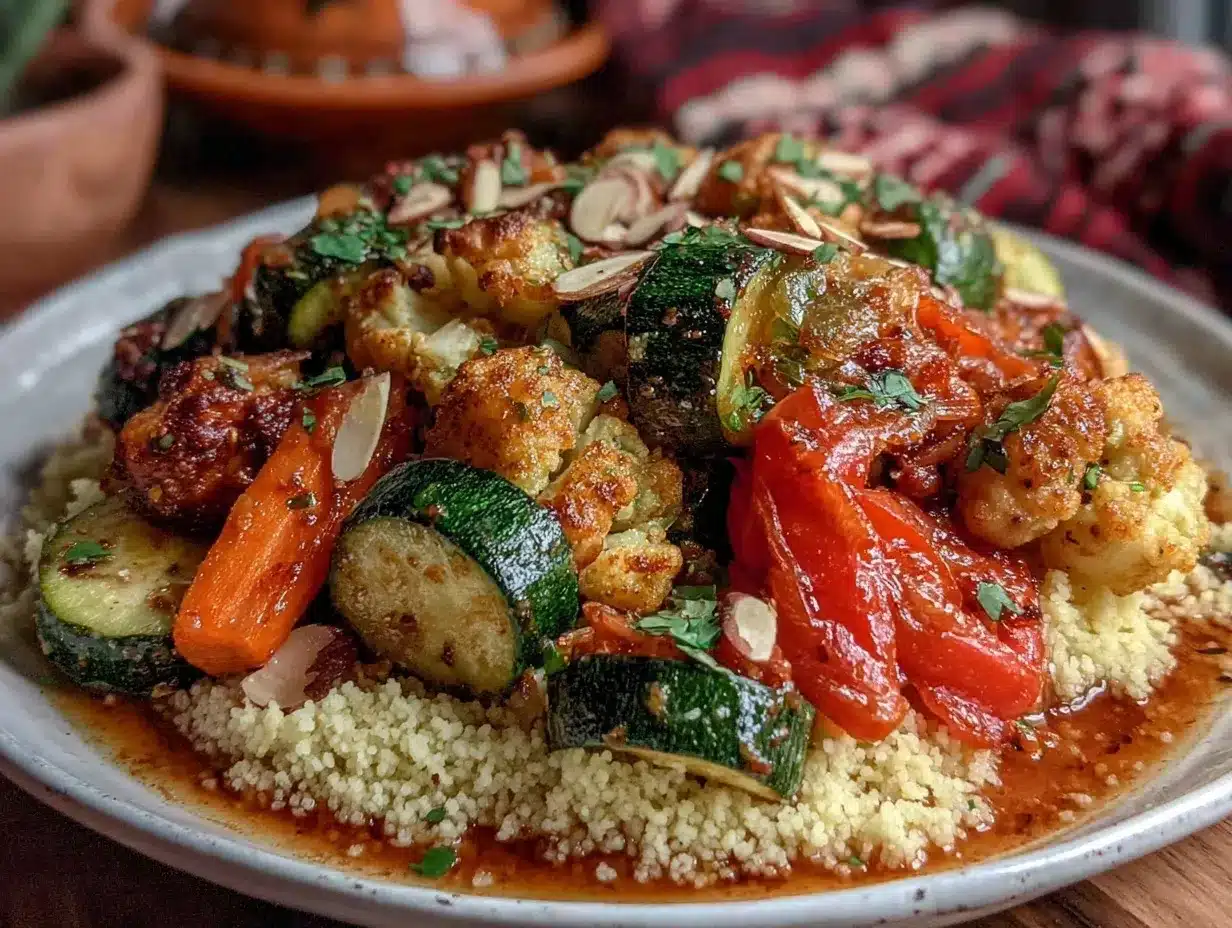
Pile couscous onto a platter, make a well in the center, and ladle vegetable stew over the top. Garnish with chopped cilantro, parsley, and optional chickpeas, raisins, or almonds.
Troubleshooting tips: If the couscous turns out sticky, spread it on a tray and let it dry for a few minutes before serving. If veggies are undercooked, simmer an extra 5-10 minutes. Taste and adjust salt or spices as needed. The goal is vibrant flavors and tender vegetables – don’t be afraid to tweak!
Cooking Tips & Techniques
Over the years, I’ve picked up a few tricks that make Moroccan couscous with seven vegetables truly shine. Here’s what works best for me:
- Don’t Rush the Steaming: Traditional couscous is steamed three times, with fluffing in between. Even if you’re short on time, steaming twice makes a huge difference in texture.
- Layer Your Spices: Add spices early so they bloom in the oil, then adjust at the end for a balanced finish.
- Cut Veggies Evenly: Uneven chunks cook at different rates. I learned the hard way when half my carrots were mush and the other half still crunchy!
- Multi-task Like a Pro: Start the vegetable stew while you prep couscous. This saves time and keeps everything hot and fresh.
- Don’t Overcrowd Your Pot: Too many veggies can lead to steaming instead of simmering. Use a large pot, or split into two batches if needed.
- Taste and Adjust: Flavors develop as you cook. I always taste right before serving and tweak salt, pepper, or a dash more ras el hanout.
- Keep Broth at a Gentle Simmer: Boiling can break down vegetables too quickly, making them mushy. Gentle simmering keeps them tender and flavorful.
Honestly, I’ve burned more than one pot of couscous by leaving it unattended – don’t make my mistake! Set a timer and trust your senses. If you want richer flavor, use homemade vegetable broth. For a golden color, a pinch of saffron makes all the difference. The best tip? Cook with love and don’t stress the small stuff – it’s meant to be enjoyed.
Variations & Adaptations
Moroccan couscous with seven vegetables is super flexible. Here are a few ways to make it your own:
- Gluten-Free: Swap couscous for millet or quinoa. I do this for gluten-sensitive friends, and the flavor is still spot-on.
- Low-Carb: Use grated cauliflower instead of couscous. It absorbs the broth beautifully and keeps things light.
- Seasonal Twist: In summer, add green beans, bell peppers, or fresh peas. In winter, try sweet potatoes and parsnips.
- Protein Boost: Stir in cooked chickpeas, shredded rotisserie chicken, or even lamb for heartier meals.
- Spice Level: For more heat, add a pinch of cayenne or harissa paste to the broth.
- Allergen Substitutions: If nut allergies are a concern, skip the almonds and use toasted pumpkin seeds (delicious crunch!).
Personally, I love tossing in a handful of raisins and toasted almonds for a sweet-savory combo. I’ve tried swapping regular couscous for whole wheat – it works but has a nuttier taste. Don’t be afraid to experiment; this dish is forgiving and adapts to whatever you’ve got on hand.
Serving & Storage Suggestions
Moroccan couscous with seven vegetables is best enjoyed piping hot, right after assembling. Serve it on a big platter, family-style, with plenty of fresh herbs scattered on top. Honestly, it’s gorgeous enough for any Pinterest board!
- Serving Temperature: Hot is best, but leftovers are surprisingly tasty cold or at room temp.
- Presentation: Use a shallow bowl or platter. Make a well in the couscous for the veggies and broth to sit in the center.
- Pairings: Serve alongside grilled chicken, lamb skewers, or a simple cucumber salad. Mint tea is a classic Moroccan pairing.
- Storage: Cool leftovers completely, then refrigerate in airtight containers for up to 4 days. The flavors deepen overnight.
- Freezing: Couscous and veggies freeze well. Store in freezer-safe containers for up to 2 months. Thaw overnight and reheat gently.
- Reheating: Sprinkle couscous with a little water, cover, and microwave for 2-3 minutes. Heat veggies on the stove with a splash of broth.
One tip: couscous tends to soak up liquid as it sits, so add a little extra broth when reheating. The flavors get even richer after a day or two – it’s almost better as leftovers!
Nutritional Information & Benefits
This Moroccan couscous with seven vegetables packs a nutritious punch. Here’s a quick rundown (serving size: 1 generous bowl):
- Calories: Approx. 320
- Protein: 8g (more with chickpeas)
- Fiber: 9g
- Carbs: 60g
- Fat: 5g
- Vitamins: High in vitamin A, C, and potassium from all those veggies
It’s naturally low in saturated fat and cholesterol, and loaded with plant-based goodness. The veggies bring antioxidants, while couscous offers steady energy. For gluten-free diets, swap out the couscous as noted above. Allergens to watch: wheat (in couscous) and nuts (if using almonds). Honestly, it’s the kind of recipe that makes you feel good, inside and out. I always feel lighter and more energized after a bowl – it’s real food at its best.
Conclusion
If you’re looking for a vibrant, wholesome dinner that’s as beautiful as it is satisfying, Moroccan couscous with seven vegetables is your answer. It’s easy to make, endlessly adaptable, and guaranteed to bring a little magic to any meal. Honestly, this recipe has become a staple in my kitchen for good reason – it’s just that comforting.
Don’t be afraid to tweak the veggies, play with the spices, or make it your own. That’s the beauty of Moroccan cooking! I love sharing this dish with friends and family, and I hope it brings as much warmth and joy to your table as it has to mine. If you give it a try, let me know in the comments or share your favorite adaptations. Bookmark this one – it’s a keeper!
Wishing you happy cooking and many delicious dinners ahead – you’ve got this!
Frequently Asked Questions
What is the best type of couscous for this recipe?
Instant couscous works best for quick preparation, but traditional Moroccan couscous gives a fluffier texture if you’re willing to steam it. Both are delicious!
Can I make Moroccan couscous with seven vegetables gluten-free?
Yes, just swap out regular couscous for millet or quinoa. It’s a simple substitution and works beautifully with the veggie stew.
What vegetables can I substitute if I don’t have all seven?
Feel free to use what you have – sweet potatoes, green beans, or bell peppers all work well. The key is keeping a mix of root and tender vegetables for flavor and texture.
How do I prevent the couscous from turning sticky?
Fluff the couscous with a fork after soaking or steaming, and don’t skip the olive oil. If it’s still sticky, spread it out to dry for a few minutes before serving.
Can I make this recipe ahead of time?
Absolutely! Prepare everything a day ahead, refrigerate, and reheat gently before serving. The flavors get even better overnight – just add a splash of broth when warming.
Pin This Recipe!
Moroccan Couscous with Seven Vegetables

This vibrant Moroccan couscous features seven vegetables simmered in a fragrant broth and served over fluffy, triple-steamed couscous. It’s a comforting, wholesome dish perfect for family dinners, gatherings, or festive occasions.
- Prep Time: 15 minutes
- Cook Time: 30 minutes
- Total Time: 45 minutes
- Yield: 6 servings 1x
- Category: Main Course
- Cuisine: Moroccan
Ingredients
- 2 cups instant couscous
- 2 tablespoons olive oil
- 1 teaspoon salt
- 2 1/2 cups water or vegetable broth
- 2 large carrots, peeled and sliced
- 2 medium zucchini, sliced
- 1 small turnip, peeled and cubed
- 1 medium potato, peeled and cubed
- 1 large tomato, chopped
- 1/2 small cabbage, cut into wedges
- 1 small onion, chopped
- 2 tablespoons tomato paste
- 1 teaspoon ground turmeric
- 1 teaspoon ground cumin
- 1 teaspoon ground ginger
- 1 teaspoon ras el hanout
- 1/4 teaspoon saffron threads (soaked in 2 tablespoons warm water)
- 1/2 teaspoon black pepper
- 1 teaspoon salt (more to taste)
- 1/4 cup fresh cilantro, chopped
- 1/4 cup fresh parsley, chopped
- Optional: cooked chickpeas
- Optional: raisins or slivered almonds
Instructions
- Wash, peel, and chop all vegetables into even 1-inch pieces. Rinse chickpeas if using.
- Heat 2 tablespoons olive oil in a large pot over medium heat. Add chopped onion and sauté until soft, about 3 minutes.
- Stir in tomato paste, turmeric, cumin, ginger, ras el hanout, and saffron water. Cook for 1 minute until fragrant.
- Add carrots, turnip, potato, cabbage, zucchini, and tomato. Sprinkle with salt and pepper. Stir to coat vegetables in spice mixture.
- Pour in 2 1/2 cups water or vegetable broth. Cover and simmer over medium-low heat for 25 minutes, until vegetables are tender but not mushy. Stir halfway through and add more water if needed.
- Place couscous in a large mixing bowl. Sprinkle with 1 teaspoon salt and drizzle with 2 tablespoons olive oil. Pour 2 cups boiling water over couscous, cover, and let sit for 5 minutes. Fluff gently with a fork.
- For extra fluffiness, transfer couscous to a steamer basket and steam over simmering vegetable broth for 10 minutes. Fluff and steam for 5 more minutes. (Optional but recommended.)
- Pile couscous onto a platter, make a well in the center, and ladle vegetable stew over the top.
- Garnish with chopped cilantro, parsley, and optional chickpeas, raisins, or almonds.
- Taste and adjust salt or spices as needed before serving.
Notes
For gluten-free, substitute couscous with millet or quinoa. Steaming the couscous two or three times yields the fluffiest texture. Adjust vegetables based on season or availability. Add chickpeas for extra protein, and raisins or almonds for sweetness and crunch. Taste and adjust spices before serving. Leftovers taste even better the next day.
Nutrition
- Serving Size: 1 generous bowl (abo
- Calories: 320
- Sugar: 8
- Sodium: 650
- Fat: 5
- Saturated Fat: 0.7
- Carbohydrates: 60
- Fiber: 9
- Protein: 8
Keywords: Moroccan couscous, seven vegetables, vegetarian, vegan, North African, easy dinner, healthy, comfort food, family meal, gluten-free option