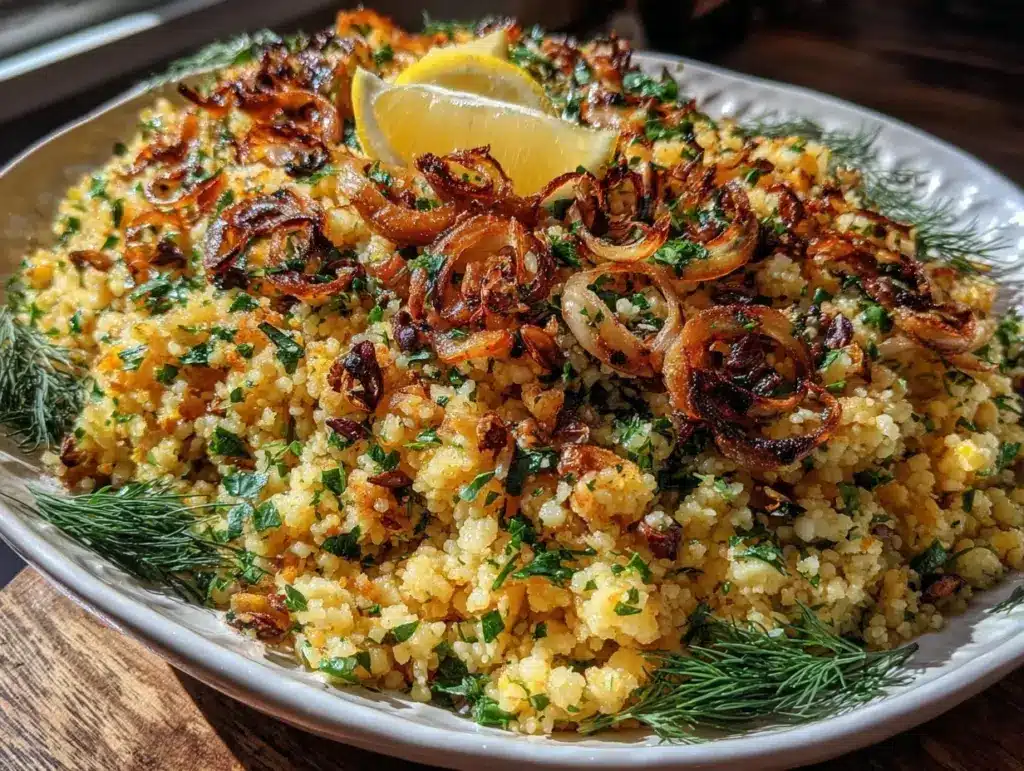
Let me paint you a picture—the nutty aroma of fluffy millet pilaf with fresh herbs drifting through the kitchen, mingling with hints of garlic and sweet onion. It’s the kind of smell that makes you stop mid-task and peer into the pot, just to see how those tiny golden grains are puffing up. The first time I made millet pilaf, it was on a cool December evening, the windows fogged up and my family gathered around the table, waiting for something new (and honestly, something that didn’t include rice or potatoes for the millionth time). I was instantly hooked by the texture—light, springy, almost cloud-like—and how the fresh parsley and dill seemed to brighten every bite.
Years ago, when I was knee-high to a grasshopper, holiday sides meant heavy casseroles and bread puddings. But this fluffy millet pilaf is pure, nostalgic comfort without the gut-busting heaviness—perfect for folks who want something gluten-free but still crave that hearty, satisfying flavor. I first stumbled upon millet in a health food store, looking for alternatives to the usual grains, and it’s become a staple ever since. Honestly, I wish I’d discovered it years earlier!
My family couldn’t stop sneaking forkfuls off the serving platter (I can’t really blame them—it’s dangerously easy to eat). There’s just something about the way the fresh herbs pop against the warm, toasty millet. It’s found its way onto our holiday table, potluck spreads, and even weekday lunches. Let’s face it, this millet pilaf recipe feels like a warm hug, and it’s perfect for brightening up your Pinterest holiday board with its vibrant colors and fluffy texture. After testing it a half-dozen times (in the name of research, of course!), I can say with confidence it’s a keeper—bookmark it now, because you’re going to want to make this again and again.
Why You’ll Love This Fluffy Millet Pilaf Recipe
As someone who’s spent years tinkering with gluten-free sides (and let’s be real—sometimes ending up with mushy disasters), I can assure you this fluffy millet pilaf with fresh herbs is the real deal. Here’s why it stands out:
- Quick & Easy: Ready in about 30 minutes, which means less waiting and more eating (especially handy during busy holidays or last-minute dinners).
- Simple Ingredients: No fancy shopping trips required—you probably have most of these pantry staples already. Millet, broth, onion, garlic, and a handful of fresh herbs do all the heavy lifting.
- Perfect for Gatherings: This pilaf shines as a holiday side—gluten-free, vegan-friendly, and lovely enough to impress even picky eaters at family feasts.
- Crowd-Pleaser: Kids love the mild, nutty flavor and the fun, fluffy texture. Adults appreciate the lightness and the fresh herbal notes. It’s got mass appeal!
- Unbelievably Delicious: The combo of toasted millet, aromatic veggies, and fresh herbs is just next-level comfort food—light but so flavorful.
What makes this millet pilaf different from the rest? For starters, it’s all about the technique: toasting the millet first for maximum flavor, using a little bit less liquid so the grains stay perfectly separate (not sticky), and finishing with a generous handful of herbs for brightness. No soggy grains here, just fluffy perfection every time.
And honestly, this recipe isn’t just good—it’s the kind that makes you close your eyes after the first bite and savor that moment. It’s hearty enough for dinner but light enough for lunches. Whether you’re looking to impress guests, feed your family healthier options, or just add a pop of color to your holiday spread, this millet pilaf recipe delivers. You’ll want to keep it in your regular rotation, trust me. It’s comfort food, reimagined for the modern (and gluten-free!) table.
What Ingredients You Will Need
This fluffy millet pilaf leans on simple, wholesome ingredients to deliver bold flavor and a satisfyingly light texture. Most of what you need is probably already in your pantry, and the fresh herbs add a burst of color and taste that really makes it holiday-worthy. Here’s what you’ll need:
- For the Pilaf Base:
- Millet (1 cup / 190g)—I recommend Bob’s Red Mill for great texture and consistent results. Make sure it’s raw and rinsed before cooking.
- Vegetable broth (2 cups / 480ml)—Adds depth of flavor. Use low-sodium if you prefer, or swap for chicken broth if not vegan.
- Water (1/2 cup / 120ml)—Helps achieve just the right fluffiness. You can use all broth for richer flavor.
- Extra-virgin olive oil (2 tablespoons / 30ml)—For sautéing and a hint of richness. Avocado oil works too.
- Yellow onion, finely chopped (1 medium / about 120g)—Sweet and aromatic. White onion is fine as a substitute.
- Garlic, minced (2 cloves / about 8g)—Adds a savory punch. Feel free to use more if you love garlic!
- Salt (1/2 teaspoon / 3g)—Adjust to your taste; remember broth may already be salted.
- Black pepper (1/4 teaspoon / 1g)—Freshly cracked is best for a little zing.
- For the Finishing Touch:
- Fresh parsley, roughly chopped (1/2 cup / 15g)—Brings a bright, grassy freshness.
- Fresh dill, chopped (1/4 cup / 8g)—Adds a subtle, herby tang. Mint or cilantro work if you’re feeling adventurous.
- Lemon zest (from 1 lemon)—Optional, but it gives a lovely citrus lift!
- Optional Add-ins:
- Toasted pine nuts or slivered almonds (1/4 cup / 25g)—For crunch.
- Cooked peas or chopped bell pepper (1/2 cup / 75g)—For color and sweetness.
If you need a gluten-free guarantee, always check labels (millet is naturally gluten-free, but cross-contamination can happen). For a vegan version, stick with vegetable broth. Dairy-free? No worries—there’s no butter here, just olive oil. You can swap out the herbs for whatever’s fresh in your garden (basil, mint, or cilantro all work). For folks who want a lower-carb twist, try using half millet, half cauliflower rice—surprisingly tasty and still fluffy!
All in all, these ingredients are flexible and forgiving. I’ve used frozen peas when I’m out of fresh, swapped the dill for mint in the summer, and once even tossed in a handful of spinach. You know what? It worked every time.
Equipment Needed
Good news—this millet pilaf recipe doesn’t demand any fancy gadgets. Here’s what you’ll need (and how to get by if your kitchen is more basic than gourmet):
- Medium saucepan with lid—A 2-3 quart (2-3L) pot is perfect. I’ve found heavy-bottomed pans help prevent sticking, but any decent saucepan will do.
- Fine mesh strainer—For rinsing millet. If you don’t have one, a regular colander works if the holes are small enough.
- Wooden spoon or spatula—For stirring and fluffing. Metal spoons work, but they can scratch nonstick pots.
- Chef’s knife—For chopping herbs and onions. If yours is a little dull, remember to sharpen it (makes prepping way faster and safer).
- Cutting board—Any sturdy board will do. I use bamboo because it’s easy to clean and doesn’t hold odors.
Optional, but handy: A citrus zester for the lemon zest (I’ve improvised with a vegetable peeler before—just slice thin and chop). If you have an electric rice cooker, you can make millet pilaf in there too—just use the same water ratio and check a few minutes early for doneness.
For budget-friendly options, stick to basic cookware. I’ve made this recipe in thrift-store pans and dollar-store strainers, and it still turns out great. The key? Just keep an eye on the pan so nothing sticks or burns!
Preparation Method
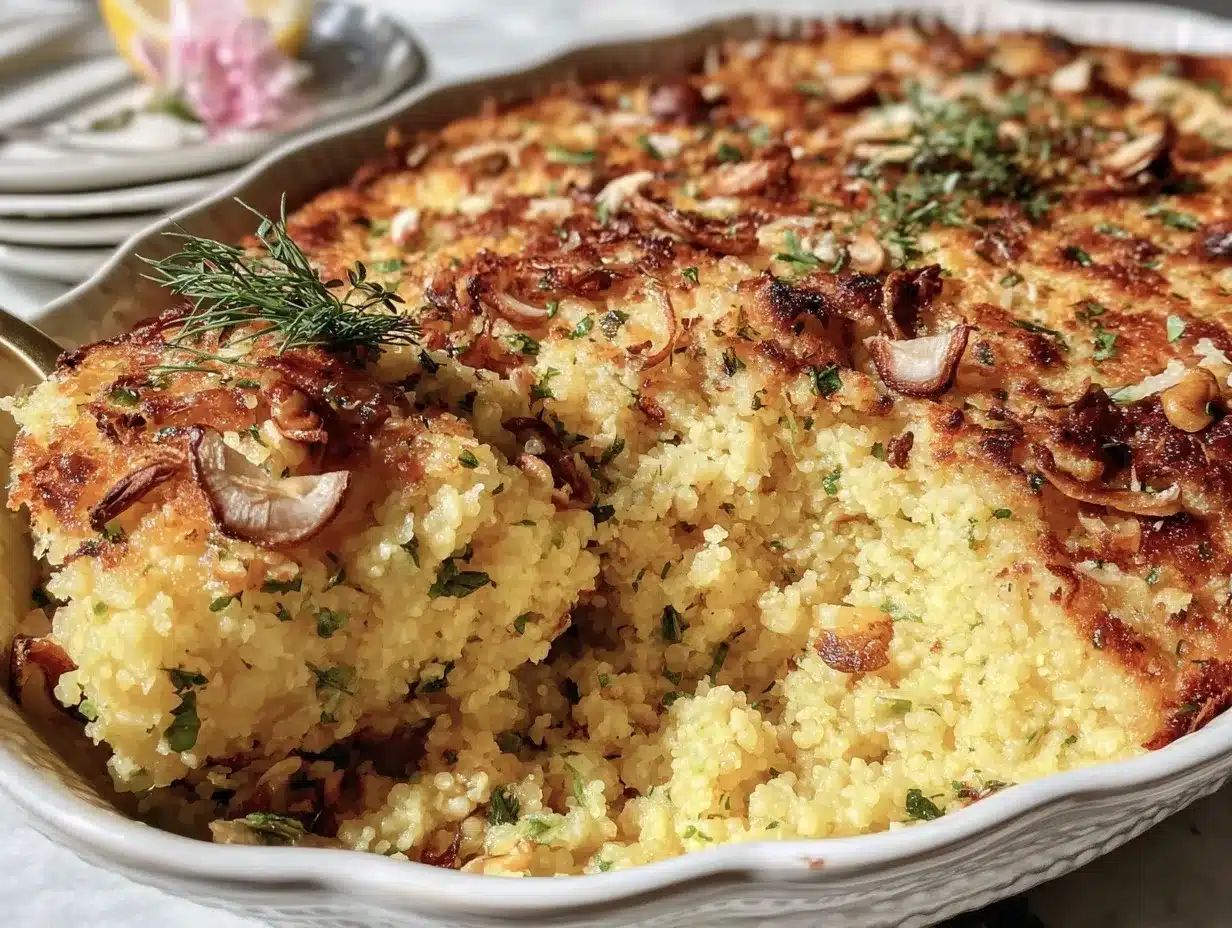
Ready to make your fluffy millet pilaf with fresh herbs? Here’s the step-by-step method for perfect results every time:
-
Rinse and toast the millet:
Place 1 cup (190g) of raw millet in a fine mesh strainer and rinse under cold running water for 30 seconds. Drain well.
Add drained millet to a dry medium saucepan and toast over medium heat, stirring often, for 3-5 minutes until fragrant and lightly golden. Watch closely—it can go from golden to burnt in a heartbeat!
Tip: Toasting boosts the nutty flavor and ensures fluffier grains. -
Sauté the aromatics:
Add 2 tablespoons (30ml) olive oil to the pan. Stir in the chopped onion (1 medium, about 120g) and sauté for 3-4 minutes until softened and translucent.
Add minced garlic (2 cloves, about 8g) and cook for another 1 minute, until fragrant.
Troubleshooting: If the garlic starts to brown, lower the heat—it can turn bitter if burned. -
Add liquid and simmer:
Pour in 2 cups (480ml) vegetable broth and 1/2 cup (120ml) water. Stir well, scraping up any bits stuck to the bottom.
Season with 1/2 teaspoon (3g) salt and 1/4 teaspoon (1g) black pepper.
Bring to a boil over high heat, then immediately reduce to low and cover with a tight-fitting lid.
Warning: Don’t peek too often—steam is key for fluffiness. -
Simmer and steam:
Let the millet cook undisturbed for 18-20 minutes. After 18 minutes, check by lifting the lid quickly and peeking. The liquid should be absorbed and the grains look plump but separate.
If some liquid remains, cover and cook for another 2-3 minutes.
Note: If you’re using an electric stove, sometimes the heat lingers—slide the pot off the burner and let it steam for an extra 5 minutes (this helps finish cooking without scorching). -
Fluff and finish:
Once the millet is cooked, remove from heat and let it sit, covered, for 5 minutes to let the steam finish fluffing the grains.
Uncover, add the chopped parsley (1/2 cup / 15g), chopped dill (1/4 cup / 8g), and lemon zest.
Fluff gently with a fork or wooden spoon, mixing the herbs in evenly.
Sensory cue: The millet should be light, fluffy, and separate—never mushy! -
Add-ins (optional):
Stir in toasted nuts, peas, or bell pepper if using.
Taste and adjust seasoning—sometimes a pinch more salt or a squeeze of lemon wakes up the flavors. -
Serve:
Transfer to a warm serving platter, garnish with extra herbs if you like.
Serve hot for best texture, but it’s surprisingly tasty at room temperature too!
If your millet turns out sticky, it’s usually from too much liquid or overcooking. Next time, measure your water carefully and check doneness a few minutes early. And don’t skip the toasting step—it’s a game changer for texture!
Cooking Tips & Techniques
Through trial and error (and a bit of kitchen chaos), I’ve picked up a few tricks for making millet pilaf that’s perfectly fluffy every time:
- Toast the millet first—This not only boosts flavor, but helps keep the grains separate. Don’t rush this step; a gentle golden color is what you want.
- Watch your water ratio—Millet is a bit finicky. Too much water and you’ll have sticky porridge. I stick to 2.5 cups (600ml) liquid for 1 cup (190g) millet; if your millet is very fresh or you live somewhere humid, reduce by 2 tablespoons (30ml).
- Don’t stir while simmering—Let the millet do its thing. Stirring can break grains and make them mushy.
- Rest after cooking—Letting the cooked millet sit (covered) for 5 minutes after you turn off the heat is key. The steam finishes cooking and fluffs things up.
- Use fresh herbs, not dried—Dried herbs just don’t have the same pop. If you only have dried, use half the amount and add right before serving.
- Multitasking tip: Chop your herbs and prep add-ins while the millet simmers. It makes assembly a breeze.
My worst millet mistake? Not rinsing it. The result was muddy-tasting and clumpy—never again! Also, leaving the pot on high heat while distracted by a phone call (rookie move, I know)—burnt bottom. If you’re worried about burning, use a heavy-bottomed pan and stay close. Consistency comes with practice, but these little details make all the difference.
Final tip: If you want extra flavor, sauté a pinch of cumin or coriander seeds with the onions. It adds a subtle warmth that’s perfect in winter!
Variations & Adaptations
This fluffy millet pilaf recipe is super flexible. Here are some of my favorite ways to switch it up:
- Seasonal twist: Swap parsley and dill for basil and mint in the summer, or use rosemary and thyme for a cozy winter vibe.
- Low-carb adaptation: Mix in half cauliflower rice with the millet. It’s still fluffy, but with fewer carbs and a little veggie boost.
- Protein add-in: Stir in cooked chickpeas, lentils, or diced grilled chicken for a heartier main dish.
- Cooking method: Make it in a rice cooker using the same ratio, or use an Instant Pot—set to “Rice” mode, natural release for 10 minutes.
- Allergen substitutions: Use sunflower oil instead of olive if you’re allergic, and skip nuts for a nut-free version.
- Flavor boost: Add 1/2 teaspoon smoked paprika or curry powder for a fun twist (I love the smoked paprika version—it’s a little unexpected!).
Personal favorite? Adding lemon zest and a handful of chopped mint in the spring, especially for Easter brunch. The freshness is unreal! Feel free to experiment—millet is forgiving, and the herbs are where you can get creative based on what’s in your garden or fridge.
Serving & Storage Suggestions
This fluffy millet pilaf with fresh herbs is best served hot, fresh from the pot. It’s gorgeous on a big platter, garnished with extra parsley and lemon zest—a real Pinterest-worthy moment. For holidays, I like to pair it with roast chicken, glazed carrots, or a beet salad. It also works well alongside grilled fish or as part of a vegetarian spread with hummus and roasted veggies.
If you’re serving for brunch, a dollop of Greek yogurt on top is pretty fantastic. For drinks, try a crisp white wine or sparkling water with lemon.
Leftovers keep well in the fridge for up to 4 days. Store in an airtight container. To reheat, sprinkle with a tablespoon of water, cover, and microwave for 1-2 minutes (or reheat gently in a saucepan over low heat). The herbs will mellow a bit over time, but the flavor stays bright. For longer storage, freeze in a zip-top bag for up to 2 months—thaw overnight and reheat as above. Just know, the texture is best fresh, but it’s still tasty later!
Nutritional Information & Benefits
Millet is a gluten-free ancient grain, naturally high in magnesium, phosphorus, and B vitamins. A serving (about 1 cup cooked) has roughly 210 calories, 4g protein, 2g fat, and 45g carbs. It’s low on the glycemic index, making it great for blood sugar control.
Fresh herbs like parsley and dill add vitamin C, antioxidants, and a little fiber. Olive oil provides heart-healthy fats. The whole recipe is naturally gluten-free, vegan, and can be nut-free—just skip the optional nuts.
If you’re sensitive to nightshades, skip the bell pepper add-in. Millet is generally well-tolerated, but always check for any cross-contamination if you have celiac. For me, millet pilaf has been a gentle, nourishing alternative to heavy sides—easy on the tummy, filling, and packed with nutrients!
Conclusion
If you’re looking for the perfect gluten-free holiday side, this fluffy millet pilaf recipe is worth trying. It’s light yet filling, simple but packed with flavor, and honestly, a refreshing change from the usual suspects. You can tweak the herbs, add veggies, or toss in a handful of nuts—make it your own!
I love this recipe because it’s wholesome comfort food without any fuss. It’s become a go-to for family gatherings and potlucks, and I hope it brings as much joy to your table as it has to mine. So, give it a try and let me know how you adapted it for your crew. Leave a comment below, share your millet pilaf on Pinterest, or send me your own twists—I absolutely love seeing your creations!
Here’s to more delicious, gluten-free sides that bring people together. Happy cooking!
Frequently Asked Questions
Can I make millet pilaf ahead of time?
Yes! Cook and store it in an airtight container in the fridge for up to 4 days. Fluff with a fork before serving and reheat gently for best texture.
Is millet really gluten-free?
Absolutely. Millet is naturally gluten-free, but always check packaging to avoid cross-contamination if you have celiac or severe gluten sensitivity.
Can I use dried herbs instead of fresh?
You can, but the flavor isn’t as bright. Use half the amount of dried herbs and add them at the end for best results.
What can I substitute for millet?
Quinoa, sorghum, or even rice can work in a pinch—just adjust water ratios. Millet gives the fluffiest texture, though!
How do I prevent millet from getting mushy?
Measure your water carefully, toast the millet first, and let it rest after cooking. Avoid stirring while it simmers—this keeps the grains nice and fluffy.
Pin This Recipe!
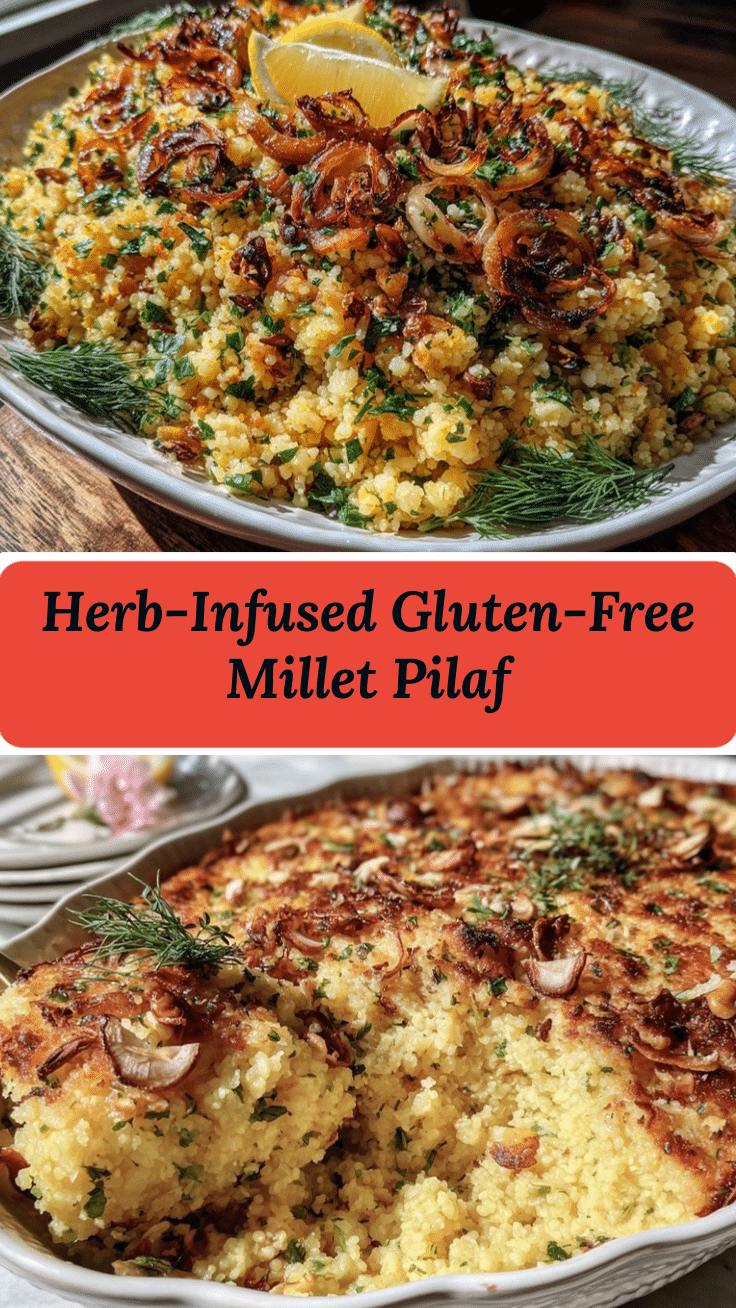
Fluffy Millet Pilaf Recipe – Easy Gluten-Free Holiday Side Dish

This fluffy millet pilaf is a light, gluten-free side dish packed with nutty flavor, fresh herbs, and a springy texture. Perfect for holidays, potlucks, or healthy weeknight dinners, it’s easy to make and crowd-pleasing.
- Prep Time: 10 minutes
- Cook Time: 20 minutes
- Total Time: 30 minutes
- Yield: 4 servings 1x
- Category: Side Dish
- Cuisine: American
Ingredients
- 1 cup raw millet (about 6.5 oz / 190g), rinsed
- 2 cups vegetable broth (16 fl oz / 480ml, low-sodium preferred)
- 1/2 cup water (4 fl oz / 120ml)
- 2 tablespoons extra-virgin olive oil (1 fl oz / 30ml)
- 1 medium yellow onion, finely chopped (about 4 oz / 120g)
- 2 cloves garlic, minced (about 0.3 oz / 8g)
- 1/2 teaspoon salt (or to taste)
- 1/4 teaspoon black pepper
- 1/2 cup fresh parsley, roughly chopped (about 0.5 oz / 15g)
- 1/4 cup fresh dill, chopped (about 0.3 oz / 8g)
- Zest from 1 lemon (optional)
- 1/4 cup toasted pine nuts or slivered almonds (optional, for crunch)
- 1/2 cup cooked peas or chopped bell pepper (optional, for color and sweetness)
Instructions
- Place millet in a fine mesh strainer and rinse under cold running water for 30 seconds. Drain well.
- Add drained millet to a dry medium saucepan and toast over medium heat, stirring often, for 3-5 minutes until fragrant and lightly golden.
- Add olive oil to the pan. Stir in chopped onion and sauté for 3-4 minutes until softened and translucent.
- Add minced garlic and cook for another 1 minute, until fragrant.
- Pour in vegetable broth and water. Stir well, scraping up any bits stuck to the bottom.
- Season with salt and black pepper.
- Bring to a boil over high heat, then immediately reduce to low and cover with a tight-fitting lid.
- Let the millet cook undisturbed for 18-20 minutes. Check after 18 minutes; if liquid remains, cover and cook for another 2-3 minutes.
- Remove from heat and let sit, covered, for 5 minutes to finish steaming.
- Uncover, add chopped parsley, dill, and lemon zest. Fluff gently with a fork or wooden spoon to mix herbs evenly.
- Stir in optional add-ins (toasted nuts, peas, or bell pepper) if using. Taste and adjust seasoning.
- Transfer to a warm serving platter, garnish with extra herbs if desired, and serve hot or at room temperature.
Notes
Toast millet before cooking for best flavor and texture. Use fresh herbs for brightness; dried herbs can be substituted at half the amount. For a nut-free version, omit nuts. If millet turns sticky, reduce liquid slightly or check doneness early. Leftovers keep well in the fridge for up to 4 days and can be frozen for up to 2 months.
Nutrition
- Serving Size: About 1 cup cooked p
- Calories: 210
- Sugar: 2
- Sodium: 350
- Fat: 2
- Saturated Fat: 0.3
- Carbohydrates: 45
- Fiber: 3
- Protein: 4
Keywords: millet pilaf, gluten-free side dish, holiday recipe, vegan pilaf, healthy grains, millet recipe, easy pilaf, vegetarian side, fluffy millet, fresh herbs