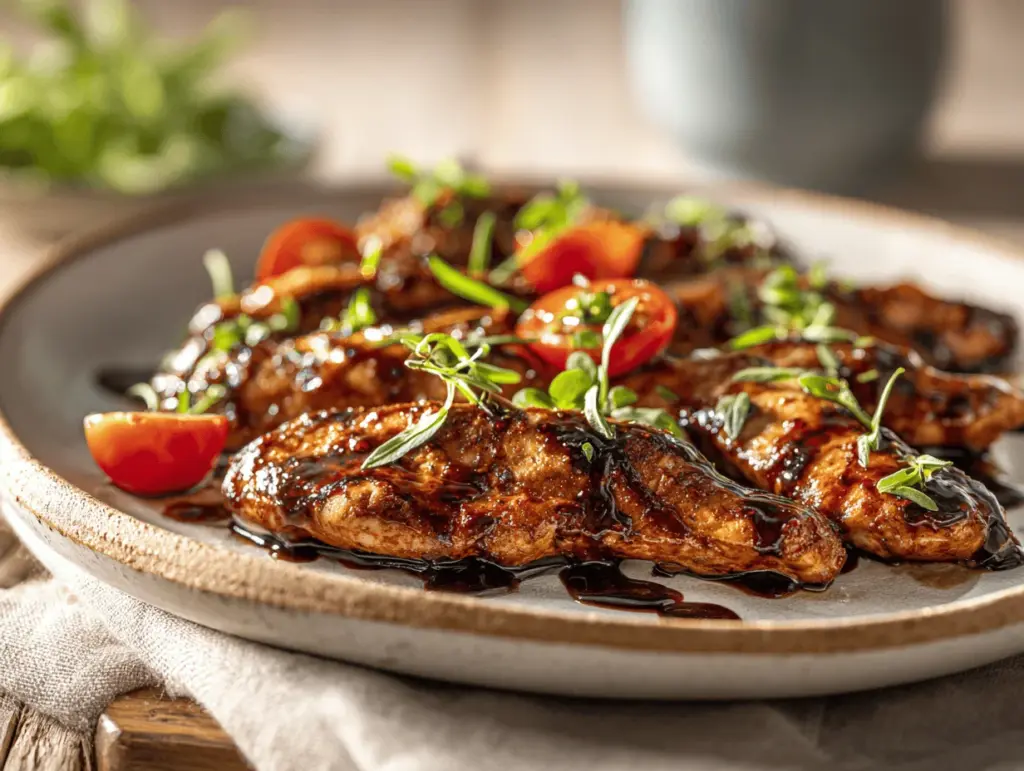
The sizzle of chicken hitting a hot skillet, that sweet tang of balsamic vinegar mingling with honey—honestly, it’s enough to make me hungry all over again. I’ll never forget the first time I made these balsamic glazed chicken tenderloins. It was one of those busy weeknights when I needed something fast, but wasn’t willing to settle for bland. One whiff of that caramelizing glaze, and suddenly my family was peeking into the kitchen asking, “What smells so good?”
Let’s face it, chicken tenderloins can be a blank canvas—sometimes they’re just begging for a little excitement. That’s where this recipe comes in. The balsamic glaze is sticky, slightly sweet, and packs a wallop of flavor in every bite. I’ve experimented with dozens of quick chicken dinners, but this one keeps coming back into rotation. Whether you’re juggling homework, Zoom calls, or just need a reliable meal that feels a bit special, this is the answer.
What I truly love is how the balsamic glazed chicken tenderloins hit that sweet spot: easy, fast, and seriously good. I’ve tested this recipe on picky eaters, flavor fanatics, and even my own skeptical palate after a long day. Every single time—it wins. If you’ve been searching for a no-fuss, flavor-packed chicken recipe that works for busy families, meal preppers, or even a cozy date night at home, you’ve found it. Ready to make your kitchen smell amazing?
Why You’ll Love This Balsamic Glazed Chicken Tenderloins Recipe
- Quick & Easy: You can whip these balsamic glazed chicken tenderloins up in just 25 minutes from start to finish. Perfect for those evenings when you barely have time to think about dinner.
- Simple Ingredients: No need for a specialty grocery run. Everything you need is probably already in your pantry or fridge—think balsamic vinegar, honey, garlic, and chicken tenderloins.
- Perfect for Any Occasion: Whether it’s a weeknight rush, a casual weekend dinner, or even a meal prep session for lunches, these tenderloins fit right in.
- Crowd-Pleaser: I’ve made this for picky kids, my husband, and even brought it to a potluck once. Not a single complaint—just empty plates and requests for seconds.
- Unbelievably Delicious: The combination of tangy balsamic and just-right sweetness from honey creates a sticky glaze that clings to each tenderloin. It’s savory, a little sweet, and totally comforting.
Honestly, I’ve made a lot of balsamic chicken recipes over the years, but this one stands out. Blending the glaze ingredients before adding them to the pan was a game-changer for me—the sauce turns out silky and coats the chicken perfectly. No more broken or separated sauces! The balance of sweet, tangy, and garlicky flavors is spot on. Not to mention, you can easily adjust the sweetness or acidity to your liking.
This isn’t just chicken for the sake of protein—it’s the kind of meal that makes you want to linger at the table, maybe even sneak an extra bite straight from the pan. There’s something about the glossy finish on these balsamic glazed chicken tenderloins that screams “special occasion,” even if it’s just a Tuesday night. If you need a go-to recipe that’s both reliable and impressive, this one’s it.
What Ingredients You Will Need
This balsamic glazed chicken tenderloins recipe keeps things straightforward, using familiar ingredients that work together for maximum flavor. Here’s what you’ll need and a few notes from my own kitchen trials:
- Chicken Tenderloins (1.5 lbs / 680g): Fresh or thawed. They cook quickly and stay juicy—perfect for this glaze. You can also use boneless, skinless chicken breasts cut into strips if that’s what you have.
- Olive Oil (2 tablespoons / 30ml): For sautéing. I usually use extra-virgin, but any olive oil will do.
- Salt (1 teaspoon / 6g) and Black Pepper (½ teaspoon / 1g): Basic seasoning for the chicken. Don’t skip this.
For the Balsamic Glaze:
- Balsamic Vinegar (⅓ cup / 80ml): The star of the show. Go for a good-quality vinegar for the best flavor (it doesn’t have to be fancy, just not super cheap or too acidic).
- Honey (3 tablespoons / 60g): Balances the sharpness of the vinegar and helps form that glossy glaze. Maple syrup also works if you’re out of honey.
- Garlic (3 cloves, minced): Fresh garlic brings so much depth. You can use pre-minced garlic in a pinch, but fresh is worth it here.
- Dijon Mustard (1 teaspoon / 5g): Adds a gentle tang and helps emulsify the glaze. I’ve tried yellow mustard in a pinch—it works but the Dijon makes it better.
- Chicken Broth (¼ cup / 60ml): Helps thin out the glaze a bit so it coats the chicken, not just sits on top. You can substitute vegetable broth or even water, but broth gives a richer flavor.
Optional Garnishes:
- Fresh Parsley or Basil: Chopped for color and a bit of brightness.
- Crushed Red Pepper Flakes: For a little heat, if you like.
Ingredient Tips:
- Look for chicken tenderloins that are even in size for the best, most even cooking.
- Some balsamic vinegars are sweeter than others. If yours is especially tangy, you might want to add a touch more honey.
- If you need this recipe gluten-free, double-check your Dijon mustard and chicken broth labels.
- Low-carb? You can swap the honey with a sugar-free liquid sweetener like allulose or monkfruit syrup.
I’ve played around with brands and find that Colavita balsamic vinegar and Maille Dijon mustard give the best results, but don’t stress—use what you have and it’ll still be delicious. If you’re feeling adventurous, add a sprig of fresh rosemary to the pan while the glaze simmers for a subtle herbal note. These little tweaks keep things interesting!
Equipment Needed
- Large Skillet or Sauté Pan: I prefer a nonstick or stainless steel pan for even glazing. Cast iron works, but clean-up can be stickier.
- Tongs: For flipping the chicken tenderloins easily and safely.
- Small Mixing Bowl: To whisk together the glaze ingredients before adding to the pan. I’ve tried just adding them straight in, but whisking first means a silkier sauce.
- Measuring Cups and Spoons: For accuracy—especially with the honey and vinegar.
- Knife and Cutting Board: For mincing garlic and prepping garnishes.
- Paper Towels: For patting the chicken dry (helps with browning).
If you don’t have a large skillet, two medium pans will work—just divide the chicken and glaze evenly. If you’re short on tongs, a sturdy spatula does the trick. For cleanup, soaking your skillet with a little hot water right after cooking helps loosen up any sticky glaze residue (trust me, learned that one the hard way after a late-night dinner!). And if you’re on a tight budget, any basic nonstick pan will still get the job done.
How to Make Balsamic Glazed Chicken Tenderloins
-
Prep the Chicken: Pat the chicken tenderloins dry with paper towels. Season both sides with salt and pepper.
Tip: Dry chicken browns better, so don’t skip this step! -
Mix the Glaze: In a small bowl, whisk together ⅓ cup (80ml) balsamic vinegar, 3 tablespoons (60g) honey, 3 minced garlic cloves, 1 teaspoon (5g) Dijon mustard, and ¼ cup (60ml) chicken broth.
Note: Whisking combines everything smoothly—no clumps of mustard or garlic. -
Sear the Chicken (5-6 minutes): Heat 2 tablespoons (30ml) olive oil in a large skillet over medium-high heat. Add the chicken tenderloins in a single layer (work in batches if needed). Cook for 2-3 minutes per side, until golden and nearly cooked through. Remove to a plate.
Warning: Don’t overcrowd the pan—otherwise, the chicken will steam, not brown. -
Simmer the Glaze (3-4 minutes): Lower the heat to medium. Pour the mixed glaze into the empty skillet. Stir and bring to a gentle simmer. Let it bubble for about 2-3 minutes, stirring occasionally, until it starts to thicken and looks glossy.
What to Look For: The glaze should reduce by about one-third and coat the back of a spoon. -
Return Chicken to Pan (3-4 minutes): Add the seared tenderloins back to the skillet. Toss to coat each piece well. Simmer another 2-3 minutes, turning once, until chicken is cooked through (internal temp should reach 165°F / 74°C) and the glaze is sticky.
Tip: If the glaze gets too thick, add a splash of broth or water to loosen. -
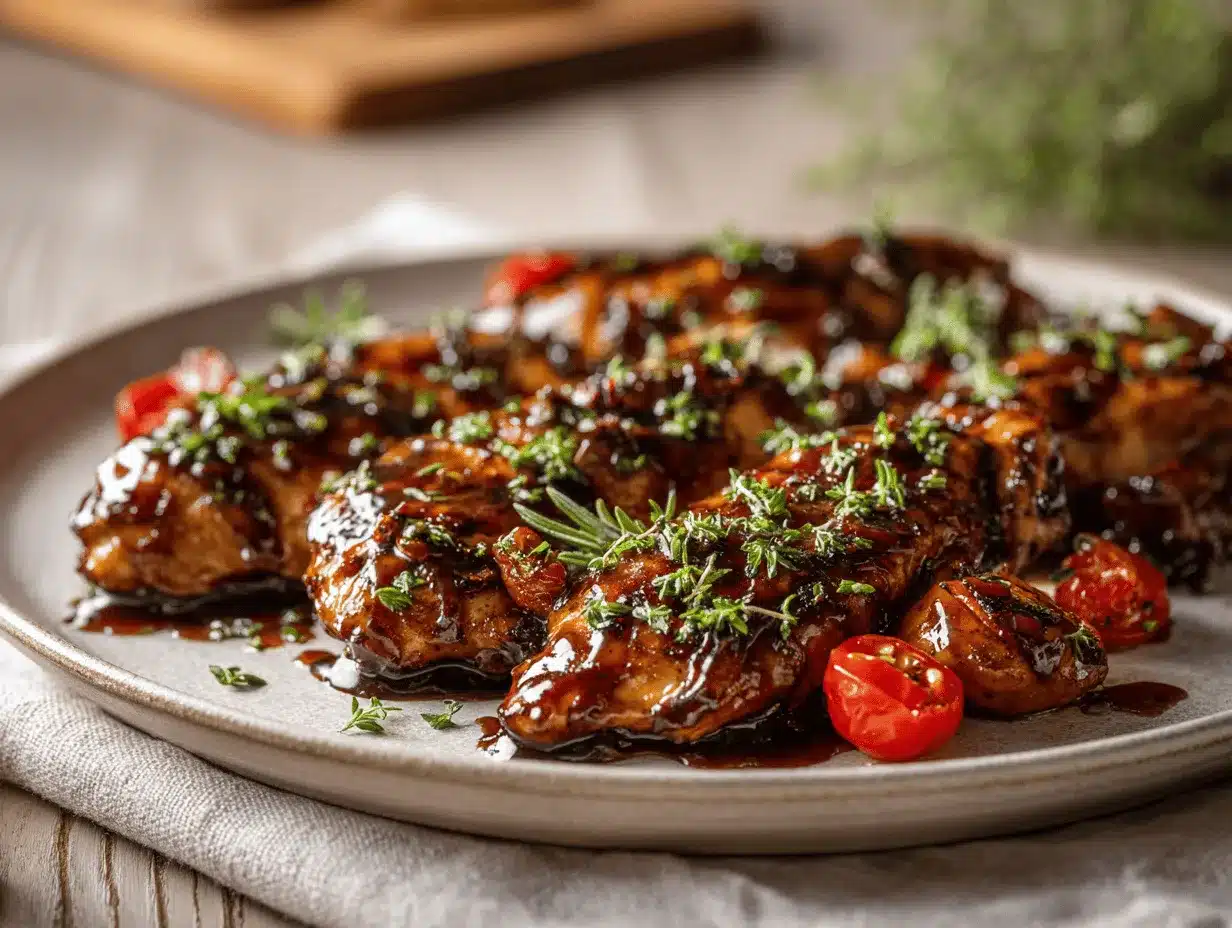
Finish & Serve: Remove from heat. Sprinkle with chopped fresh parsley or basil, plus a pinch of crushed red pepper if desired.
Sensory Cue: The chicken should look glossy, smell sweet and savory, and feel springy to the touch.
Troubleshooting:
- If the glaze burns or turns bitter, your heat may be too high—keep it at a gentle simmer.
- Chicken not browning? It’s probably too wet or the pan is overcrowded.
- Glaze too thin? Simmer a minute longer. Too thick? Add a splash more broth.
Personal note—sometimes I make extra glaze and drizzle it over roasted veggies or rice. It’s that good! And don’t rush the final simmer; giving the chicken a chance to really bathe in the glaze is what takes this recipe from tasty to completely irresistible.
Cooking Tips & Techniques
Over the years, I’ve picked up a few tricks to make sure these balsamic glazed chicken tenderloins come out perfect every single time:
- Use Medium-High Heat for Searing: High enough to brown, but not so high that the glaze scorches. My first few tries, I cranked the heat and ended up with a burnt pan—lesson learned!
- Don’t Crowd the Pan: If your skillet is small, cook the chicken in two batches. Overcrowding means the chicken steams instead of browning, and you miss out on those tasty bits.
- Mix the Glaze Beforehand: This keeps the honey and mustard from clumping. I used to just pour everything into the pan, and it never coated the chicken quite right.
- Watch the Glaze Consistency: The perfect glaze should be thick enough to cling, but still pourable. If it gets too sticky, just thin with a bit of broth or water.
- Rest the Chicken Briefly: Letting the tenderloins sit for a minute or two after glazing helps the juices redistribute. This keeps them juicy instead of dry.
Common Mistakes to Avoid:
- Burning the glaze—if you notice a sharp smell or see smoke, pull the pan off the heat right away.
- Undercooking the chicken—always check for an internal temp of 165°F (74°C). A quick-read thermometer is your friend.
- Skimping on seasoning—don’t be shy with salt and pepper before cooking!
One trick I swear by: multitask by prepping a side dish while the chicken sears (think steamed broccoli or a quick salad). This way, everything hits the table at once. With a little practice, you’ll breeze through this recipe, and maybe even catch yourself humming as the glaze bubbles away.
Variations & Adaptations
One of my favorite things about these balsamic glazed chicken tenderloins is how easy they are to switch up. Here are some fun ways to make this recipe your own:
- Gluten-Free: Double-check your chicken broth and Dijon mustard are gluten-free (most are, but some brands sneak in wheat). Everything else in the recipe is naturally gluten-free.
- Dairy-Free: No adaptations needed—this recipe is already dairy-free!
- Spicy Kick: Add ¼ teaspoon crushed red pepper flakes or a diced jalapeño to the glaze for a little heat.
- Herb Infusion: Toss a sprig of fresh rosemary or thyme into the glaze as it simmers. It adds a subtle, aromatic note.
- Low-Sugar: Swap the honey for a sugar-free syrup or reduce the quantity for a more tangy glaze. I’ve tried this with monkfruit syrup and it works surprisingly well.
- Different Proteins: This glaze is delicious on pork tenderloin, salmon, or even roasted tofu. Adjust the cooking time as needed for different proteins.
- Sheet Pan Method: Arrange chicken tenderloins on a foil-lined sheet tray, brush with the glaze, and bake at 400°F (200°C) for 15-18 minutes, flipping halfway through.
Personally, I love adding a handful of cherry tomatoes to the pan during the last few minutes. They burst and mix with the glaze, making the dish extra colorful and juicy. Try different tweaks and see what you love best—this recipe is super forgiving!
Serving & Storage Suggestions
For the best experience, serve these balsamic glazed chicken tenderloins hot, right out of the skillet. The glaze is glossy and delicious when freshly made.
- Presentation: Arrange tenderloins on a platter, drizzle with remaining glaze, and sprinkle with fresh parsley or basil for a pop of color. For a dinner party, I sometimes add a few lemon wedges on the side.
- Perfect Pairings: These chicken tenderloins go great with garlic mashed potatoes, steamed green beans, or a simple arugula salad. For a lighter meal, serve over cauliflower rice or quinoa.
- Storage: Leftovers keep well in an airtight container in the fridge for up to 3 days. The glaze actually gets even more flavorful after a day or two!
- Freezing: Freeze cooled chicken (with glaze) in a freezer bag for up to 2 months. Thaw overnight in the fridge before reheating.
- Reheating: Warm gently in a skillet over low heat, adding a splash of water or broth to loosen the glaze. The microwave works too, but go low and slow to keep the chicken juicy.
Honestly, sometimes I’ll slice up the leftovers and toss them on a salad or into a wrap—makes for a fantastic next-day lunch. The flavors deepen after sitting, so don’t be afraid to meal prep a double batch!
Nutritional Information & Benefits
For a serving (about 4 ounces / 113g of chicken with glaze):
- Calories: ~210
- Protein: 26g
- Carbohydrates: 11g (mostly from honey)
- Fat: 7g
- Gluten-Free & Dairy-Free
Chicken tenderloins are a super lean protein source, making this meal satisfying and perfect for anyone keeping an eye on their macros. Balsamic vinegar is rich in antioxidants, and using honey instead of refined sugar gives a more natural sweetness. If you’re on a low-carb plan, swap the honey for a sugar-free option to drop the carbs even more.
Personally, I love this recipe as a lighter alternative to heavier glazed meats—it’s filling without feeling heavy, and the simple ingredient list means you know exactly what’s going into your dinner.
Conclusion
In the world of weeknight dinners, these balsamic glazed chicken tenderloins are a total game-changer. They’re fast, easy, and loaded with flavor—plus, they make your kitchen smell incredible. Whether you’re feeding a family, impressing friends, or just treating yourself, this recipe never disappoints.
Don’t be afraid to make it your own—tweak the glaze, try different herbs, or even swap the protein. That’s part of the fun! I keep coming back to this meal because it strikes that rare balance: comforting, healthy-ish, and so quick to throw together.
If you give this recipe a try, I’d love to hear how it turns out! Leave a comment below, share your own twists, or post a photo and tag me. Let’s keep inspiring each other to make simple, really good food—one skillet at a time.
Frequently Asked Questions (FAQs)
Can I use chicken breasts instead of tenderloins?
Absolutely! Just slice the chicken breasts into strips about the same size as tenderloins for even cooking. Adjust the cook time as needed—they might take a minute or two longer.
What’s the best way to prevent the glaze from burning?
Keep the heat at medium when simmering the glaze, and don’t walk away. If you see it getting too thick or dark, add a splash of broth or water and stir.
Can I make this balsamic glazed chicken tenderloins recipe ahead of time?
Yes! You can cook the chicken and store it with the glaze in the fridge. Reheat gently in a skillet with a little extra broth to refresh the glaze.
Is this recipe kid-friendly?
Definitely! The glaze is sweet and tangy, which most kids love. If you’re worried about the vinegar, you can use a bit less or add extra honey for a milder flavor.
What sides go well with balsamic glazed chicken tenderloins?
I love serving these with mashed potatoes, roasted vegetables, or a crisp green salad. For something lighter, try cauliflower rice or sautéed spinach.
Pin This Recipe!
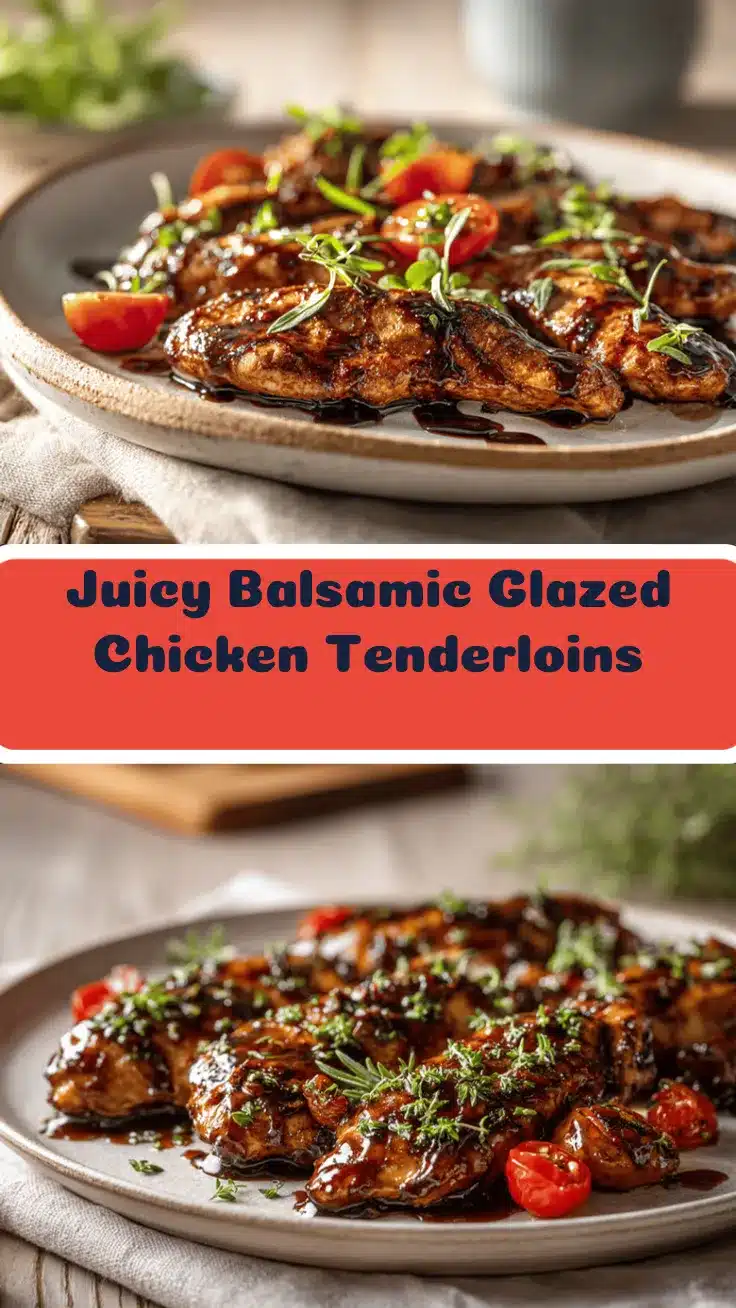
Balsamic Glazed Chicken Tenderloins

These balsamic glazed chicken tenderloins are a quick, easy, and flavor-packed dinner that comes together in just 25 minutes. The sticky, sweet-tangy glaze makes this dish a family favorite perfect for busy weeknights or special occasions.
- Prep Time: 10 minutes
- Cook Time: 15 minutes
- Total Time: 25 minutes
- Yield: 4 servings 1x
- Category: Main Course
- Cuisine: American
Ingredients
- 1.5 lbs (680g) chicken tenderloins (or boneless, skinless chicken breasts cut into strips)
- 2 tablespoons olive oil
- 1 teaspoon salt
- 1/2 teaspoon black pepper
- 1/3 cup balsamic vinegar
- 3 tablespoons honey (or maple syrup)
- 3 cloves garlic, minced
- 1 teaspoon Dijon mustard
- 1/4 cup chicken broth (or vegetable broth or water)
- Optional: Fresh parsley or basil, chopped, for garnish
- Optional: Crushed red pepper flakes, for garnish
Instructions
- Pat the chicken tenderloins dry with paper towels. Season both sides with salt and pepper.
- In a small bowl, whisk together balsamic vinegar, honey, minced garlic, Dijon mustard, and chicken broth until smooth.
- Heat olive oil in a large skillet over medium-high heat. Add chicken tenderloins in a single layer (work in batches if needed). Cook for 2-3 minutes per side, until golden and nearly cooked through. Remove to a plate.
- Lower the heat to medium. Pour the mixed glaze into the empty skillet. Stir and bring to a gentle simmer. Let it bubble for about 2-3 minutes, stirring occasionally, until it starts to thicken and looks glossy.
- Return the seared chicken tenderloins to the skillet. Toss to coat each piece well. Simmer another 2-3 minutes, turning once, until chicken is cooked through (internal temp should reach 165°F) and the glaze is sticky. If the glaze gets too thick, add a splash of broth or water to loosen.
- Remove from heat. Sprinkle with chopped fresh parsley or basil and a pinch of crushed red pepper if desired. Serve hot.
Notes
For best results, use chicken tenderloins of even size for even cooking. Whisking the glaze ingredients before adding to the pan ensures a silky, well-emulsified sauce. If your balsamic vinegar is very tangy, add a bit more honey to balance. The glaze is also delicious drizzled over roasted vegetables or rice. Let the chicken rest briefly after cooking for juicier results. For a gluten-free version, double-check your Dijon mustard and broth labels.
Nutrition
- Serving Size: About 4 ounces (113g) chicken with glaze per serving
- Calories: 210
- Sugar: 9
- Sodium: 500
- Fat: 7
- Saturated Fat: 1
- Carbohydrates: 11
- Protein: 26
Keywords: balsamic chicken, chicken tenderloins, quick dinner, skillet chicken, weeknight meal, easy chicken recipe, gluten-free, dairy-free, honey balsamic glaze