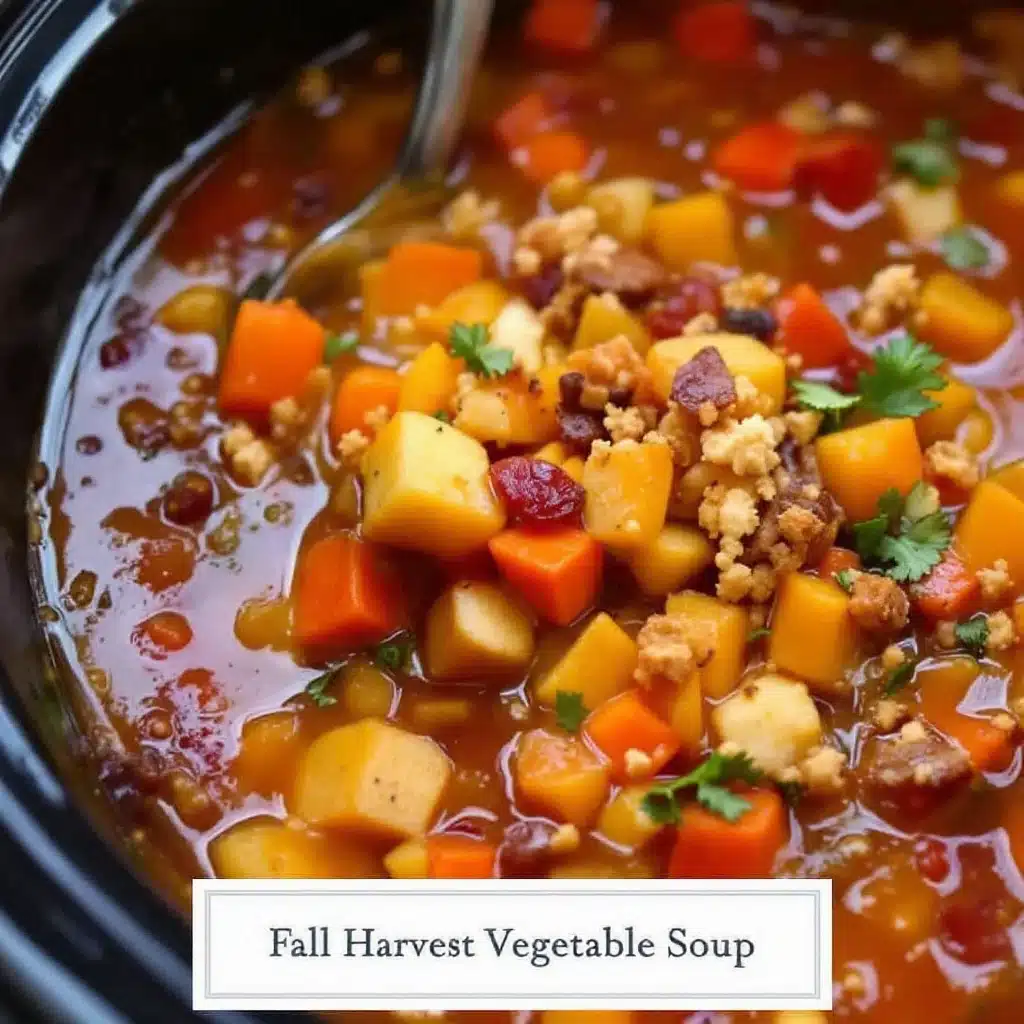
My friend Jenna texted me a photo of her slow cooker filled with what looked like brown sludge and said, “It’s soup.” I did not trust slow cooker vegetable soup. Not even a little. The idea of leaving vegetables to swim in liquid for eight hours seemed like a guaranteed way to end up with mush that tasted more like sadness than autumn. I told her as much, and she sent back a single eye-roll emoji before inviting me over to prove me wrong.
That afternoon, I walked into her apartment and stopped mid-sentence. The smell hit me first—not the flat, boiled aroma I expected, but something deep and savory, with a thread of sweetness that pulled you straight into the kitchen. She lifted the lid, and there it was: tender chunks of butternut squash holding their shape, carrots that still had bite, and broth that looked like it had been simmering on a stove all day. I ate two bowls. Then I asked for the recipe.
This is that soup. It’s the one that made me admit I was wrong about slow cookers and vegetables. It’s not complicated—no fancy techniques, no obscure ingredients—but it delivers the kind of warmth that makes you want to curl up on the couch and ignore your phone for an hour. If you’re skeptical, I get it. I was too. But this cozy slow cooker fall harvest vegetable soup is the dish that turned me around.
Why You’ll Love This Recipe
Let me tell you why this particular soup earned a permanent spot in my fall rotation. I’ve tested it through three different slow cookers, two different brands of vegetable broth, and one very questionable bag of frozen squash that I will not name. This version is the one that worked every single time.
- Set It and Forget It : Ten minutes of prep in the morning, and dinner is ready when you walk through the door. No stirring, no watching the pot, no stress.
- Simple Ingredients : Everything comes from a standard grocery store. No trips to specialty markets or obscure spice shops required.
- Perfect for Meal Prep : This soup gets better on day two. Make a big batch on Sunday and eat well all week.
- Crowd-Pleaser : I’ve served this to vegetable skeptics and dedicated carnivores. The bowls come back empty every time.
- Unbelievably Comforting : The broth develops a richness that tastes like it simmered for hours—because it did, but without any effort from you.
What makes this recipe different from the dozens of other vegetable soup recipes out there? Two things. First, the order matters. Hard vegetables go in first, delicate ones later. That’s the trick that keeps everything from turning into baby food. Second, I finish the soup with a splash of apple cider vinegar and fresh herbs right before serving. It wakes up all the flavors and makes the broth taste more complex than it has any right to be.
This is the kind of soup that makes you close your eyes after the first bite. It’s fall in a bowl—cozy, nourishing, and exactly what you need when the air gets crisp and the days get short.
What Ingredients You Will Need
This recipe uses simple, seasonal ingredients to deliver deep flavor without any fuss. Most of these are probably already in your kitchen or just a quick shopping trip away.
- Butternut squash , peeled and cubed into ½-inch pieces (about 3 cups) — adds natural sweetness and creamy texture. Look for squash that feels heavy for its size with no soft spots.
- Carrots , peeled and sliced into ½-inch rounds (about 2 cups) — hold up well to long cooking and add color and sweetness.
- Celery stalks , sliced (about 1 cup) — brings that savory backbone every good soup needs.
- Yellow onion , diced (1 medium) — the aromatic foundation. Sweet onions work too if that’s what you have.
- Garlic cloves , minced (4-5 cloves) — don’t skimp here. Fresh garlic makes a real difference.
- Yukon Gold potatoes , cubed (about 2 cups) — waxy potatoes hold their shape better than russets. Red potatoes work too.
- Vegetable broth , low-sodium (4 cups) — I prefer Imagine or Better Than Bouillon (roasted vegetable base) for the richest flavor.
- Fire-roasted diced tomatoes , with their juices (1 can, 14.5 oz) — adds depth and a hint of smokiness. Regular diced tomatoes work if that’s what you have.
- Dried thyme (1 teaspoon) — earthy and woodsy, perfect for fall.
- Dried rosemary (½ teaspoon, crushed between your fingers) — a little goes a long way. Rub it to release the oils.
- Bay leaves (2) — for subtle herbal notes. Remember to remove them before serving.
- Salt and black pepper — to taste. Start conservatively; you can always add more later.
- Apple cider vinegar (1 tablespoon, added at the end) — this is the secret ingredient. It brightens everything without making the soup taste vinegary.
- Fresh parsley or thyme , chopped (for garnish) — optional but nice for color and freshness.
- Optional add-ins : a Parmesan rind added during cooking adds umami, or a can of cannellini beans for extra protein and heartiness.
For substitutions: swap butternut squash with sweet potato or pumpkin. Use Yukon Gold or red potatoes, not russets—they get mealy. Replace fire-roasted tomatoes with regular diced tomatoes plus a pinch of smoked paprika. For a gluten-free option, this soup is naturally gluten-free as written. For a lower-carb version, skip the potatoes and add extra celery and zucchini instead.
Equipment Needed
You do not need a fancy kitchen to make this soup. Here is what you will need:
- Slow cooker (5 to 6-quart) — this is the star of the show. I use a Cuisinart programmable model, but any brand works. If you have a smaller slow cooker, just halve the recipe.
- Chef’s knife (8-inch) — a sharp knife makes vegetable prep infinitely faster and safer. I learned this the hard way after a dull knife slipped on a sweet potato.
- Cutting board — preferably large enough to hold all your chopped vegetables without crowding.
- Vegetable peeler — for the carrots and butternut squash. A Y-shaped peeler is my favorite for speed.
- Measuring cups and spoons — for accuracy, especially with the broth and seasonings.
- Wooden spoon or spatula — for stirring. Metal can scratch your slow cooker insert.
- Ladle — for serving. A ½-cup or ⅔-cup ladle works well.
- Storage containers — glass or BPA-free plastic with tight-fitting lids for leftovers.
No slow cooker? You can make this in a Dutch oven on the stovetop. Simmer covered on low heat for about 45 minutes to an hour, adding the delicate vegetables (like zucchini or green beans, if using) in the last 15 minutes. The flavor won’t be quite as deep, but it will still be delicious.
Preparation Method
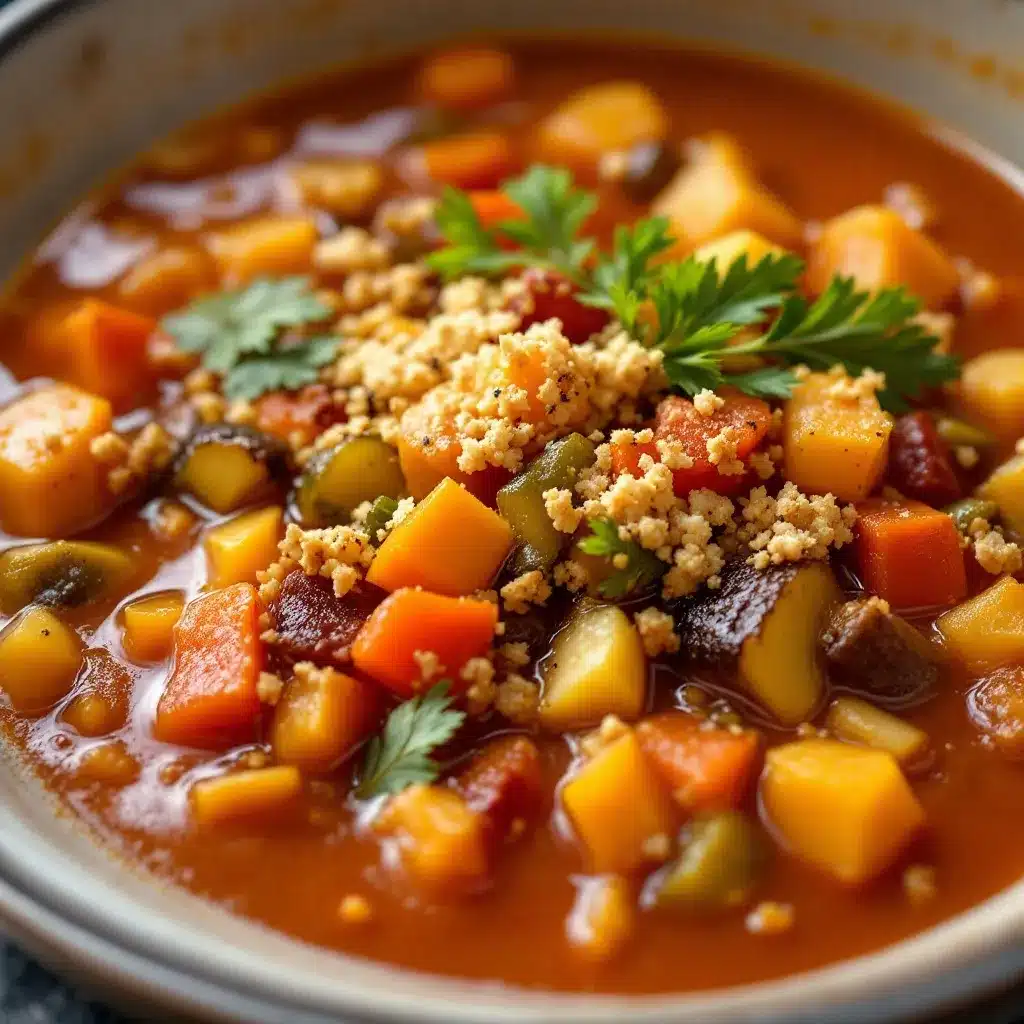
This is the part where the magic happens. Follow these steps, and you will end up with soup that tastes like you spent hours in the kitchen—even though you barely lifted a finger.
- Prep your vegetables. Peel and cube the butternut squash into ½-inch pieces. Peel and slice the carrots into ½-inch rounds. Slice the celery. Dice the onion. Mince the garlic. Cube the potatoes into ½-inch pieces. (Pro tip: do the squash first—it takes the longest. And if you are short on time, most grocery stores sell pre-cut butternut squash. No judgment here.)
- Layer the ingredients in the slow cooker. Start with the hard, dense vegetables: the butternut squash, carrots, potatoes, and celery. These need the longest cooking time. Add the onion and garlic on top. Pour in the fire-roasted tomatoes with their juices and the vegetable broth. Add the dried thyme, crushed rosemary, bay leaves, and a generous pinch of salt and pepper. Do not stir yet—layering helps everything cook evenly.
- Cook on low for 6 to 7 hours or on high for 3 to 4 hours. I prefer low and slow for the best flavor development. The soup is ready when the squash and potatoes are tender when pierced with a fork but still hold their shape. If you are using a newer slow cooker that runs hot, start checking at the 5-hour mark on low.
- Add delicate ingredients (if using). If you are adding green beans, zucchini, or leafy greens like kale or spinach, stir them in during the last 30 minutes of cooking. They need just enough time to soften without turning to mush. If you are adding a Parmesan rind, drop it in at the beginning and fish it out before serving.
- Finish with acid and fresh herbs. Turn off the slow cooker. Remove the bay leaves (they are tough and unpleasant to bite into). Stir in the apple cider vinegar. Taste the broth—it should be savory, slightly sweet, and bright. Adjust salt and pepper as needed. Stir in fresh parsley or thyme if using.
- Let it rest for 10 minutes. This is not strictly necessary, but it allows the flavors to settle and meld. The soup will be piping hot straight from the slow cooker, so this also saves you from burning your tongue.
- Serve and enjoy. Ladle into bowls and garnish with extra fresh herbs, a drizzle of olive oil, or a sprinkle of red pepper flakes if you like a little heat. A slice of crusty bread or a crispy skillet cornbread with honey drizzle on the side is never a bad idea.
A note on troubleshooting: if your soup tastes flat or one-dimensional, it likely needs more salt or a second splash of vinegar. If it is too thin, mash some of the vegetables against the side of the slow cooker with a spoon to release their starches and thicken the broth. If it is too thick, stir in additional warm broth or water until it reaches your preferred consistency.
Cooking Tips & Techniques
After making this soup more times than I care to count, I’ve collected a few hard-won lessons. Let me save you from my mistakes.
Cut vegetables uniformly. I cannot stress this enough. If your squash pieces are twice the size of your potato pieces, you will end up with mushy potatoes and undercooked squash. Take the extra two minutes to make everything roughly the same size. Your future self will thank you.
Do not overcrowd the slow cooker. A 5 to 6-quart slow cooker should be no more than two-thirds full for even cooking. If you are doubling the recipe, use a larger slow cooker or split between two. I learned this the hard way when I tried to cram everything into a 4-quart model and ended up with soup that took an extra two hours to cook.
Resist the urge to lift the lid. Every time you open the slow cooker, you release heat and add 20 to 30 minutes to the cooking time. Trust the process. Let it do its thing. I know it is tempting to peek, but the soup will be waiting for you when it is ready.
Toast your spices (optional but worth it). If you have an extra five minutes, heat a dry skillet over medium heat and toast the dried thyme and rosemary for 30 to 60 seconds until fragrant. This wakes up their essential oils and adds a deeper, more complex flavor to the soup. I do this when I am feeling fancy or when I want the soup to taste extra special.
Season in layers. Add salt at the beginning to help vegetables release their moisture and cook properly, but go easy—you can always add more at the end. I start with about ½ teaspoon and adjust before serving. Broth concentrates as it cooks, so you do not want to oversalt early on.
Make it a complete meal. This soup is satisfying on its own, but if you want to turn it into a full dinner, add a can of drained and rinsed chickpeas or white beans during the last 30 minutes of cooking. Or serve it alongside a fluffy cheddar and chive buttermilk biscuit for dipping. The combination is pure comfort.
Variations & Adaptations
This recipe is a starting point, not a rulebook. Here are some ways to make it your own.
Protein-packed version: Stir in 2 cups of cooked shredded chicken, cooked Italian sausage (casings removed and crumbled), or cubed firm tofu during the last 30 minutes. The soup becomes heartier and more substantial—perfect for cold nights when you need something that sticks to your ribs.
Spicy harvest soup: Add ½ teaspoon of red pepper flakes or a chopped chipotle pepper in adobo sauce (plus a teaspoon of the sauce) with the other seasonings. The heat balances beautifully with the sweetness of the squash and carrots. I make this version when I am fighting off a cold—the spice clears my sinuses every time.
Herb-forward variation: Swap the dried thyme and rosemary for 2 teaspoons of dried herbes de Provence or Italian seasoning. Add a Parmesan rind at the beginning for extra umami. Finish with a handful of fresh basil or dill. This version feels brighter and more summery, even in the middle of fall.
Slow cooker vs. stovetop vs. Instant Pot: For the stovetop, sauté the onion and garlic in olive oil first, then add remaining ingredients and simmer covered for 45 minutes to 1 hour. For the Instant Pot, use the sauté function for the aromatics, then pressure cook on high for 10 minutes with a natural release. The slow cooker version produces the deepest, most developed flavor, but the other methods work well when you are short on time.
Seasonal swaps: In late summer, use zucchini and yellow squash instead of potatoes. In winter, swap the butternut squash for cubed sweet potato or pumpkin. In spring, add asparagus and peas during the last 15 minutes. The base formula stays the same—just swap in whatever looks good at the market.
I once made a version with leftover roasted root vegetables from a fresh autumn harvest salad with maple vinaigrette dressing I had made the night before. I just tossed them in during the last hour of cooking. It was honestly one of the best batches I have ever made. Don’t be afraid to experiment.
Serving & Storage Suggestions
This soup is versatile enough for a quiet weeknight dinner or a casual gathering with friends. Here is how to serve and store it like a pro.
Serving temperature and presentation: Serve the soup hot, straight from the slow cooker. Ladle into wide, shallow bowls so the vegetables are visible. Garnish with a drizzle of good olive oil, a sprinkle of fresh herbs, and a crack of black pepper. A dollop of pesto or a swirl of yogurt on top adds richness and color.
What to serve alongside: This soup begs for something to dip into it. Crusty sourdough bread, fluffy garlic parmesan breadsticks, or a simple green salad with a tangy vinaigrette are all excellent choices. If you are serving it as a main course, a side of roasted chicken or a pomegranate quinoa salad rounds out the meal nicely.
Storage instructions: Let the soup cool completely before storing. Transfer to airtight containers and refrigerate for up to 5 days. The flavors actually deepen and improve over the first 24 to 48 hours, so do not be surprised if leftovers taste even better than the first serving.
Freezing instructions: This soup freezes beautifully. Portion into freezer-safe containers or zip-top bags (lay flat for easy stacking). Leave about an inch of headspace for expansion. Freeze for up to 3 months. Thaw overnight in the refrigerator before reheating.
Reheating methods: Reheat on the stovetop over medium-low heat, stirring occasionally, until warmed through. Or microwave individual portions in 60-second intervals, stirring between each. If the soup has thickened during storage, add a splash of broth or water to loosen it up. The texture will be slightly softer than freshly made, but the flavor will still be excellent.
How flavors develop over time: The first day, the soup tastes fresh and bright with distinct vegetable flavors. By day two, the flavors have melded together into a cohesive, savory whole. The squash becomes more integrated into the broth, giving it a subtle creaminess. This is why I always make a double batch—day three is often my favorite.
Nutritional Information & Benefits
This soup is as good for you as it tastes. Here is a rough breakdown per serving (about 1½ cups, based on 6 servings):
- Calories: approximately 180-220
- Protein: 5-7 grams (varies with broth and any add-ins)
- Fat: 2-4 grams (mostly from olive oil, if added)
- Carbohydrates: 35-40 grams
- Fiber: 8-10 grams
- Sugar: 10-12 grams (naturally occurring from vegetables)
- Sodium: varies widely based on broth and added salt (use low-sodium broth to control this)
Health benefits of key ingredients: Butternut squash is packed with vitamin A (great for eye health and immunity) and vitamin C. Carrots provide beta-carotene and fiber. Potatoes offer potassium and vitamin B6. The garlic and onions contain compounds that support immune function. This is basically a bowl of nutrient-dense goodness.
Dietary considerations: This recipe is naturally gluten-free, dairy-free (as written), vegan, and vegetarian. It is also relatively low in fat and calories for a satisfying meal. If you are watching your carbohydrate intake, you can reduce the potatoes and increase the celery and zucchini. The soup is also easily adaptable for Whole30 or paleo diets by using compliant broth and skipping any non-compliant add-ins.
Potential allergens: This recipe is free of the top eight allergens as written. However, if you add a Parmesan rind or serve with bread, those will introduce dairy and gluten respectively. Always check labels on broth and canned tomatoes to ensure they are free from any ingredients you need to avoid.
I personally love that I can eat a big bowl of this soup and feel full and satisfied without feeling heavy or sluggish. It is the kind of meal that energizes rather than drains you—perfect for those busy fall days when you need something nourishing but don’t want to spend hours in the kitchen.
Conclusion
This cozy slow cooker fall harvest vegetable soup is the recipe that made me stop rolling my eyes at slow cooker vegetable soups. It is proof that simple ingredients, treated with a little care and a lot of patience, can produce something genuinely special. The squash gets sweet and tender, the broth develops a richness that tastes like it simmered all day (because it did), and the whole thing comes together with almost no effort on your part.
I hope you make this soup and make it your own. Add extra garlic if that is your style. Throw in a Parmesan rind if you have one. Swap the potatoes for sweet potatoes. The beauty of a recipe like this is that it welcomes your fingerprints. It wants to be customized.
When you do make it, I would love to hear how it turned out. Drop a comment below and tell me what variations you tried, or tag me in your photos if you share them online. This soup has become a fall staple in my kitchen, and I have a feeling it will become one in yours too. Here is to cozy evenings, full bowls, and the kind of meal that makes you slow down and actually taste what you are eating.
Frequently Asked Questions
Can I use frozen vegetables instead of fresh?
Yes, you can. Frozen butternut squash and frozen mixed vegetables work well in this soup. Add them directly to the slow cooker without thawing. Keep in mind that frozen vegetables will release more liquid, so the soup may be slightly thinner. You can thicken it by mashing some of the vegetables against the side of the slow cooker before serving.
Why did my vegetables turn into mush?
This usually happens for one of two reasons: the vegetables were cut too small, or they cooked too long. Stick to ½-inch pieces and check for doneness at the 6-hour mark on low. If your slow cooker runs hot, start checking earlier. Also, remember that delicate vegetables like zucchini or green beans should only be added during the last 30 minutes of cooking.
Can I make this soup in advance for a party?
Absolutely. In fact, I recommend it. Make the soup a day ahead, let it cool, and refrigerate overnight. Reheat gently on the stovetop or in the slow cooker on low for 1 to 2 hours before serving. The flavors will be even better, and you will have one less thing to worry about on the day of your gathering.
How can I make this soup creamier without adding dairy?
Blend about 1 to 2 cups of the cooked soup (mostly the soft vegetables and broth) in a blender until smooth, then stir it back into the pot. This releases the natural starches from the squash and potatoes, creating a creamy texture without any cream. Alternatively, stir in a can of full-fat coconut milk for a dairy-free creamy version with a subtle tropical note.
Is this soup freezer-friendly?
Yes, it freezes very well. Let the soup cool completely, then portion into freezer-safe containers or bags. Leave some headspace for expansion. Freeze for up to 3 months. Thaw overnight in the refrigerator and reheat on the stovetop or in the microwave. The texture of the vegetables will be softer after freezing, but the flavor will still be excellent.
Pin This Recipe!
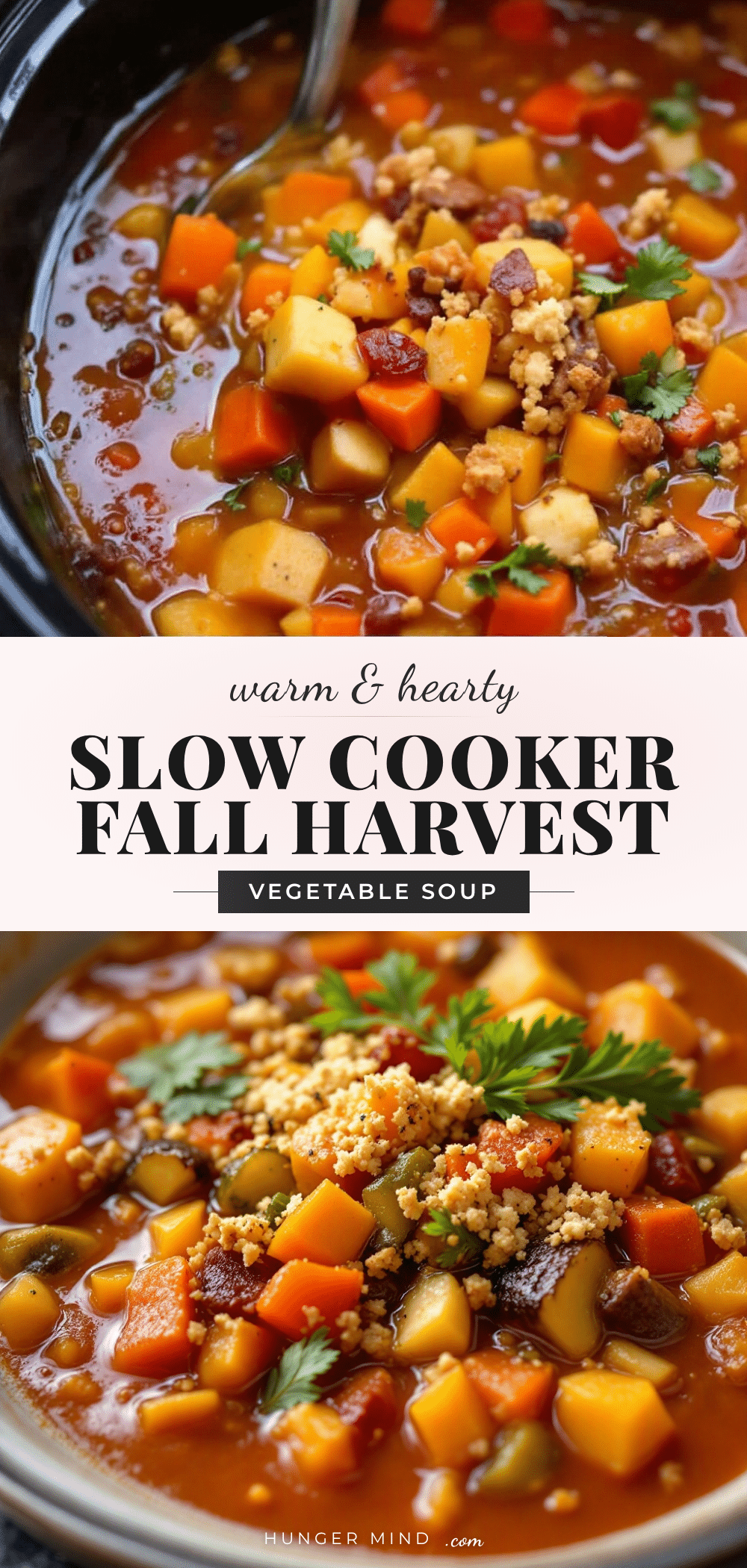
Best Cozy Slow Cooker Fall Harvest Vegetable Soup Recipe

This cozy slow cooker fall harvest vegetable soup is the dish that turned me around on slow cooker vegetable soups. It’s not complicated—no fancy techniques, no obscure ingredients—but it delivers the kind of warmth that makes you want to curl up on the couch and ignore your phone for an hour.
- Prep Time: 15 minutes
- Cook Time: 6 hours 30 minutes
- Total Time: 6 hours 45 minutes
- Yield: 6 servings
- Category: Soup
- Cuisine: American
Ingredients
- Butternut squash, peeled and cubed into ½-inch pieces (about 3 cups)
- Carrots, peeled and sliced into ½-inch rounds (about 2 cups)
- Celery stalks, sliced (about 1 cup)
- Yellow onion, diced (1 medium)
- Garlic cloves, minced (4-5 cloves)
- Yukon Gold potatoes, cubed (about 2 cups)
- Vegetable broth, low-sodium (4 cups)
- Fire-roasted diced tomatoes, with their juices (1 can, 14.5 oz)
- Dried thyme (1 teaspoon)
- Dried rosemary (½ teaspoon, crushed)
- Bay leaves (2)
- Salt and black pepper (to taste)
- Apple cider vinegar (1 tablespoon)
- Fresh parsley or thyme, chopped (for garnish)
- Optional: Parmesan rind, cannellini beans
Instructions
- Prep your vegetables. Peel and cube the butternut squash into ½-inch pieces. Peel and slice the carrots into ½-inch rounds. Slice the celery. Dice the onion. Mince the garlic. Cube the potatoes into ½-inch pieces.
- Layer the ingredients in the slow cooker. Start with the hard, dense vegetables: the butternut squash, carrots, potatoes, and celery. Add the onion and garlic on top. Pour in the fire-roasted tomatoes with their juices and the vegetable broth. Add the dried thyme, crushed rosemary, bay leaves, and a generous pinch of salt and pepper. Do not stir yet.
- Cook on low for 6 to 7 hours or on high for 3 to 4 hours. The soup is ready when the squash and potatoes are tender when pierced with a fork but still hold their shape.
- If adding delicate ingredients (green beans, zucchini, kale, spinach), stir them in during the last 30 minutes of cooking. If adding a Parmesan rind, drop it in at the beginning and fish it out before serving.
- Turn off the slow cooker. Remove the bay leaves. Stir in the apple cider vinegar. Taste and adjust salt and pepper as needed. Stir in fresh parsley or thyme if using.
- Let it rest for 10 minutes before serving.
- Ladle into bowls and garnish with extra fresh herbs, a drizzle of olive oil, or a sprinkle of red pepper flakes if desired.
Notes
For best results, cut vegetables uniformly (½-inch pieces). Do not overcrowd the slow cooker; it should be no more than two-thirds full. Resist lifting the lid during cooking. For deeper flavor, toast dried thyme and rosemary in a dry skillet for 30-60 seconds before adding. Season in layers: start with ½ teaspoon salt, adjust at the end. If soup tastes flat, add more salt or a second splash of apple cider vinegar. To thicken, mash some vegetables against the side of the slow cooker. To thin, stir in additional warm broth or water.
Nutrition
- Serving Size: 1½ cups
- Calories: 200
- Sugar: 11
- Sodium: 600
- Fat: 3
- Saturated Fat: 0.5
- Carbohydrates: 38
- Fiber: 9
- Protein: 6
Keywords: slow cooker, fall harvest, vegetable soup, butternut squash, cozy, vegetarian, gluten-free, dairy-free, vegan