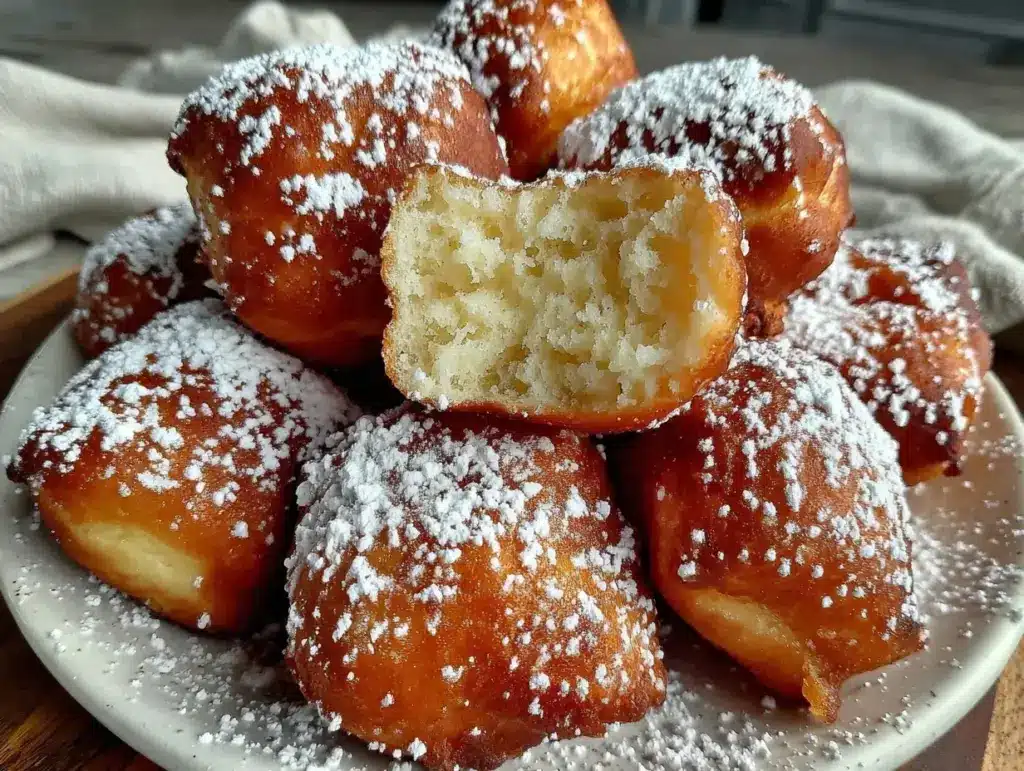
“You sure these are gonna turn out right?” I muttered, glancing sideways at the bowl of sticky dough that looked more like a mess than a promise of those iconic, pillowy beignets. Honestly, I wasn’t aiming to make beignets that day — it was one of those afternoons when I just wanted a quick fix, something sweet but without the hassle. My taste buds were craving the deep-fried, sugar-dusted magic you’d find on a stroll through New Orleans’ French Quarter, but I didn’t have the time or the fancy equipment.
So, I grabbed a shortcut recipe I found tucked in an old cookbook, skeptical but desperate. The dough was simple enough, and the powdered sugar was already dusted over the counter like a winter snow. I fried the dough carefully, the kitchen filling with that unmistakable aroma — warm, yeasty, and a little buttery. When I bit into the first fluffy beignet, the powdered sugar dusting melting instantly, I realized this accidental kitchen experiment was something special.
Since then, these Fluffy New Orleans-Style Beignets with Powdered Sugar Dusting have become my go-to treat whenever I need a little comfort or a sweet break. They’re the kind of recipe that sticks because of their simplicity and that unbeatable texture — light as a cloud but with just enough chew to remind you it’s homemade. It’s funny how a random craving turned into a small obsession, and now, I find myself making these beignets multiple times a week, even sharing them with friends who swear they taste just like the real thing from Café du Monde.
There’s something quietly satisfying about dusting the powdered sugar yourself, watching it swirl down onto the warm beignets, dust motes catching the light. It’s not just a recipe; it’s a little ritual that makes everything slow down and feel a bit more like home.
Why You’ll Love This Recipe
After countless kitchen trials and tweaks, this recipe for fluffy New Orleans-style beignets with powdered sugar dusting stands out as a reliable, delicious classic. I’ve tested this recipe on busy weeknights and lazy weekends alike, and it’s always a hit — no fancy tools, no intimidating steps, just pure joy.
- Quick & Easy: Ready in about 45 minutes from start to finish, making it perfect when you want something sweet without the wait.
- Simple Ingredients: You can find everything in your pantry — flour, yeast, sugar, and a handful of basics. No need for specialty stores or exotic items.
- Perfect for Any Occasion: Whether it’s a cozy breakfast, a festive brunch, or even a last-minute dessert, these beignets fit right in.
- Crowd-Pleaser: Kids, friends, and even picky eaters have given these beignets rave reviews — they’re soft, fluffy, and just sweet enough.
- Unbelievably Delicious: The secret is in the dough’s gentle fermentation and the final dusting of powdered sugar that melts right on top, creating that classic New Orleans feel.
This recipe isn’t just another fried dough treat — it’s crafted with a technique that balances the yeast’s rise perfectly, ensuring each beignet is airy but substantial. Plus, the dough is soft enough to roll out easily but sturdy enough to hold its shape in the hot oil. I’ve even swapped in a bit of buttermilk for tang and softness, which I think makes it stand apart from the usual recipes floating around online.
Honestly, it’s the kind of little indulgence that makes you pause and appreciate the simple pleasures of cooking — the smell of frying dough, the swirl of powdered sugar, and the warm, sweet bites that hit just right. These beignets are comfort food without the guilt, a sweet tradition reborn in your own kitchen.
What Ingredients You Will Need
This recipe uses simple, wholesome ingredients to deliver bold flavor and satisfying texture without fuss. Most are pantry staples, and you can easily swap a few for dietary preferences or what you have on hand.
- All-purpose flour (about 3 cups / 375 g) – the base for our tender dough; I prefer a brand like King Arthur for consistent texture.
- Active dry yeast (2 ¼ teaspoons or one packet) – this helps the dough rise and get fluffy.
- Sugar (¼ cup / 50 g) – adds just the right touch of sweetness inside the dough.
- Salt (1 teaspoon) – balances the flavors and enhances the dough.
- Warm water (1 ½ cups / 360 ml, about 110°F/43°C) – activates the yeast; make sure it’s not too hot or you’ll kill the yeast.
- Evaporated milk (½ cup / 120 ml) – adds richness and moisture; you can substitute with regular milk or a dairy-free alternative.
- Unsalted butter (4 tablespoons / 60 g, melted and cooled) – for tenderness and flavor.
- Egg (1 large, room temperature) – binds the dough and adds structure.
- Powdered sugar (for dusting) – the classic finish; sift generously over the hot beignets just before serving.
- Optional: A pinch of nutmeg or cinnamon to add a subtle twist to the dough flavor.
If you want to try a gluten-free version, swapping in a 1:1 gluten-free flour blend works fairly well, though the texture will be a bit different. For vegan options, you can replace the milk with almond or oat milk and use a flax egg in place of the egg. But honestly, the butter and egg really help with that authentic, fluffy texture that makes these beignets so special.
Equipment Needed
Making these fluffy New Orleans-style beignets doesn’t call for fancy gear, but a few essentials make the process smooth.
- Mixing bowls: A large bowl for dough mixing and a smaller one for proofing the yeast.
- Measuring cups and spoons: Precise measurements keep the dough consistent.
- Rolling pin: For rolling out the dough evenly; a simple wooden or silicone one works just fine.
- Deep fryer or heavy-bottomed pot: For frying the beignets. I find a Dutch oven great for even heat distribution. If you don’t have a thermometer, keep an eye on the oil’s behavior (bubbles, gentle sizzle) to gauge temperature.
- Cooking thermometer: Helpful but not mandatory; frying at about 350°F (175°C) is ideal.
- Slotted spoon or spider strainer: For safely removing beignets from hot oil.
- Cooling rack and paper towels: To drain excess oil and keep the beignets crisp.
- Sifter or fine-mesh sieve: To dust powdered sugar evenly.
When I first started, I didn’t have a thermometer and relied on bubbling breadcrumbs in the oil as a test — it’s a handy trick if you’re without gadgets. Also, using a heavy pot rather than a shallow pan helps keep the oil temperature steady, preventing greasy or undercooked beignets. For budget-friendly options, a deep saucepan and a metal slotted spoon do the job perfectly well.
Preparation Method
- Activate the yeast: In a small bowl, combine warm water (110°F / 43°C) with sugar and active dry yeast. Stir gently and let it sit for 5-10 minutes until foamy. If it doesn’t foam, your yeast might be dead, so start fresh.
- Mix the dough: In a large bowl, whisk together the flour and salt. In a separate bowl, mix the melted butter, evaporated milk, and egg. Add the yeast mixture to the wet ingredients and stir well.
- Combine wet and dry: Slowly add the wet mixture to the flour, stirring with a wooden spoon or dough hook attachment if using a mixer. The dough will be sticky but should form a cohesive ball.
- Knead the dough: Turn the dough onto a floured surface and knead gently for about 5 minutes until smooth and elastic. Alternatively, use a stand mixer with a dough hook on low speed for 3-4 minutes.
- First rise: Place the dough in a lightly oiled bowl, cover with a clean kitchen towel or plastic wrap, and let it rise in a warm spot for 1 to 1 ½ hours, or until doubled in size.
- Prepare for frying: Once risen, punch down the dough gently to release air. Roll it out on a floured surface to about ½-inch (1.3 cm) thickness. Cut the dough into 2-inch (5 cm) squares or rectangles.
- Heat the oil: Pour vegetable oil into a deep fryer or heavy pot to a depth of 2-3 inches (5-7.5 cm). Heat to 350°F (175°C). Use a thermometer or test with a small piece of dough — it should bubble and rise to the surface quickly.
- Fry the beignets: Carefully drop a few pieces of dough into the hot oil, avoiding overcrowding. Fry for about 2-3 minutes per side, flipping once, until golden brown and puffed up.
- Drain and dust: Use a slotted spoon to remove beignets, draining on paper towels or a cooling rack. While still warm, dust generously with powdered sugar through a sieve for that classic finish.
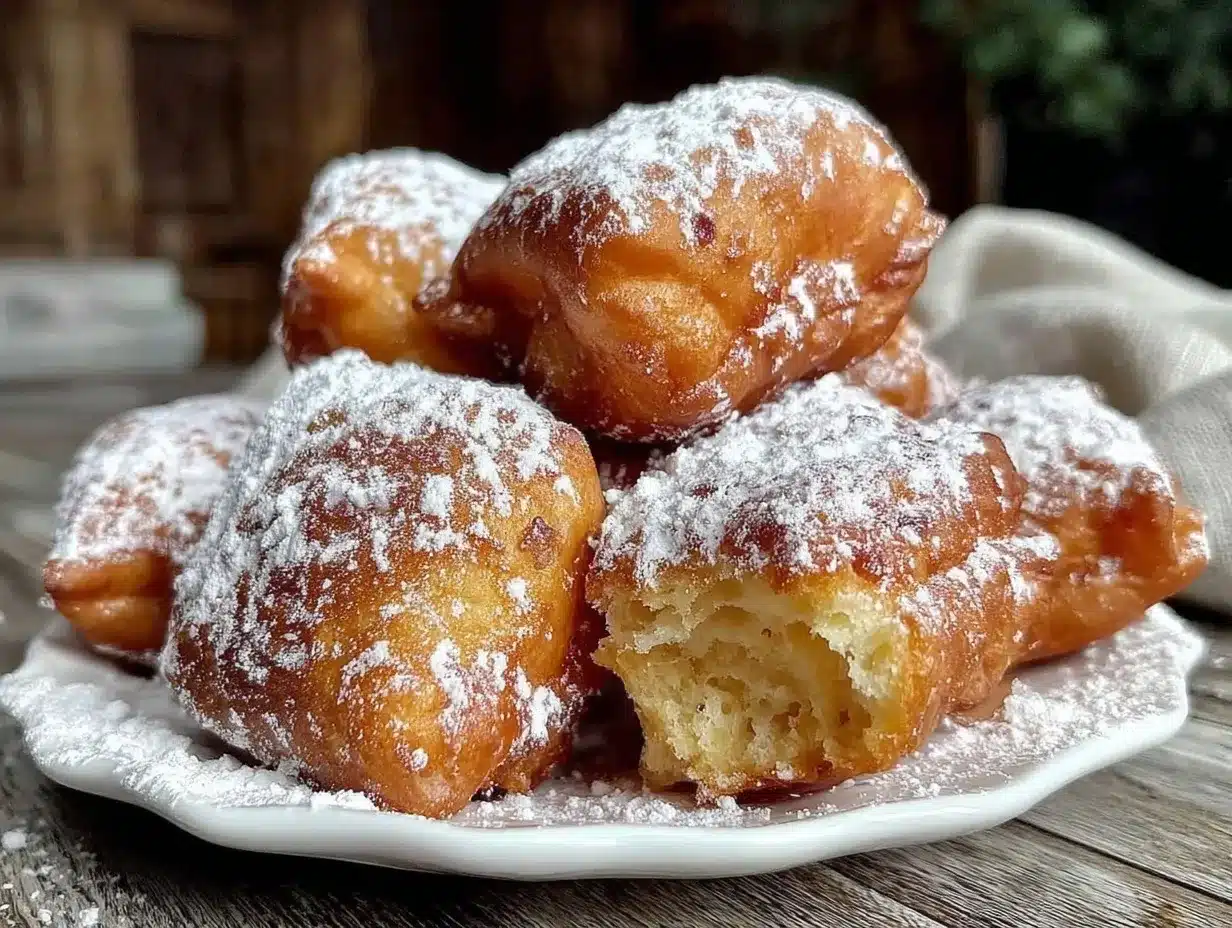
- Serve warm: Enjoy immediately for the best texture and flavor. The beignets should be fluffy, light, and melt-in-your-mouth with a snowy powdered sugar coating.
If your beignets absorb too much oil or come out dense, it’s likely the oil temperature was too low. Too hot, and they’ll brown too fast without cooking through. Patience and monitoring the oil heat are key here — I’ve learned that the first few beignets are always the test batch!
Cooking Tips & Techniques
Getting these fluffy New Orleans-style beignets just right took some trial and error, so let me share the best tips I’ve picked up along the way.
- Yeast activation: Always check that your yeast bubbles and foams before mixing. It’s the little guarantee that your dough will rise beautifully.
- Dough texture: The dough should be sticky but manageable. Resist the urge to add too much flour during kneading — a slightly sticky dough results in a lighter beignet.
- Oil temperature control: Maintaining 350°F (175°C) is crucial. Too hot, and the beignets brown too fast; too cool, and they soak up oil and become greasy. Use a thermometer or watch the dough pieces — they should float and bubble gently.
- Frying in small batches: Crowding the pot lowers the oil temperature and leads to uneven cooking. Fry 3-4 pieces at a time for best results.
- Powdered sugar dusting: Dust the beignets immediately after frying while still warm. The sugar melts slightly, creating that signature sweet glaze.
- Patience during rising: The first rise is when the magic happens. If it’s chilly in your kitchen, find a warm spot like near a window or atop your fridge.
One thing I learned the hard way: rushing the rising process leads to dense beignets that just don’t fluff up. Also, avoid over-mixing or over-kneading, which can make the dough tough. A gentle hand is your best friend here.
Variations & Adaptations
Want to switch things up? These fluffy beignets are surprisingly adaptable for different tastes and dietary needs.
- Gluten-free version: Use a 1:1 gluten-free flour blend and add a teaspoon of xanthan gum if your blend doesn’t include it. The texture will be a bit different but still delightful.
- Vegan adaptation: Replace the egg with a flax egg (1 tablespoon ground flaxseed + 3 tablespoons water, mixed and rested), swap evaporated milk for coconut or almond milk, and use vegan butter or coconut oil.
- Flavor twists: Add a pinch of cinnamon or nutmeg to the dough for a warm spice note, or mix in finely chopped orange zest for a citrusy lift.
- Stuffed beignets: Before frying, add a dollop of chocolate, jam, or cream cheese in the center, sealing the dough around the filling for a decadent surprise.
I once tried adding a sprinkle of cardamom to the dough and paired the beignets with a homemade vanilla bean glaze — a little indulgence that became a favorite holiday treat. These variations keep the recipe exciting and allow you to tailor it to your mood or occasion.
Serving & Storage Suggestions
These beignets are best served warm, right after the final dusting of powdered sugar. The contrast of the crisp, golden exterior and the soft, fluffy inside is what makes each bite special.
Pair them with a steaming cup of coffee or hot chocolate for a cozy morning or afternoon treat. If you want to serve them at a brunch spread, they go beautifully alongside fresh fruit salads or savory dishes — kind of like how I love balancing sweet and savory with sides like the Mexican rice or a fresh salad.
To store, place cooled beignets in an airtight container at room temperature for up to 1 day. For longer storage, freeze them in a single layer on a baking sheet, then transfer to a freezer bag for up to 2 months. Reheat in a hot oven (350°F / 175°C) for 5-7 minutes to regain crispness.
Keep in mind that the powdered sugar may dissolve over time, so dust again before serving if needed. The flavors mellow slightly with time, but that fresh-fried magic is always worth making them fresh whenever possible.
Nutritional Information & Benefits
Each fluffy New Orleans-style beignet is a treat that offers more than just sweetness. While they’re a comfort food indulgence, the recipe strikes a balance with simple ingredients and moderate portions.
| Serving Size | 1 beignet (approx. 50 g) |
|---|---|
| Calories | 150-180 kcal |
| Carbohydrates | 22 g |
| Fat | 6 g |
| Protein | 3 g |
| Sugar | 6 g (mostly from powdered sugar) |
The use of evaporated milk adds calcium and a bit of protein, while the yeast fermentation process helps the dough digest more easily. For those mindful of gluten, switching to gluten-free flour options makes this a treat accessible to more diets.
Just a heads-up: these beignets do contain gluten, dairy, and eggs, so they aren’t suitable for those with allergies to these ingredients unless adaptations are made.
Personally, I find this recipe a nice balance between indulgence and simplicity — a little joy in the middle of the day with real, straightforward ingredients.
Conclusion
Fluffy New Orleans-Style Beignets with Powdered Sugar Dusting are more than just a recipe — they’re a small slice of joy that’s easy to make and hard to forget. From that first warm bite dusted with snow-like sugar to the soft, airy dough beneath, this recipe brings a little piece of New Orleans right into your kitchen.
I love how this recipe is adaptable enough for different diets and occasions, yet simple enough to whip up on a whim. Whether you stick to the classic or try one of the variations, you’re in for a treat that feels both special and comforting.
Give this recipe a try when you need a sweet reset or want to impress friends with a homemade touch — and maybe pair it with a fresh side from the blog like the fresh autumn harvest salad for a balanced, colorful spread.
Feel free to share how your beignets turn out or what twists you tried — I’m always excited to hear your kitchen stories. Happy frying!
Frequently Asked Questions
- Can I make the dough ahead of time?
Yes, you can prepare the dough and let it rise in the fridge overnight. Just bring it to room temperature before rolling and frying. - What oil is best for frying beignets?
Neutral oils with a high smoke point like vegetable, canola, or peanut oil work well. Avoid olive oil as it burns too quickly. - How do I keep beignets warm before serving?
Place fried beignets on a baking sheet in a low oven (about 200°F / 95°C) to keep them warm and crisp until ready to serve. - Can I bake beignets instead of frying?
Traditional beignets are fried for that crispy, airy texture, but you can bake them for a lighter version. They won’t puff as much or have the same crunch. - Why are my beignets dense and chewy?
This usually means the dough didn’t rise enough or the oil was too cool. Make sure to proof the yeast fully and maintain the correct oil temperature.
Pin This Recipe!
Fluffy New Orleans-Style Beignets Recipe Easy Homemade Powdered Sugar Treats

A quick and easy recipe for fluffy New Orleans-style beignets dusted with powdered sugar, perfect for a sweet treat that tastes like the classic Café du Monde version.
- Prep Time: 15 minutes
- Cook Time: 15 minutes
- Total Time: 45 minutes
- Yield: 12 servings 1x
- Category: Dessert
- Cuisine: Creole / New Orleans
Ingredients
- 3 cups all-purpose flour (about 375 g)
- 2 ¼ teaspoons active dry yeast (one packet)
- ¼ cup sugar (50 g)
- 1 teaspoon salt
- 1 ½ cups warm water (about 110°F / 43°C)
- ½ cup evaporated milk (120 ml)
- 4 tablespoons unsalted butter, melted and cooled (60 g)
- 1 large egg, room temperature
- Powdered sugar for dusting
- Optional: pinch of nutmeg or cinnamon
Instructions
- Activate the yeast: In a small bowl, combine warm water (110°F / 43°C) with sugar and active dry yeast. Stir gently and let it sit for 5-10 minutes until foamy.
- Mix the dough: In a large bowl, whisk together the flour and salt. In a separate bowl, mix the melted butter, evaporated milk, and egg. Add the yeast mixture to the wet ingredients and stir well.
- Combine wet and dry: Slowly add the wet mixture to the flour, stirring with a wooden spoon or dough hook attachment if using a mixer. The dough will be sticky but should form a cohesive ball.
- Knead the dough: Turn the dough onto a floured surface and knead gently for about 5 minutes until smooth and elastic. Alternatively, use a stand mixer with a dough hook on low speed for 3-4 minutes.
- First rise: Place the dough in a lightly oiled bowl, cover with a clean kitchen towel or plastic wrap, and let it rise in a warm spot for 1 to 1 ½ hours, or until doubled in size.
- Prepare for frying: Once risen, punch down the dough gently to release air. Roll it out on a floured surface to about ½-inch (1.3 cm) thickness. Cut the dough into 2-inch (5 cm) squares or rectangles.
- Heat the oil: Pour vegetable oil into a deep fryer or heavy pot to a depth of 2-3 inches (5-7.5 cm). Heat to 350°F (175°C). Use a thermometer or test with a small piece of dough — it should bubble and rise to the surface quickly.
- Fry the beignets: Carefully drop a few pieces of dough into the hot oil, avoiding overcrowding. Fry for about 2-3 minutes per side, flipping once, until golden brown and puffed up.
- Drain and dust: Use a slotted spoon to remove beignets, draining on paper towels or a cooling rack. While still warm, dust generously with powdered sugar through a sieve.
- Serve warm: Enjoy immediately for the best texture and flavor.
Notes
Maintain oil temperature at 350°F (175°C) for best results. Fry in small batches to avoid lowering oil temperature. Dust powdered sugar immediately after frying while beignets are still warm. Dough should be sticky but manageable; avoid adding too much flour during kneading. For gluten-free, use a 1:1 gluten-free flour blend with xanthan gum. For vegan, replace egg with flax egg and use plant-based milk and butter.
Nutrition
- Serving Size: 1 beignet (approx. 5
- Calories: 150180
- Sugar: 6
- Sodium: 200
- Fat: 6
- Saturated Fat: 3.5
- Carbohydrates: 22
- Fiber: 1
- Protein: 3
Keywords: beignets, New Orleans, powdered sugar, fried dough, dessert, easy recipe, homemade treats